What Plumbing Problems Happen Most in a Typical Evansville Home
Locally owned plumber in Evansville, IN. Open 24/7.
The Most Common Plumbing Problems You'll Likely See
What plumbing problems happen most in a typical home? In Evansville, it's mostly clogged drains, running toilets, dripping faucets, water heater trouble, hidden leaks, and sump pump failures. Most of them start small and get worse if you wait.
You probably found this page because something's dripping, gurgling, or backing up. Good news. Most home plumbing trouble falls into a short list. We fix the same handful of problems every single week.
Here's what we see most often in Evansville homes. Find your symptom first. Then look at what usually causes it.
- Clogged drains: Slow sinks, standing water in the tub, or a gurgling sound. Grease, hair, and soap scum build up inside the pipe over time.
- Running or clogged toilets: A toilet that runs nonstop often has a worn flapper or fill valve. Clogs usually come from too much paper or things that shouldn't be flushed.
- Dripping faucets: That steady drip is often a worn cartridge or washer. It looks tiny, but it adds up on your water bill.
- Water heater trouble: Lukewarm showers, rumbling noises, or rusty-looking hot water. Sediment buildup at the bottom of the tank is a common cause.
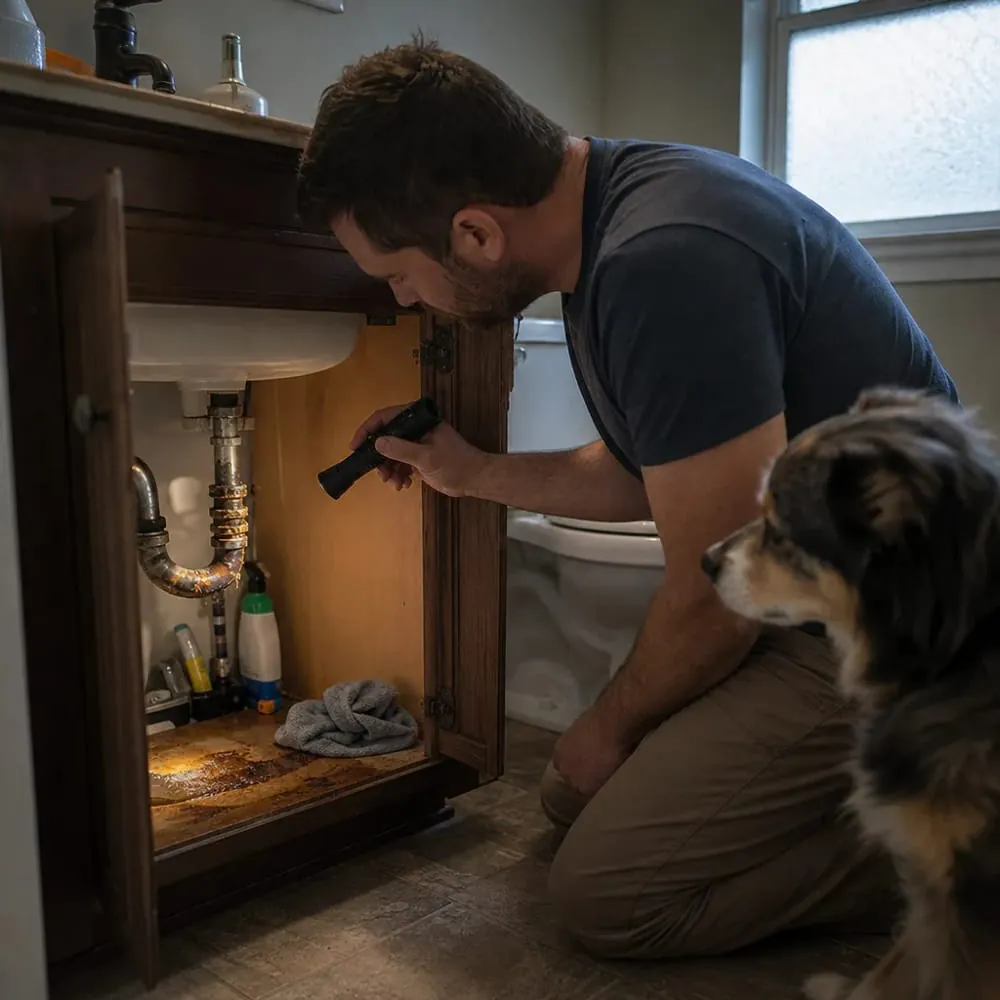
- Hidden leaks: Look for musty smells, soft spots in the floor, or stains on the ceiling. These often hide under sinks or behind walls.
- Sump pump failure: A wet basement after a hard rain. The pump may be worn out, stuck, or overwhelmed.
Small problems almost never stay small.
The EPA's WaterSense program says household leaks can waste nearly 10,000 gallons of water a year in an average home. That's from drips and running toilets most people ignore. Sound familiar?
Evansville homes have their own twist on these problems. Hard water is common around the Tri-State. It leaves mineral crust in faucets, showerheads, and water heaters. Some older houses on the West Side and near downtown still have aging pipes that corrode from the inside.
And our winters don't help. Freeze-thaw cycles put stress on pipes in crawl spaces and along outside walls. You can guess what spring rain does to a basement with a tired sump pump.
Here's a mistake we see often. A family on the East Side had a slow kitchen sink for months. They kept pouring store-bought drain cleaner down it. By the time they called, the line was fully blocked. The harsh chemicals had also worn on the old pipe.
But that's an easy one to avoid. A slow drain is a warning sign, not an emergency yet. Drain cleaning early is quick. Waiting turns it into pipe repair.
Not every drip needs a plumber in Evansville the same day. Some things can wait a few days. Others can't, like a leak near electrical outlets or water pooling around your water heater. If you're not sure which one you've got, it's worth a quick call.
Not sure what's causing your problem? Call us at (812) 677-8484. We're open 24/7, quotes are free, and there's no trip or diagnostic fee. We're licensed, insured, and locally owned right here in Evansville.
Why Common Problems Often Show Up Together, Not Alone
A drip under the sink. A toilet that runs at night. A water heater that pops and rumbles.
Most people treat these as three separate problems. We usually find they share one cause.
Your plumbing is one connected system. Water comes in through one line, and it leaves through one sewer. So when something goes wrong in one spot, it rarely stays put.
Our home plumbing guides break each problem down on its own. But in a real house, they almost never stay separate. Here are the pairs we see together most often in Evansville homes:
- High water pressure that wears out faucets, keeps toilets running, and strains the water heater
- Mineral buildup that clogs faucet aerators while sediment settles in the tank
- Slow drains in more than one room, a common sign of a main sewer line clog
- A tired sump pump paired with a blocked discharge line or exterior drain
- Tree roots in the yard plus gurgling toilets and backups in the lowest drain
See the pattern? One root cause shows up as several symptoms.
We got a call from a homeowner near Bayard Park last spring. She'd replaced two faucet cartridges in one year. Her toilet flapper was shot too. The real problem was a failed pressure regulator. The whole house was running at high pressure, and every fixture was paying for it. We swapped the regulator. The repeat repairs stopped.
This is a mistake we see often. Someone fixes the loudest symptom and stops there. And then the next fixture fails a few months later.
Spring weather in Evansville makes this worse for basements. Heavy rain and a high Ohio River push a lot of water toward your foundation. If the sump pump is weak and the exterior drain is clogged, you don't get one problem. You get both at once, usually during the worst storm of the year.
Older homes near Haynie's Corner and Jacobsville have their own patterns: cast iron drains, aging galvanized lines, and roots finding every crack.
That's why we look at the whole system before we pick up a wrench. Here's what we check when someone calls about more than one issue:
- Test the water pressure at a hose bib or laundry hookup
- Look at the water heater for sediment noise, rust, or a missing expansion tank
- Run water in several drains to see if they back up together
- Check the lowest drain in the house for gurgling or slow flow
- Inspect the sump pump, basin, and discharge line if there's a basement or crawl space
It doesn't take long. But it tells us whether you've got three small problems or one big one wearing a disguise.
So why fix one leak if three more are lining up behind it? Most folks don't realize it until the second or third repair. Finding the shared cause first saves you that headache.
Seeing two or three of these at once? Call us at (812) 677-8484, day or night. We're open 24/7 across Evansville and the Tri-State for homes and businesses. Quotes are free and there's no trip or diagnostic fee. We're licensed, insured, and locally owned.
Common Plumbing Problems in Older Homes
Low water pressure. Rusty water first thing in the morning. A slow drain that never quite clears.
If your house was built before the 1960s, those signs usually point to the pipes themselves. It's not just a clog or a bad faucet.
Evansville has a lot of these homes. We work in Riverside, Haynie's Corner, and Bayard Park all the time. The houses are beautiful. But the plumbing behind the walls can be 70 to 100 years old.
Here's what we find most often when we open up an older home. Most houses won't have every item on this list.
- Galvanized steel water pipes that rust from the inside and choke your water pressure
- Cast iron drain lines that crack, scale up, and leave drains running slow
- Clay sewer pipe with loose joints that tree roots love to slip into
- Old shutoff valves that won't turn when you need them most
- Gray polybutylene supply lines, found in some homes built from about 1978 to 1995
But most older homes have at least two of these going on.
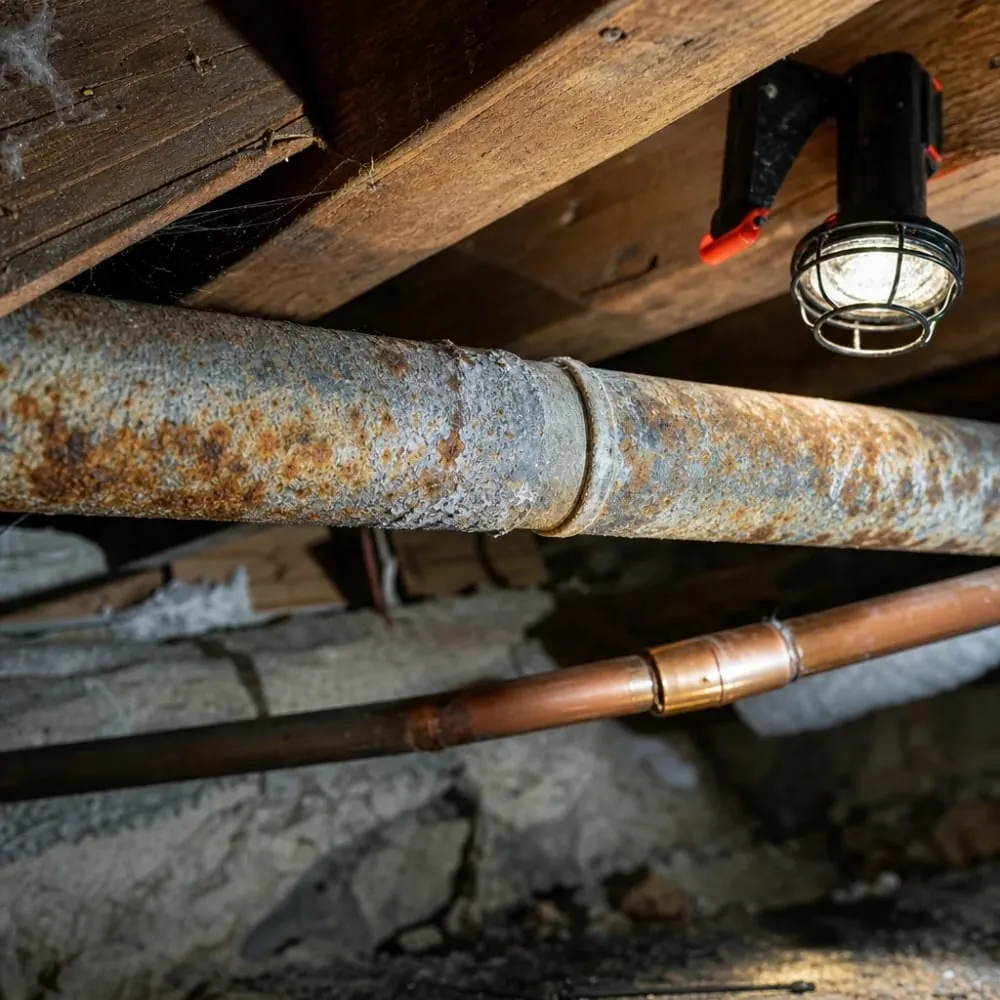
Galvanized pipe is the big one. It looks fine from the outside. Inside, rust builds up a little more every year. Eventually the opening is about the size of a pencil. So you turn on the shower and get a trickle. And brown water after you've been away for a few days is another clue.
Cast iron drains last a long time, though not forever. Over the decades the inside gets rough and flaky. Grease and paper snag on that rough surface. You'll hear gurgling toilets. Or you'll see a basement floor drain back up after a hard rain.
Clay sewer pipe is common under older Evansville yards. Our soil near the river has a lot of clay in it. It swells when it's wet and shrinks when it dries. That movement pulls the pipe joints apart a little at a time. Roots find those gaps fast. Big old maples and sycamores along older streets don't help.
We got a call from a homeowner near Washington Avenue with this exact problem. Her basement drain backed up every few weeks. She'd had it snaked three times already. When we ran a camera down the line, we found roots packed into a cracked clay joint about 40 feet out. Snaking cleared it for a while, but the roots just grew right back.
Old pipes rarely fail all at once.
They fail one weak spot at a time. This is a mistake we see often: people patch the same galvanized line three or four times. Each patch holds fine. Then the pipe gives out a foot away.
So what should you do if you own an older home? Start by finding out what's in your walls. A plumbing inspection shows which pipes you have and how much life they've got left. Then you can plan repairs on your own schedule, not in the middle of a flooded basement at 2 a.m.
Sometimes the answer is a simple pipe repair. Other times a whole-home repipe makes more sense than chasing leaks year after year. We'll tell you straight which one fits your house.
Own an older home in Evansville or the Tri-State? Call us any time, day or night. We're licensed, insured, and locally owned. Quotes are free and there's no trip or diagnostic fee. Call (812) 677-8484
Frequently Asked Questions
- What counts as a plumbing issue?
- A plumbing issue is anything affecting the pipes, drains, fixtures, or water heater that bring water in or carry it out of your home. This includes clogged drains, running toilets, dripping faucets, low water pressure, and hidden leaks. Some signs are easy to spot, like standing water. Others hide behind walls or under floors as musty smells or soft spots. If you notice any of these signs in your Evansville home, it's worth tracking down the cause early.
- How long does plumbing last in a house?
- Most home plumbing lasts between 40 and 80 years, depending on the pipe material. Older homes near Riverside, Haynie's Corner, and Bayard Park often still have galvanized or cast iron lines that corrode and weaken from the inside. Newer copper or PEX pipes tend to last longer with fewer surprises. If your home is older, watch for rusty water, low pressure, or slow drains. These are common signs that aging pipes need attention.
- How do I know if I should call a plumber or try to fix it myself?
- Call a plumber when a problem involves water near electrical outlets, pooling near your water heater, or more than one drain backing up at once. Small things, like a slow drain or a minor drip, can sometimes wait a few days. But problems that repeat, spread, or involve standing water usually mean something bigger is going on. Our resources page walks through common symptoms so you can tell the difference before it becomes a bigger repair.
- Why do I keep having the same plumbing problem over and over?
- Repeat problems usually mean you're fixing a symptom instead of the real cause. Your plumbing is one connected system, so a failed pressure regulator or a sewer line clog can show up as several separate issues, like a running toilet, a worn faucet, and a noisy water heater. Many Evansville homeowners replace one part, only to have another fixture fail months later. Looking at the whole system first helps you stop the cycle instead of chasing it.
- Does Evansville's weather or water make plumbing problems worse?
- Yes, hard water and freeze-thaw winters both add stress on home plumbing in Evansville. Hard water leaves mineral buildup in faucets, showerheads, and water heaters across the Tri-State area. Winter freeze-thaw cycles stress pipes in crawl spaces and along outside walls. Heavy spring rain near the Ohio River also pushes sump pumps and exterior drains to their limit. These local conditions explain why some problems show up more often here than in other areas.
- Is a slow drain really a big deal, or can it wait?
- A slow drain is a warning sign, not an emergency, but it shouldn't be ignored for long. Grease, hair, and soap scum build up slowly inside the pipe until the line blocks completely. Pouring store-bought drain cleaner down it often makes things worse by wearing on old pipes without fixing the real clog. Catching a slow drain early usually means a quick cleaning instead of a full pipe repair later.
Call and tell us what you're seeing.
Quotes are free, and there's no trip or diagnostic fee.