Gas pipe pressure test in Evansville, IN
Before gas flows through new piping for an addition, a line run out to a new range or dryer, or a repair after a leak, a gas pipe pressure test has to prove the piping holds. In Evansville, the test ties into the city's inspection and CenterPoint Energy's turn-on rules. A strong gas smell is an emergency, not a test: get out on foot first, then call CenterPoint at 800-227-1376 and 911. Finding the source comes afterward, through gas leak detection.
When a Gas Line Pressure Test Is Required
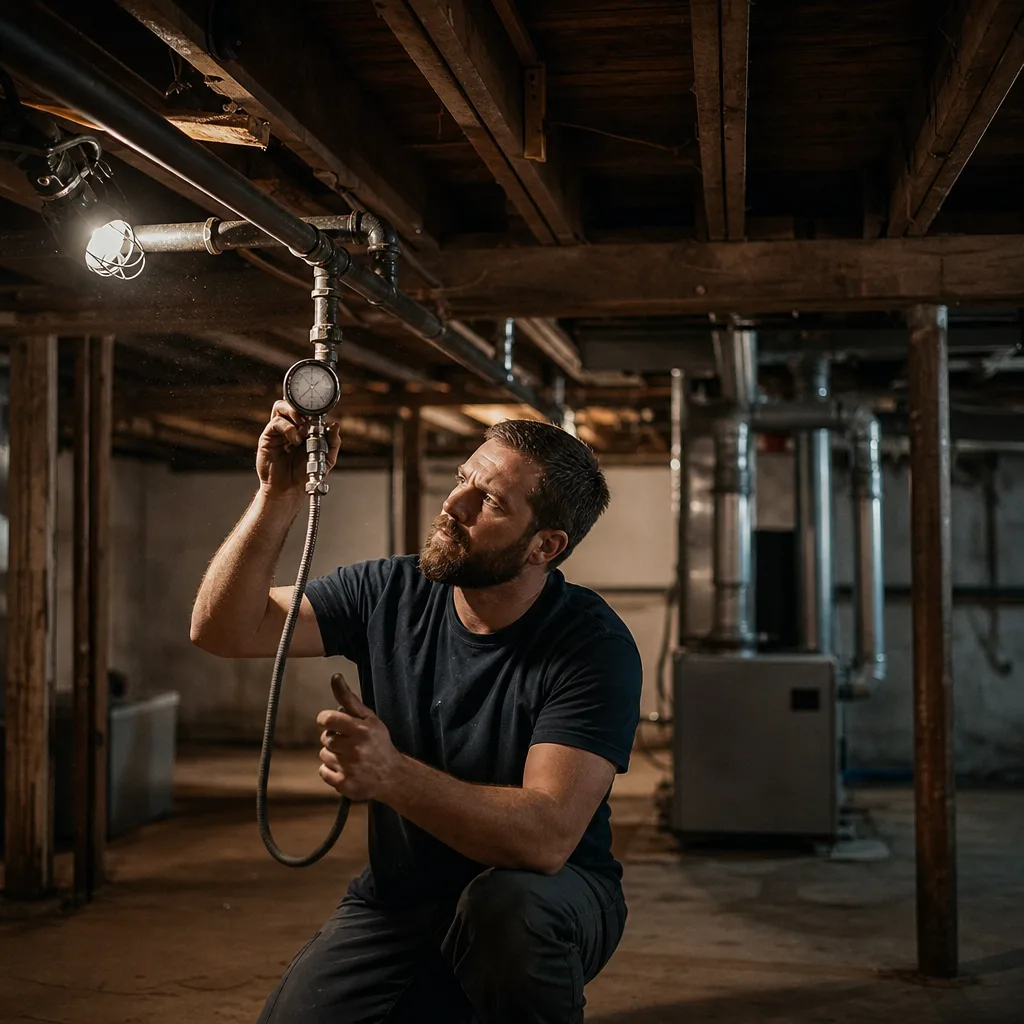
If gas piping is new, changed, or repaired, a gas line pressure test is how it gets cleared for service. CenterPoint requires a houseline pressure test before it sets a new gas meter, and its instructions put the customer in charge of contacting the local inspection authority, which notifies CenterPoint when the inspection passes.
City code adds its own gate. Evansville's EMC 15.05.080 bars any utility from supplying natural gas to a building until the Building Commissioner has approved a final inspection, with temporary service possible by approval. The city's fee schedule lists gas piping and new gas meters as permit and inspection items, which suggests most gas line work in Evansville runs through a Building Commission permit.
Repairs count too. Indiana's adopted fuel gas code says piping that is repaired or added to after a pressure test has to be tested again, and minor repairs may instead be inspected and leak-checked with a noncorrosive leak-detecting fluid.
Under CenterPoint's Indiana South tariff, every pipe past the meter outlet is owned and kept up by the customer, so the owner, not the utility, gets that piping tested.
How a Gas Pipe Pressure Test Is Done
Once new or repaired piping is ready for its gas pipe pressure test, the gas stays off at the meter for the whole test, so no fuel is in the pipe. Appliances are shut off or disconnected, open ends are capped, and the piping becomes a closed system with a test gauge attached.
The test medium comes from the code. Section 406.2 of the fuel gas code Indiana adopted allows air, nitrogen, carbon dioxide, or an inert gas, and bans oxygen.
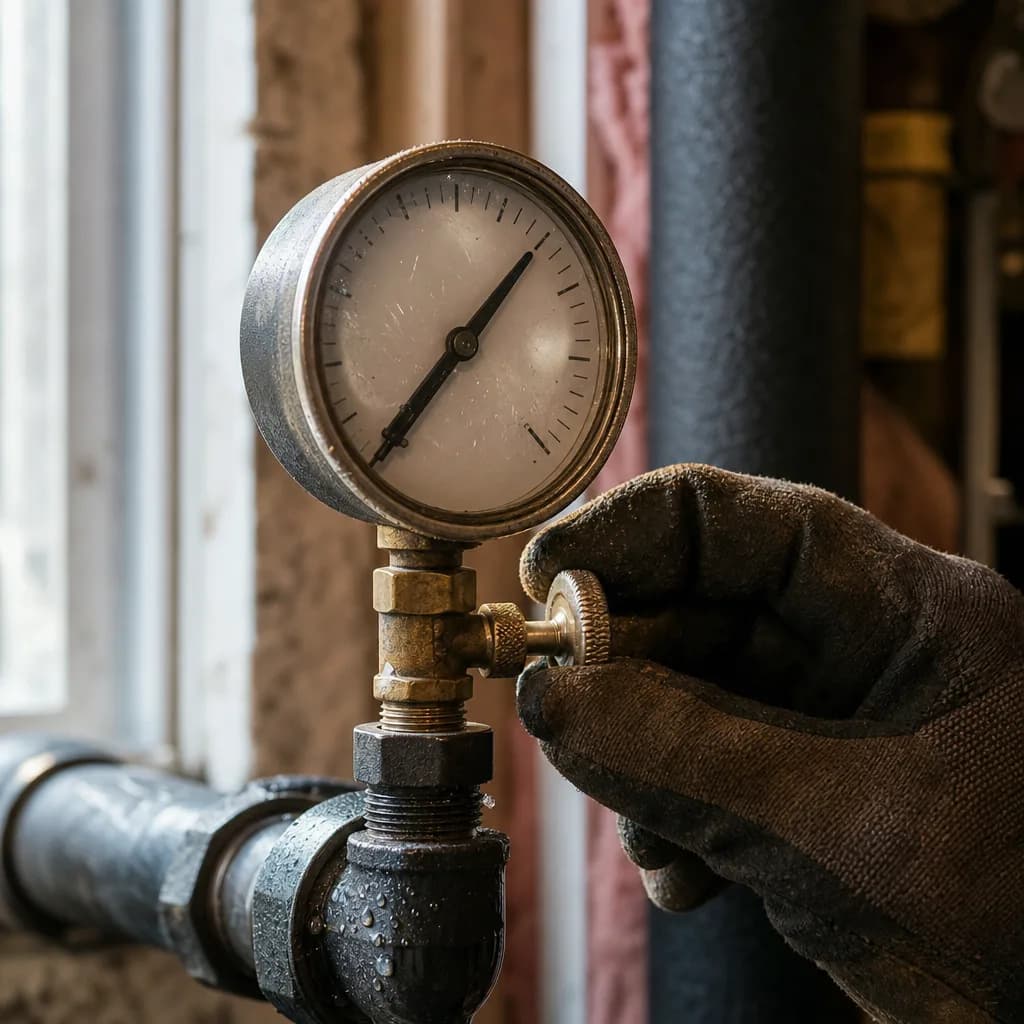
The piping is brought up to test pressure and held while the gauge is watched. A steady needle is a pass; a drop means a joint or fitting is leaking, and each one is checked until the leak is found and fixed with the line still empty.
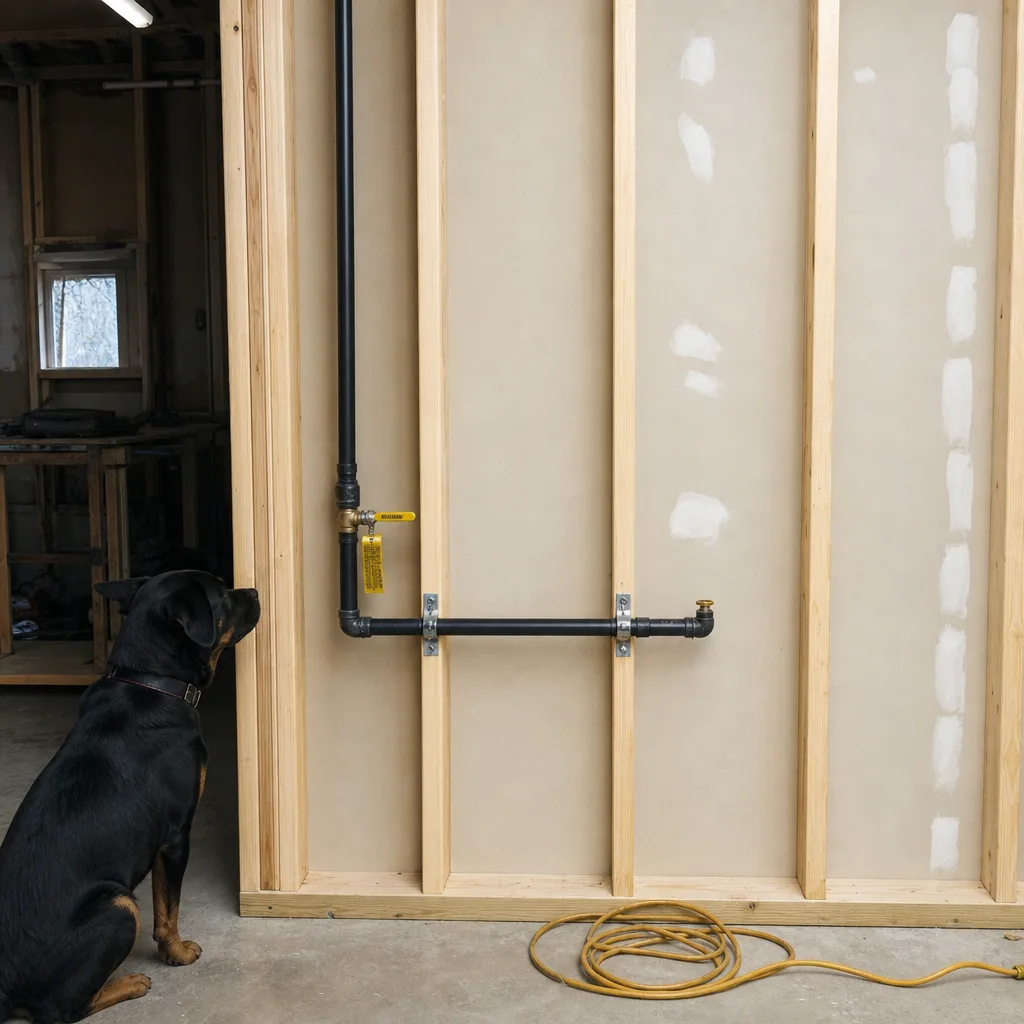
New pipe that will be hidden is tested before it's covered. City code in Evansville (EMC 15.05.100) requires work that will be covered to be inspected before any material goes over it, so a test on new piping comes before drywall or flooring closes it in.
Your gas appliances are off during the visit: no gas range, dryer, furnace, or gas water heater until the test passes and service is restored.
Residential Gas Line Pressure Test Code: What the Inspector Decides
If an inspector or CenterPoint is waiting on a passing result, the pressure and hold time for a residential gas line pressure test come from code minimums, not the person running the gauge. Indiana's fuel gas code is the 2014 Indiana Fuel Gas Code (675 IAC 25-3), based on the 2012 International Fuel Gas Code, and Indiana did not amend its test pressure, duration, or medium.
That code sets the test pressure at no less than 1½ times the working pressure and never below 3 psig. It sets the duration at no less than ½ hour for each 500 cubic feet of pipe volume, and at least 10 minutes for a single-family dwelling or a system under 10 cubic feet.
One- and two-family homes are built under the 2020 Indiana Residential Code, so the inspector works from the code that covers your building. Either way, those figures are floors, not targets.
Gas Pressure Test Results: Pass, Fail, and Retest
A gas pressure test that holds for the full time lets the job move to inspection. After the inspection passes, the inspection authority notifies CenterPoint, and the meter can be set or service restored.

A failed test means a leak was caught while the pipe was empty, which is the whole point of testing. The bad joint is found and repaired, then the piping is pressurized and watched again until it holds.
Once gas goes back in, the fuel gas code requires the piping to be checked for leaks right away whenever a new system is turned on or a system is restored after an interruption. Pilots and appliances are relit after that check.
Pressure readings can drift slightly with temperature, such as pipe running through a cold crawl space, which is one reason the gauge is watched over the full hold time instead of read once.
How to Pressure Test a Gas Line, and Why a Homeowner's Reading Won't Count
A test gauge for gas piping costs little, so pressure testing a gas line yourself can sound simple. But the test only counts when the inspector and CenterPoint accept it, and a reading taken in your own basement doesn't clear a meter set or a final inspection.
Several things go wrong out of sight. Appliance valves and regulators can be damaged by test pressure if they stay connected, one uncapped stub makes the result meaningless, and a small temperature drift can be mistaken for a leak or hide one.
Your prep does save time: write down what changed on the line and when, clear a path to the meter and every gas appliance, and unlock any basement door or crawl-space hatch along the pipe's route. Larger changes to the piping itself are gas installation work, and the pressure test is the step that proves them.
Common questions
- How long does a gas line pressure test have to hold?
- At least 10 minutes for a single-family dwelling or a system under 10 cubic feet, under the fuel gas code Indiana adopted. Larger systems need at least ½ hour per 500 cubic feet of pipe volume.
- Does CenterPoint need a pressure test before turning on gas?
- For a new meter, yes. CenterPoint requires a houseline pressure test before it sets a new gas meter, and the local inspection authority notifies CenterPoint once the inspection passes.
- What happens if my gas pipe fails the pressure test?
- The leak gets found and repaired while the pipe is still empty, and the piping is tested again until it holds. Indiana's adopted code requires a retest after repairs, with an inspected leak check allowed for minor ones.
Where we do this work
This page is for gas pipe pressure test based out of Evansville, IN. We also work surrounding communities. City pages cover each market; as demand grows we can add service pages for specific cities without rebuilding this silo.
Related work
We also do this work for businesses across the area.
Commercial plumbingReady to Get Started?
Call (812) 677-8484 Now.