Plumbing inspection in Evansville, IN
A plumbing inspection looks at the whole system instead of one fixture and ends with a plain list: what's fine, what to watch, and what to fix now. That matters here, because Evansville's housing is old by national standards; per the Census Bureau's five-year estimates for 2024, 1961 is the city's median year built, and about 49% of its 59,180 housing units were built before 1960. The usual triggers: a slow drain that keeps returning, a jump in the water bill, a house you're about to buy, or a commercial space you're about to lease.
What a Home Plumbing Inspection Covers
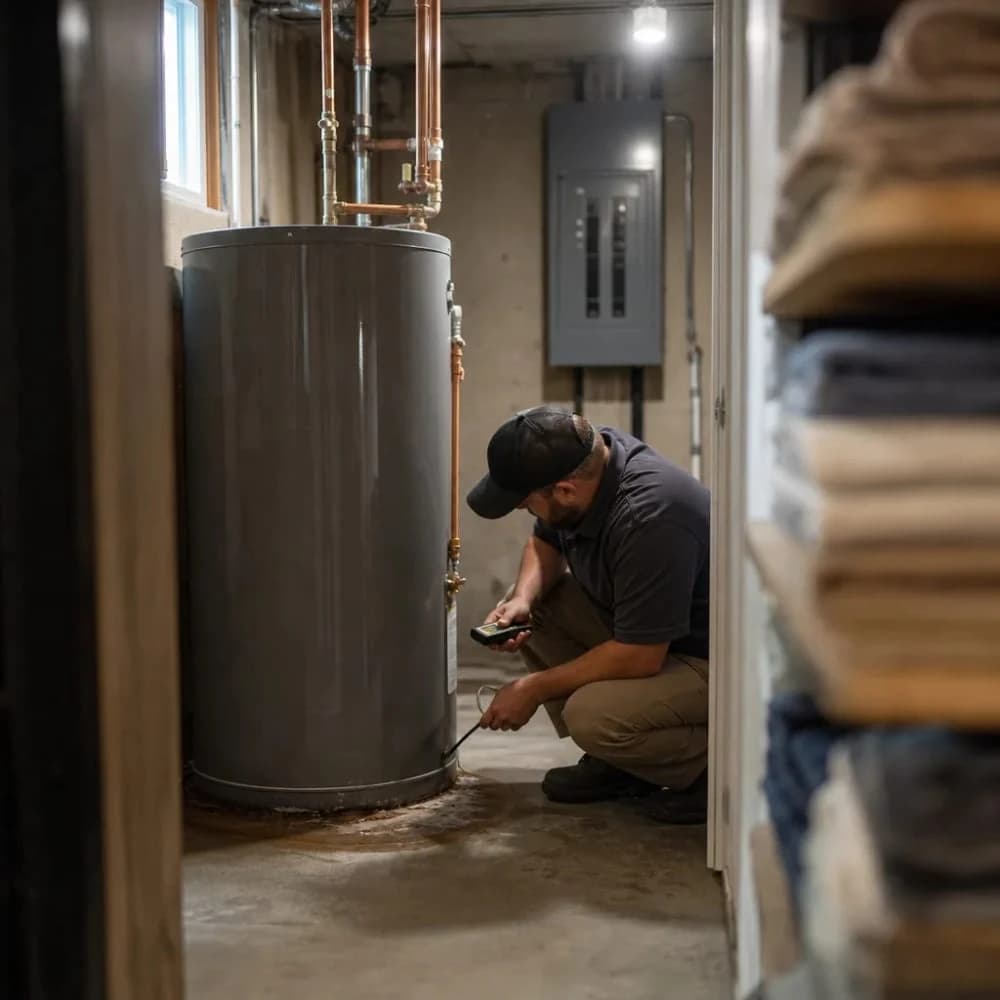
A home plumbing inspection covers what can be seen and reached. Nobody can check pipe inside walls or below a slab by eye, but clues narrow the search: a stain with no source, a floor with a warm patch, or a meter that moves with everything off.
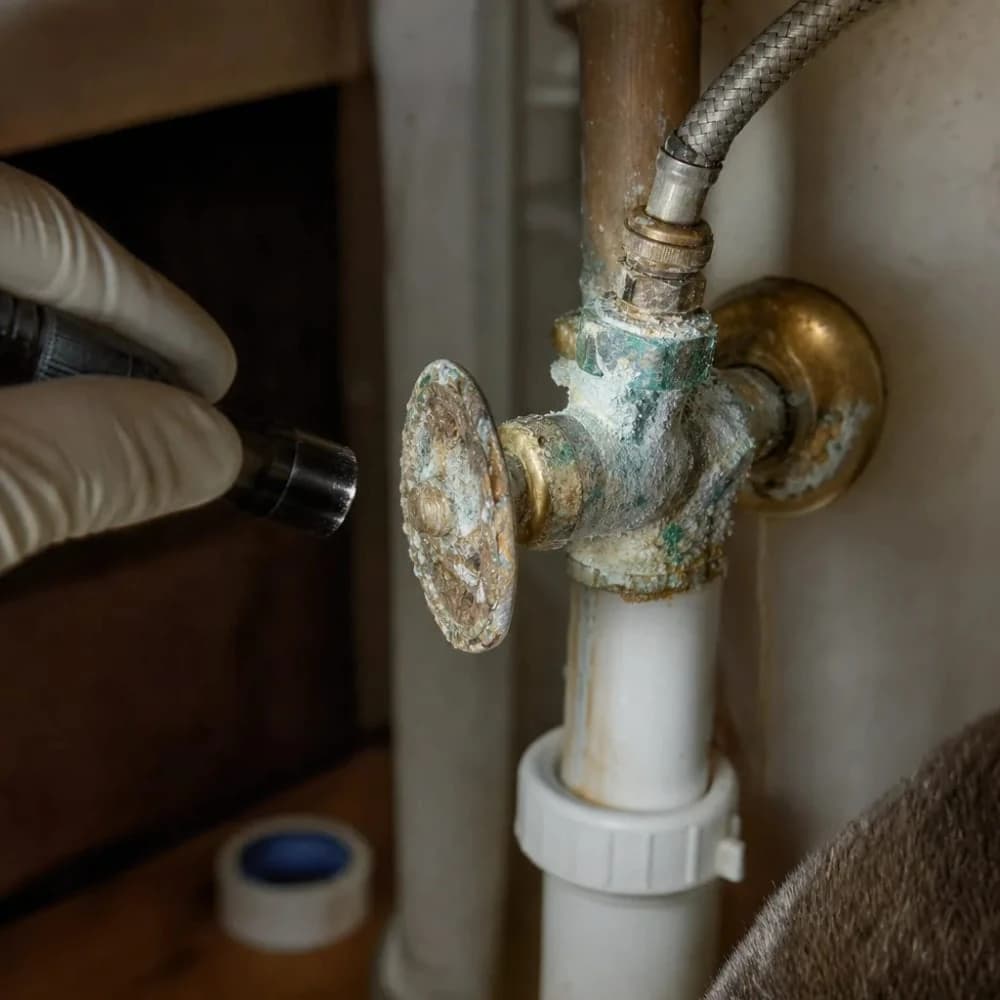
- Water supply pipe: the material, corrosion, and drips at joints and fittings.
- Shutoffs: whether the main and fixture valves turn and close fully.
- Water pressure, read at a hose bib with nothing running.
- The water heater: age, rust or leaking at the base, the relief valve and its discharge, and venting.
- Drains: how fast fixtures empty and whether more than one backs up at once.
- Toilets and faucets: running toilets, loose bases, worn seals, slow leaks.
- Sewer access: whether there's a working cleanout to reach the line.
- Backflow devices on irrigation, boilers, or fire lines, which must be tested every year under rules from both the City of Evansville and the State of Indiana.
A plumbing inspection is not the same as a home inspection under Indiana law. Indiana requires a state license to do a home inspection for pay, and the statute says a home inspection is not a code compliance inspection. Indiana's home-inspection standards (878 IAC 1-2-1) have licensees look at water supply, drain-waste-vent piping, water heating, and the drainage sumps and sump pumps, and report where the main water shutoff is. A plumbing inspection goes deeper into the same systems when the home inspector's report raises questions.
Signs a House Needs a Plumbing Inspection
Most people call for a plumbing inspection after something tips them off, and while one problem usually just needs a repair, several at once, or one that won't stay fixed, means the whole system deserves a look.
- More than one fixture draining slow at the same time, or drains that gurgle and smell like sewage.
- A bill that went up while water use didn't.
- Pressure that dropped or swings house-wide, not just at one faucet.
- Rusty, cloudy, or odd-smelling water.
- A water heater that pops or rumbles or shows rust at the base.
- The same fixture needing the same repair again.
Some times call for an inspection even when nothing seems wrong: before buying or selling, before a remodel opens the walls, after a house sits empty, or at a commercial lease change. A hidden leak may need plumbing leak detection as its own job.
Plumbing Inspection Below Grade: Sump Pit and Sewer Line
A plumbing inspection should look hard at the two parts that can flood a floor and get ignored until they quit: the sump pump and the sewer line.
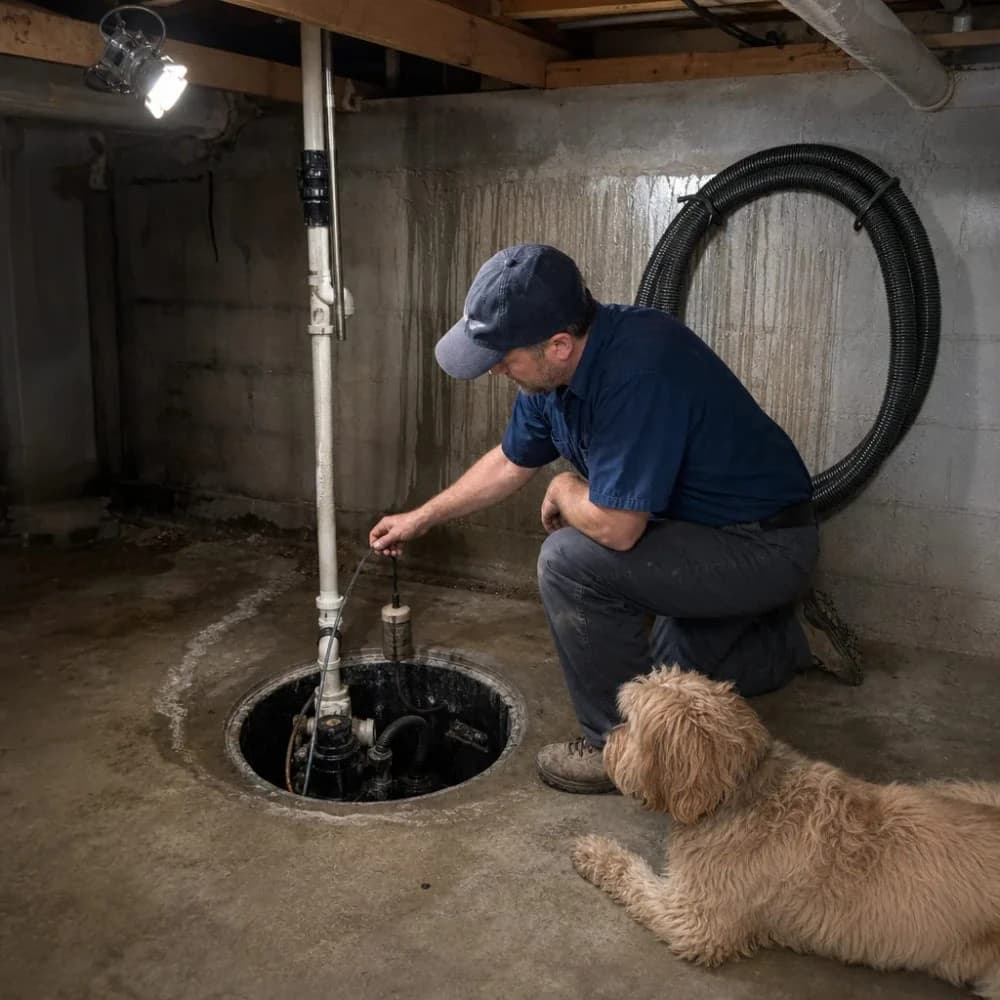
Rain sets the schedule. NOAA's 1991–2020 normals for Evansville Regional Airport show yearly precipitation of 47.91 inches, with April and May the wettest months. Wet soils after long rains are when a sump pump that sat quiet for months has to run for hours. A sump check asks: does the pump start and stop with the float, does the float hang on the pit wall, does the check valve hold, what's in the basin, and where does the discharge end?
The sewer side matters because, by EWSU's account, homeowners own their own sewer service line and are responsible for maintaining it, and backups can start there or in the City main. Gurgling, several slow drains, or water at a floor drain after a storm are the signs, and a reachable cleanout is what lets the line be cleared and checked. If the house has none, cleanout installation is often the first fix. A cracked or root-filled lateral can mean sewer line installation rather than repeated cleaning.
When You Can Skip a Full Plumbing Inspection
A full plumbing inspection isn't always worth paying for.
- The problem is known and in one spot: a lone slow sink, a dripping faucet, a running toilet. EWSU counts 86 gallons a month lost from a faucet dripping just once every 3 seconds, so fix it, but it doesn't need a full inspection.
- A plumber is already doing one planned job there and is looking at the pipes, valves, and connections in that area.
- The house is new or was just repiped and nothing is acting up. Older galvanized lines are another story; see whole-home repipe.
- You rent; the pipes and fixtures are usually the landlord's to inspect and repair.
- A home inspector already flagged one clear plumbing item, and that item can be priced on its own.
Watching costs nothing: check under sinks, compare water bills month to month, notice drain sounds, and look at the basement floor after heavy rain. EWSU's typical-home figure is about 5,000 gallons a month, which is a handy number to hold against a bill that spikes.
Plumbing Inspection Cost and What Changes It
Plumbing inspection cost rises with how much there is to check and how tough it is to get at.
- Size. More bathrooms and fixtures mean more to check.
- Age. With a median build year of 1961 in Evansville, many houses may still have original valves, galvanized supply, or older drain lines that take a closer look.
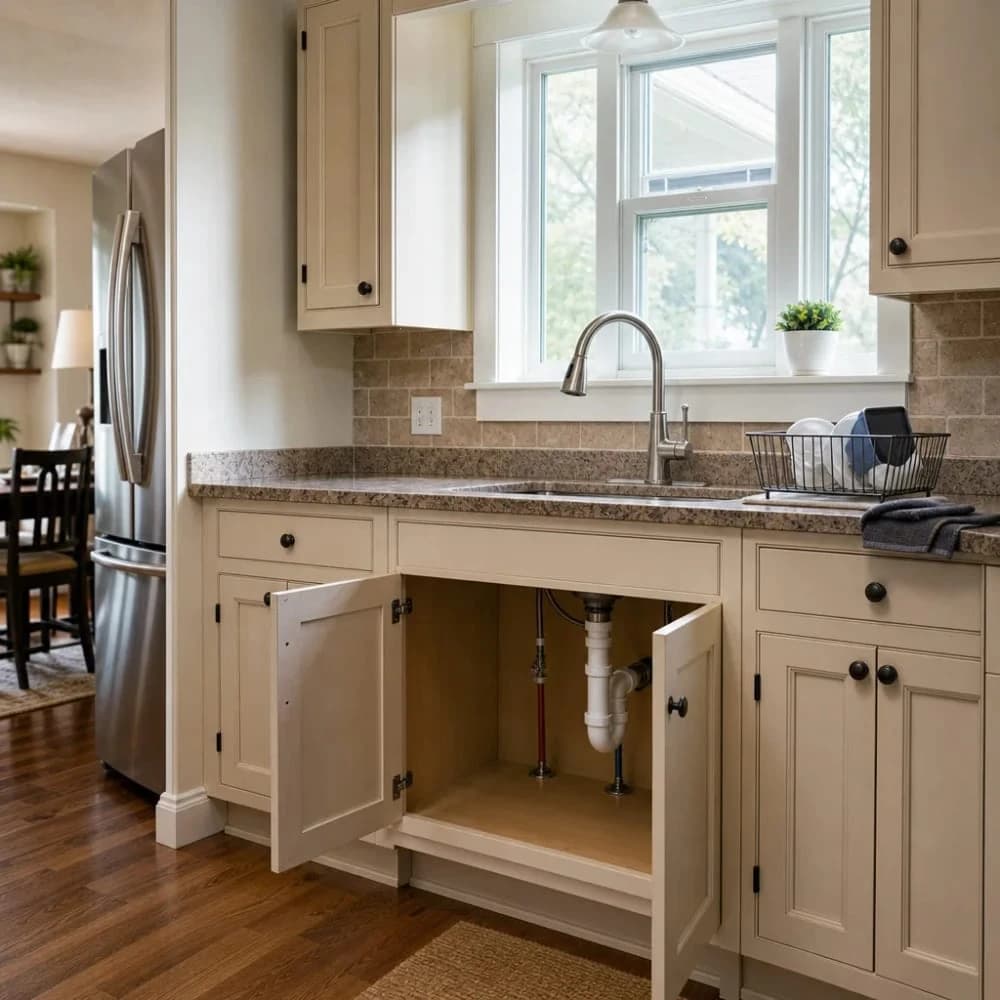
- Access. A tight crawl space or a buried cleanout takes more time.
- Extra tests. Hunting a hidden leak or testing a backflow device is separate from a basic walk-through.
- Commercial needs. Bigger water heaters, more fixtures, and annual backflow tests add time.
Some plumbers charge a flat fee, others bill by the hour; ask which before the visit. You should leave with a written list and what each repair would take, before any repair starts. Inspections are part of everyday work for a plumber in Evansville.
Common questions
- Can I do part of a plumbing inspection myself before calling someone?
- Yes. Check under sinks for damp spots, find and turn the main shutoff, watch the water meter with everything off, and look at the basement after heavy rain. A meter that moves with nothing running points to a leak, and EWSU says most leaks on the owner's side are the owner's to repair.
- Is a plumbing inspection the same as a home inspection when buying a house?
- No. A home inspection is a general look by a state-regulated inspector under Indiana law (IC 25-20.2), and it covers plumbing at a basic level. A plumbing inspection goes deeper into supply, drains, the water heater, and the sump. Neither one is a code compliance inspection.
- How often should a house get a plumbing inspection?
- There's no set schedule for a house. Backflow devices are the exception: Evansville and Indiana require them to be tested every year. Otherwise, inspect when buying or selling, before a remodel, after a house sits empty, or when two or three warning signs show up at once.
Where we do this work
This page is for plumbing inspection based out of Evansville, IN. We also work surrounding communities. City pages cover each market; as demand grows we can add service pages for specific cities without rebuilding this silo.
Related work
We also do this work for businesses across the area.
Commercial plumbingReady to Get Started?
Call (812) 677-8484 Now.