
Faucet repair in Evansville, IN
Faucet repair is the fix when your kitchen, bathroom or shower faucet keeps dripping after it's shut off, seeps water around the handle or base, or has a handle that's gone stiff or just spins. Evansville Plumbing Repair comes to your home, finds the worn cartridge, washer, seat or O-rings, and replaces them so the faucet seals again. We also check the shutoff valves and supply lines under the sink, since a leak in the cabinet often starts there.
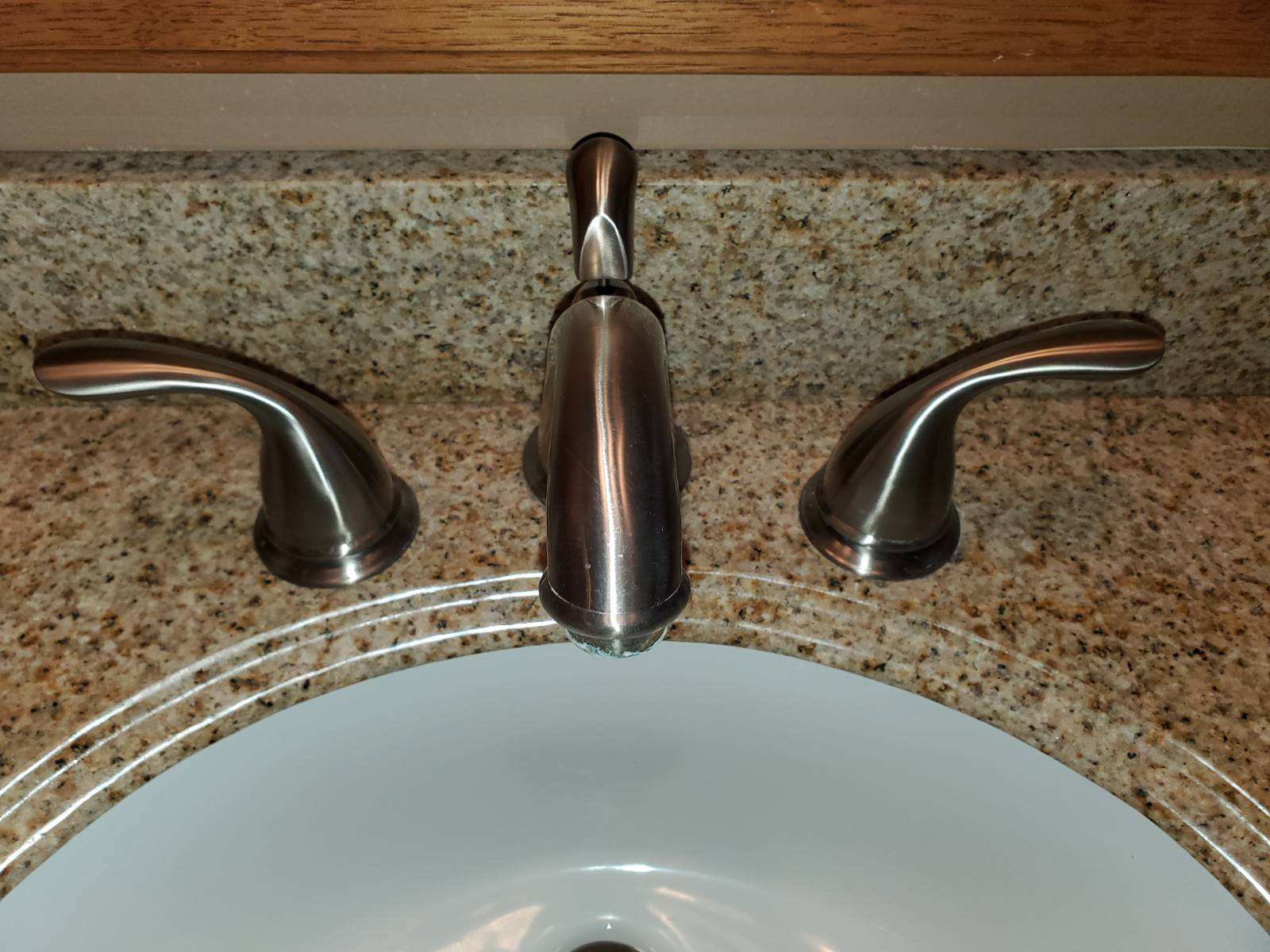
Leaky faucet or a leak under the sink? Find the source first
Look at where the water shows up. A drip at the spout means a worn part inside the faucet, while water in the cabinet or on the wall means a leak in the plumbing around it, and that leak comes first. Match what you see to the likely source:
- A leaky faucet that drips from the spout with the handle closed points to a worn washer, cartridge or valve seat.
- Water seeping around the handle or base comes from failed O-rings or stem packing.
- A shower head or tub spout that keeps dripping means the shower valve's cartridge or seals are worn.
- A handle that seizes, or spins without shutting anything off, has scale-locked or stripped parts on the stem.
- Water on the cabinet floor usually starts at a supply line, the nut on a shutoff valve or the valve stem itself, while a stain or soft drywall behind the sink points to a pipe inside the wall.
Water under a cabinet soaks particleboard and subfloor, and a leak inside the wall can run for weeks before it shows. Close the shutoff under the sink, or the main if that valve won't turn, as soon as you find standing water. We answer leak calls at any hour for homes across the Tri-State.
A spout drip costs you more slowly. One drip per second adds up to more than 3,000 gallons a year, enough to show on the water bill and stain the basin, but that water goes down the drain instead of into the floor.
When you phone us, describe what the faucet or sink is doing (a drip, a leak under the cabinet, a seized handle, or a faucet that needs to come out) and you'll be talking with the people who do the work, not a call center.
How faucet repair is done and how long it takes
A faucet repair means shutting off the water, opening the valve, replacing whatever seal or cartridge has worn out and testing for drips. A straightforward job takes under an hour once the water is off, and the method depends on the design, because ball, cartridge, compression and ceramic-disc faucets come apart differently in the kitchen, bathroom and shower alike. Two-handle compression faucets press a rubber washer onto a seat and drip more as the washer hardens. Cartridge faucets use a sleeve held in by a clip or nut, while ball faucets set a slotted ball on springs and rubber seats under one lever. A ceramic-disc faucet seals with two hard discs inside a wide cylinder and rarely drips unless a seal fails.
A careful pro works in the same order on every type:
- Close the shutoffs under the sink, or the stops for the shower valve, then open the faucet to drain the line.
- Plug the drain and pad the basin so screws, clips and springs can't fall in.
- Pry off the cap, remove the handle screw and lift the handle, photographing how each part sits.
- Unscrew the retaining nut or pull the clip, then draw out the stem, cartridge, ball or disc assembly.
- Replace worn O-rings, washers, springs and seats, or the whole cartridge, matching each new part to the old one.
- Scrub mineral crust off the body, seat and aerator.
- Coat O-rings and threads with silicone faucet grease and reassemble in reverse order, snug but not cranked down.
- Restore water slowly with the aerator off to flush grit, then run hot and cold and check the spout, handle and connections under the sink for drips.
Worn O-rings, cracked or hardened washers, a failing cartridge, a corroded valve seat and mineral crust that stops a seal from closing cause most faucet leaks.
Even a full faucet swap is normally a short visit when the shutoffs under the sink still close; a stuck valve or a whole sink replacement stretches the job, and we'll tell you which one you're facing when you call.
Some problems only show once the faucet is open. A seat pitted by corrosion won't hold a new washer until it is dressed smooth or replaced. A discontinued cartridge means ordering a part or moving to a new faucet. Fittings fused by corrosion can crack the body or twist the pipe if forced, so they get freed slowly or cut out, never muscled.
When a faucet is worth repairing and when to replace it
Fix the faucet while matching parts exist and the body has no cracks. Replace it when the body is cracked, the seat is too pitted to dress, the parts can't be found, or it starts leaking again soon after each repair. A good repair with matching parts should give years of service, so a faucet back to dripping within months is telling you the body is failing or something in the house is wearing it out. At that point faucet installation is a better use of money than another round of parts.
High supply pressure is one cause of repeat leaks: above 80 psi, every closing of the valve hammers the seals and wears them early. A gauge on an outdoor hose bib shows the number, and a pressure-reducing valve brings it down. Minerals are the other common culprit, since hard-water scale in Evansville homes crusts on cartridges, seats and aerators, stiffening handles and keeping seals from closing.
What changes the cost of faucet repair
What moves the cost of a hired repair is how much the faucet fights back, more than the faucet itself. These job details push the price one way or the other:
- A common cartridge or washer design keeps the cost down, while an older or proprietary brand takes longer to identify and raises it.
- Parts that supply houses keep on hand hold the job to one visit; a hard-to-find or discontinued cartridge adds ordering time and often a second trip.
- Seized shutoff valves add cost, because the main has to come off and the stop usually gets replaced before faucet work begins.
- A damaged seat or a cracked supply line adds parts and labor.
- Tight access raises the price: a sink crowded by a disposal and filter, or a shower valve behind tile with no access panel, takes longer to reach.
- A repair that turns into a replacement shifts most of the cost to the new faucet.
Faucets in restaurants, salons and office break rooms come apart the same way, but a leak that traces back into the building's supply lines turns the job into commercial piping work rather than a fixture repair.
Our quote for a faucet repair costs you nothing: no trip charge or diagnostic fee to come look, and no obligation to go ahead once you've heard the number and thought it over.
Frequently asked questions
- Why does a shower faucet keep leaking after it is turned off?
- A few drops right after shutoff are just water draining from the shower head and the pipe above the valve. A steady drip that lasts for hours means the valve isn't sealing: a worn cartridge in a single-handle valve, or worn washers and seats in a two- or three-handle valve. Scale on the cartridge speeds that wear. Many single-handle valves have built-in stops behind the trim plate, so the cartridge can be changed without shutting off water to the whole house.
- During a freeze, should you leave every faucet dripping or just one?
- Only the faucets fed by pipes at risk of freezing need to drip: those on exterior walls, over crawl spaces or in unheated rooms. A slow drip from the faucet farthest from where water enters the house keeps water moving through most of the line. On a single-lever faucet, set the handle to the middle so hot and cold both move. Open the cabinet doors under sinks on outside walls so house heat reaches the pipes.
Ready to Get Started?
Call (812) 677-8484 Now.