Cleanout installation in Evansville, IN
A sewer cleanout is a short riser with a threaded cap that gives a straight path into the main line, so the next clog is cleared from outside instead of through a bathroom. Cleanout installation usually comes up after a backup had to be cleared by pulling a toilet, when there's a cap in the yard no one can find, or when a rusted plug just won't turn.
Signs You Need Sewer Cleanout Installation
If nobody can find a cleanout near where the sewer line leaves the house, outside or low on a basement or crawl space wall, sewer cleanout installation is the likely fix. The other signs:
- The same backup keeps returning after the line is cleared, which can mean the cable isn't reaching the main from where it went in.
- The last clog meant pulling a toilet or going through a roof vent.
- The cleanout is buried, paved over, or boxed in behind a basement's finished wall, so it's as useless as none.
- Sewer gas smell near an outdoor cap, from a bad seal or a damaged riser.
- Sewer work is planned, and with the line already open, that's the simplest moment to add access.
In Evansville, the private sewer line belongs to the homeowner, who maintains it as far as the City's main, and EWSU says backups can start on either side. EWSU also requires a cleanout at the property line on new laterals so responsibility can be sorted out, and it does not pay to install one. When an existing line has roots, cracks, or a sag, the fix is the pipe itself: a sewer line replacement usually includes a new cleanout. A one-time clog that cleared cleanly may only need clearing the drain.
Sewer Cleanout Cap Broken or Missing? Repair Before Cleanout Installation
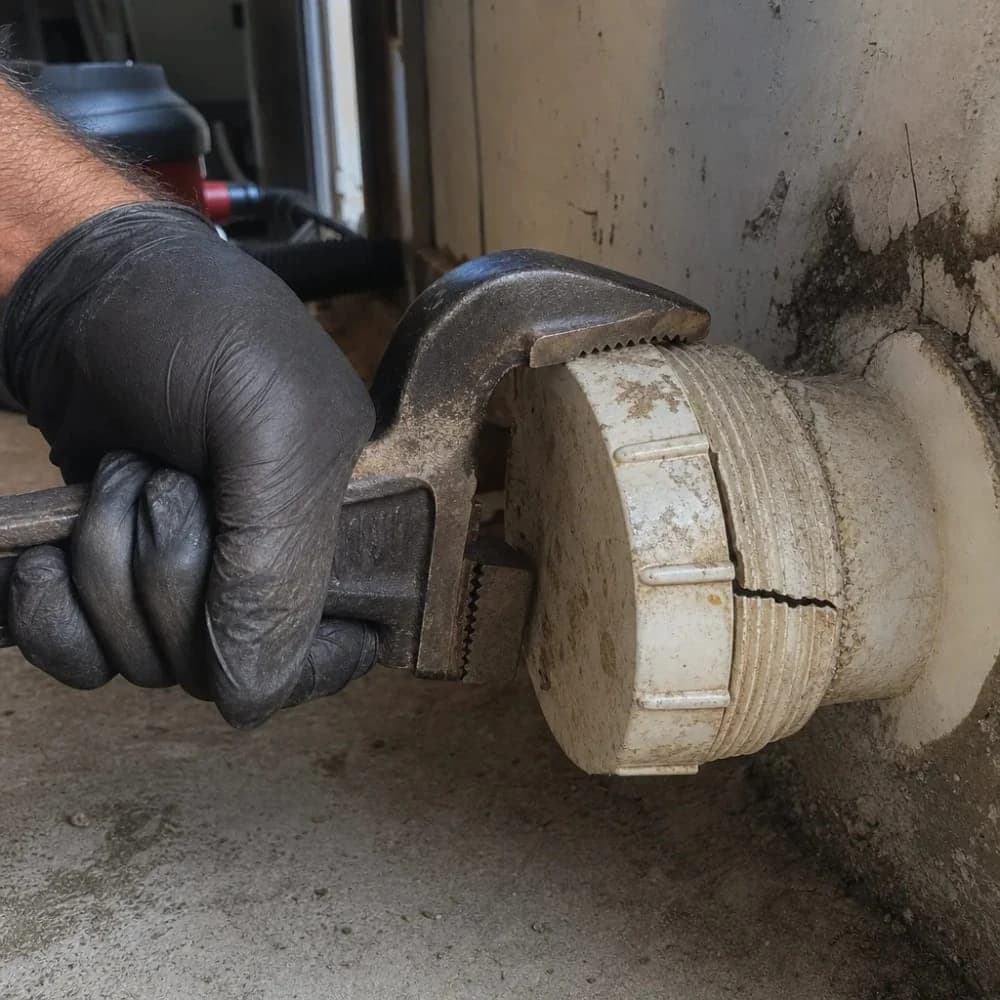
A cracked, missing, or seized sewer cleanout cap doesn't always mean cleanout installation. If the riser below the cap is sound, a new cap or plug is a cheap part, and some owners swap it themselves.
An open riser can let sewer gas out and let dirt, water, or animals in, so a missing cap is worth replacing right away. A metal plug rusted so tight it won't turn has to be cut out, and if the riser cracks while it's freed, that section is replaced.
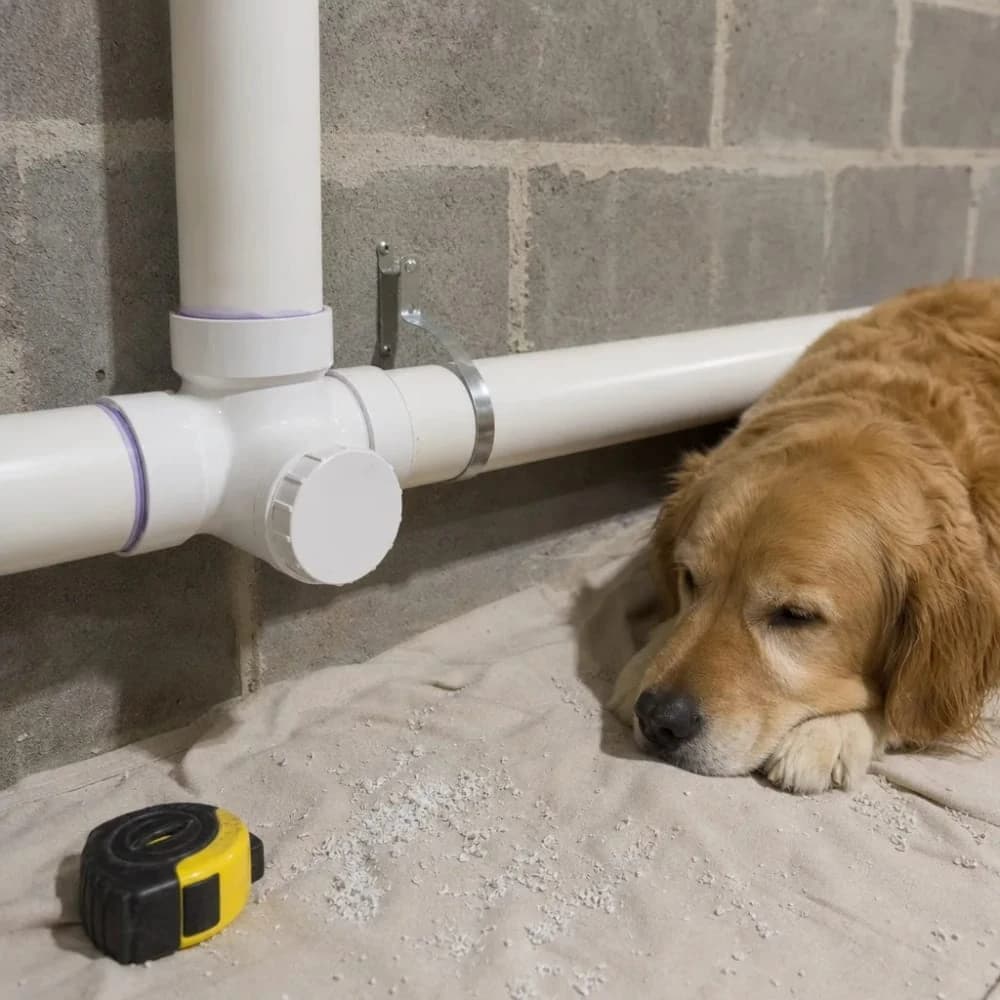
A new cleanout is the right call when the access point is gone, broken below the cap, or in the wrong place, such as aimed back at the house rather than toward the street. A two-way cleanout, which opens both toward the house and toward the main, lets a cable reach a clog on either side of it.
Sewer Cleanout Installation in Older Evansville Homes
Many older Evansville houses were plumbed with the only access inside, low on a basement wall, with nothing in the yard. Opening that during a backup sends the mess into the basement.
The code has filled in the gaps since. The 2012 Indiana Plumbing Code, which covers commercial and multi-unit buildings, calls for cleanouts no more than 100 feet apart on horizontal drains, one at the base of each stack, and one near the junction of the building drain and the sewer, where a two-way cleanout is allowed. Indiana deleted the exception that let a nearby stack cleanout stand in for that junction cleanout, so in Indiana buildings it's always required. Houses come under the 2020 Indiana Residential Code, yet the same placement is what makes a cleanout useful.
Cleanouts also get lost over time:
- A basement is finished and the cleanout ends up behind drywall.
- A porch, garage, or addition is built over the line.
- Regrading or a new patio buries the outdoor cap.
- Part of the line is repaired without adding access while the ground is open.
Older sewer pipe can be brittle, and fighting tight bends from a toilet or roof vent is harder on it than a straight shot from a cleanout. If you're not sure what's down there, a plumbing inspection can find the line and any existing access first.
Cleanout Installation, From Locating the Line to Inspection
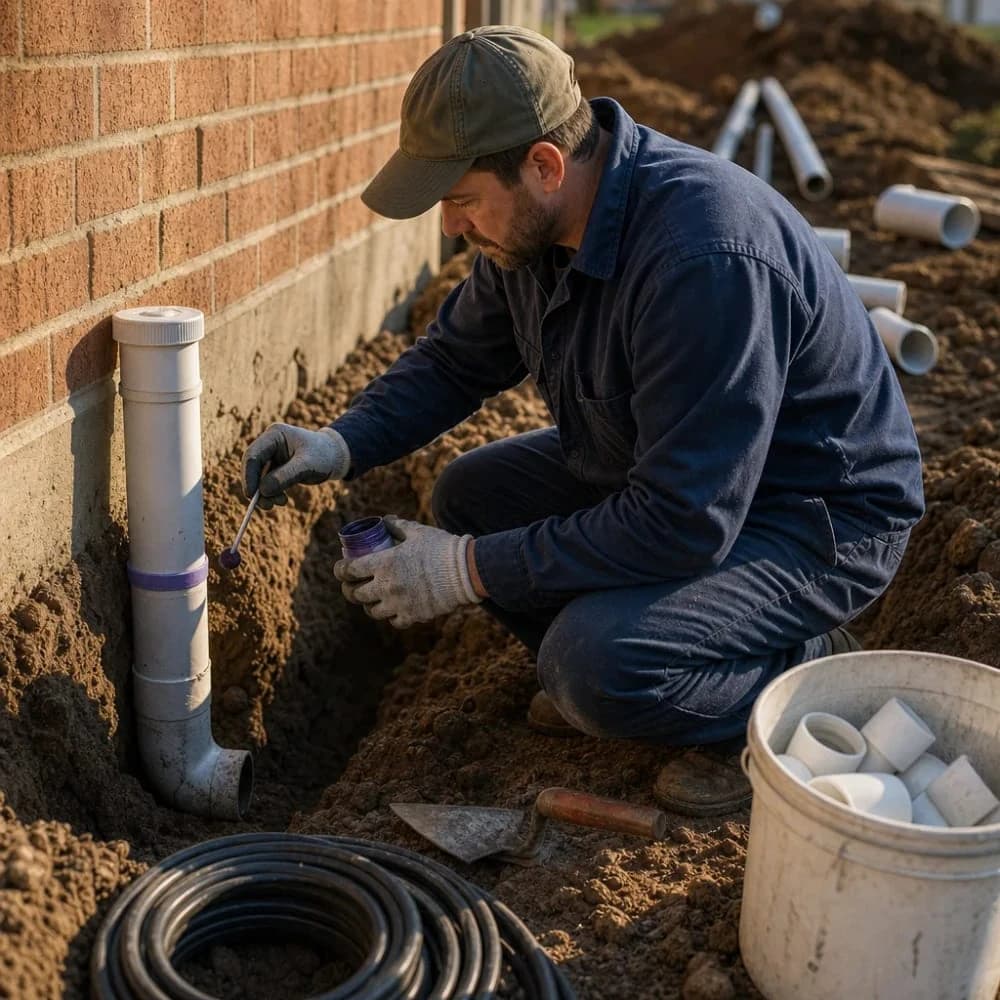
Cleanout installation is finding the line, opening it in the right spot, and adding a fitting and riser that point toward the main.
- Mark utilities. Indiana law requires a call to 811 at least two working days before digging, since gas, power, and water can share the sewer's path.
- Pick the spot, usually near where the line leaves the house.
- Dig to the pipe, cutting concrete first if needed. Indoors it can mean opening a slab or wall.
- Cut out a section and set a fitting angled toward the main, then a riser to grade topped by a threaded cap.
- Run water to check flow and the new joints, then backfill with the cap at ground level, not high enough for a mower to clip or low enough for grass to hide.
In Evansville, the Building Commission issues the plumbing permit, and that comes first; covered work needs an inspection before the trench is filled in, and sanitary sewer work has its own line in the fee schedule. Under EMC 13.05.170, opening into or connecting to a public sewer also needs a written permit from the Utility Department. While the line is open, hold off on flushing, showers, and laundry. Of all the pieces of plumbing in Evansville, a cleanout is one that pays off at the next backup.
Common questions
- Will I need a permit to add a cleanout?
- Plan on it. Evansville requires a plumbing permit from the Building Commission before the work starts, and an inspector has to see the open trench before anyone covers it. Work that opens into or connects to the public sewer also needs a written Utility Department permit under EMC 13.05.170.
- Can I keep using water in my house during the installation?
- No. While the sewer pipe is cut open for the fitting and riser, hold off on flushing, showers, and laundry. A business should plan the work for slow hours or after closing, and the 811 marking two working days ahead sets the earliest start.
- What's the difference between a one-way and two-way cleanout?
- A two-way cleanout opens toward the house and toward the main, so a cable can reach a clog on either side of it. A one-way cleanout only opens toward the main. The 2012 Indiana Plumbing Code allows a two-way cleanout at the junction of the building drain and the sewer, which is where it does the most good.
Where we do this work
This page is for cleanout installation based out of Evansville, IN. We also work surrounding communities. City pages cover each market; as demand grows we can add service pages for specific cities without rebuilding this silo.
Related work
We also do this work for businesses across the area.
Commercial plumbingReady to Get Started?
Call (812) 677-8484 Now.