
Plumbing leak detection in Evansville, IN
Plumbing leak detection finds where water is escaping out of sight, so the repair happens through one opening instead of a row of holes. The clues are a bill that jumped with no change in use, water you can hear running with every tap off, a floor that's warm in a spot, or a ceiling stain that keeps spreading. EWSU puts most owner-side leaks, including underground service pipe, crawl-space, and under-slab leaks, on the owner or tenant to repair.
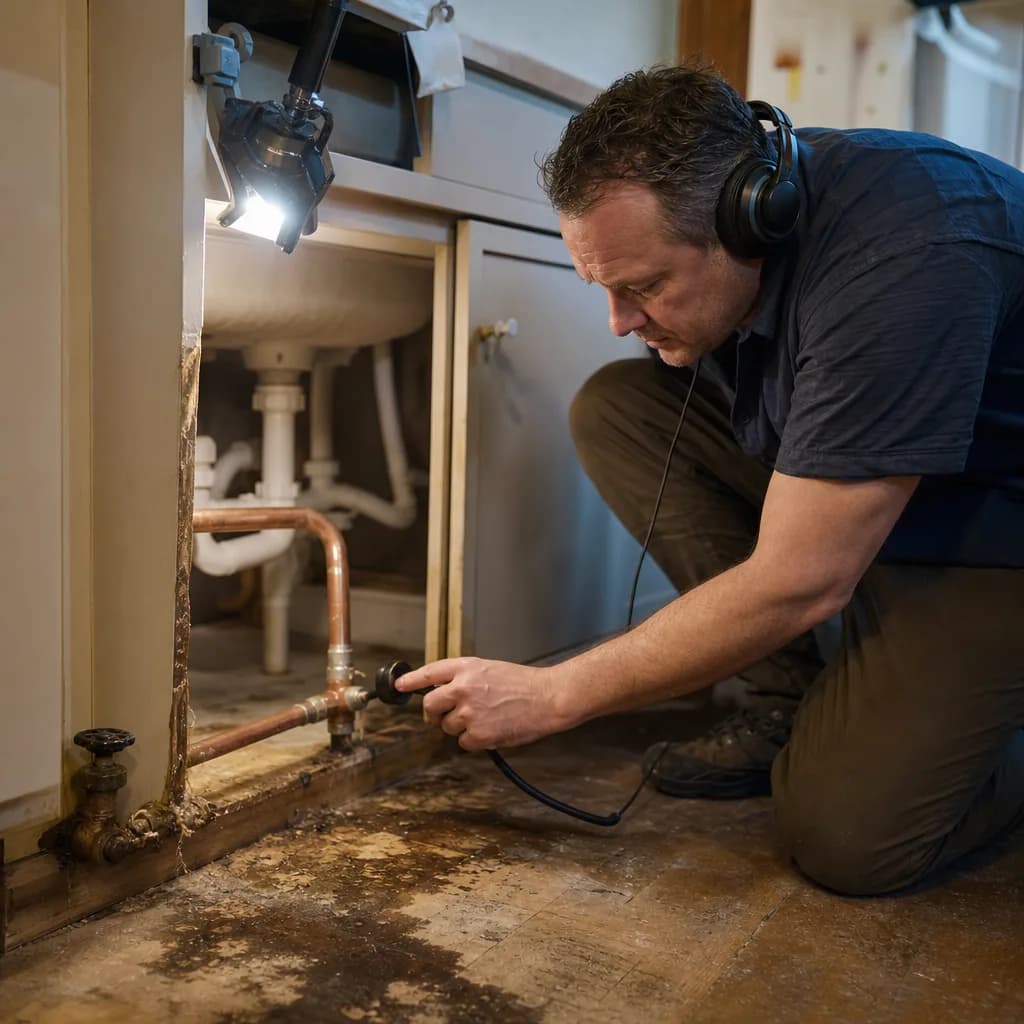
Water Leak Detection Starts With the Signs of a Hidden Leak
Water leak detection starts with what the water does, because most hidden leaks run inside a wall, under a slab, or in the service line in the yard.
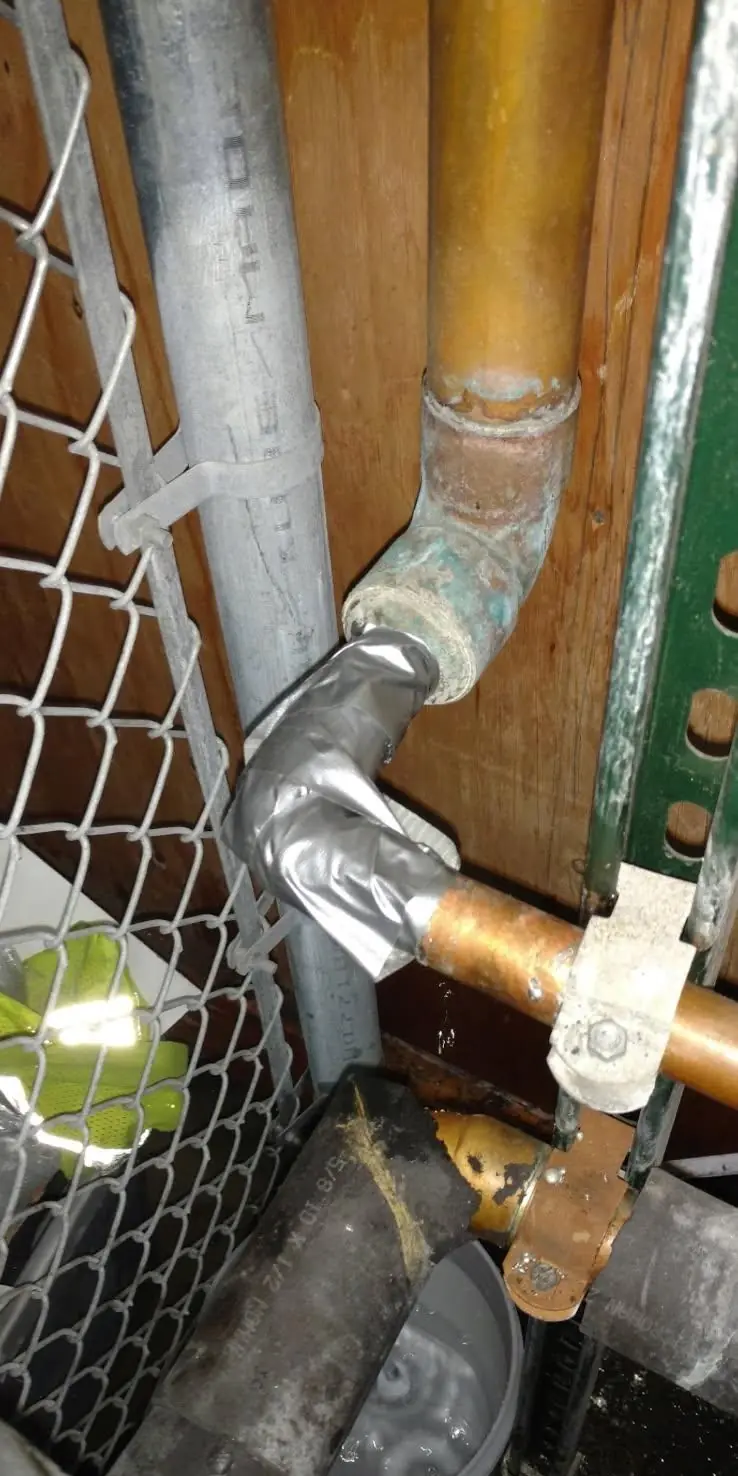
- A higher bill with no change in use. For comparison, EWSU pegs typical household use at about 5,000 gallons a month.
- Water running with every fixture shut, often easiest to hear at night near walls, sinks, or the water heater.
- A warm floor spot, which can mean a hot line leaking under a slab.
- Bubbling paint, soft drywall, or a stain that grows after a dry week.
- A musty smell, cupping wood floors, or loose tile near a tub.
- A soggy strip of yard on the path of the service line.
Rule out the toilet first. EWSU's tip: add food coloring to the tank, wait 15 to 20 minutes with no flushing, and if color shows up in the bowl, the flapper is worn. EPA's WaterSense program describes a two-hour test with no water in use, comparing a meter reading before and after. Leave an outdoor meter pit closed, too: EWSU's manual says only EWSU representatives may access or operate the meter. EWSU customer service is 812-436-7846 for questions about the meter.
Leak Detection in Older Evansville Houses
Leak detection takes more care in older houses, and Evansville has plenty: the Census Bureau's 2024 five-year estimates count 59,180 housing units in Evansville, about 49% of them built before 1960, with a median build year of 1961.
- Plaster over wood lath soaks up water like a sponge, so a stain may show only after the wall is saturated.
- Galvanized steel corrodes from the inside and often fails at threaded joints as a pinhole spraying into the wall.
- A past repair that joined copper to steel without the right fitting can corrode at the joint, often behind newer drywall.
- Water runs along joists and pipes before it drips, so a hallway stain may come from a bathroom two rooms away.
- Remodels leave old pipe behind new walls, so the leaking line may not be where today's room suggests.
Plaster, original wood floors, and old tile are hard to patch or match, so every wrong opening costs more in an older house. A slow leak keeps running too; by EWSU's count, a faucet leaking once every 3 seconds adds up to 86 gallons a month, and a hidden supply leak can run well past that.
How Water Leak Detection Works Without Tearing Up Walls
Water leak detection narrows a whole building down to one spot on one pipe, and the cutting comes last.
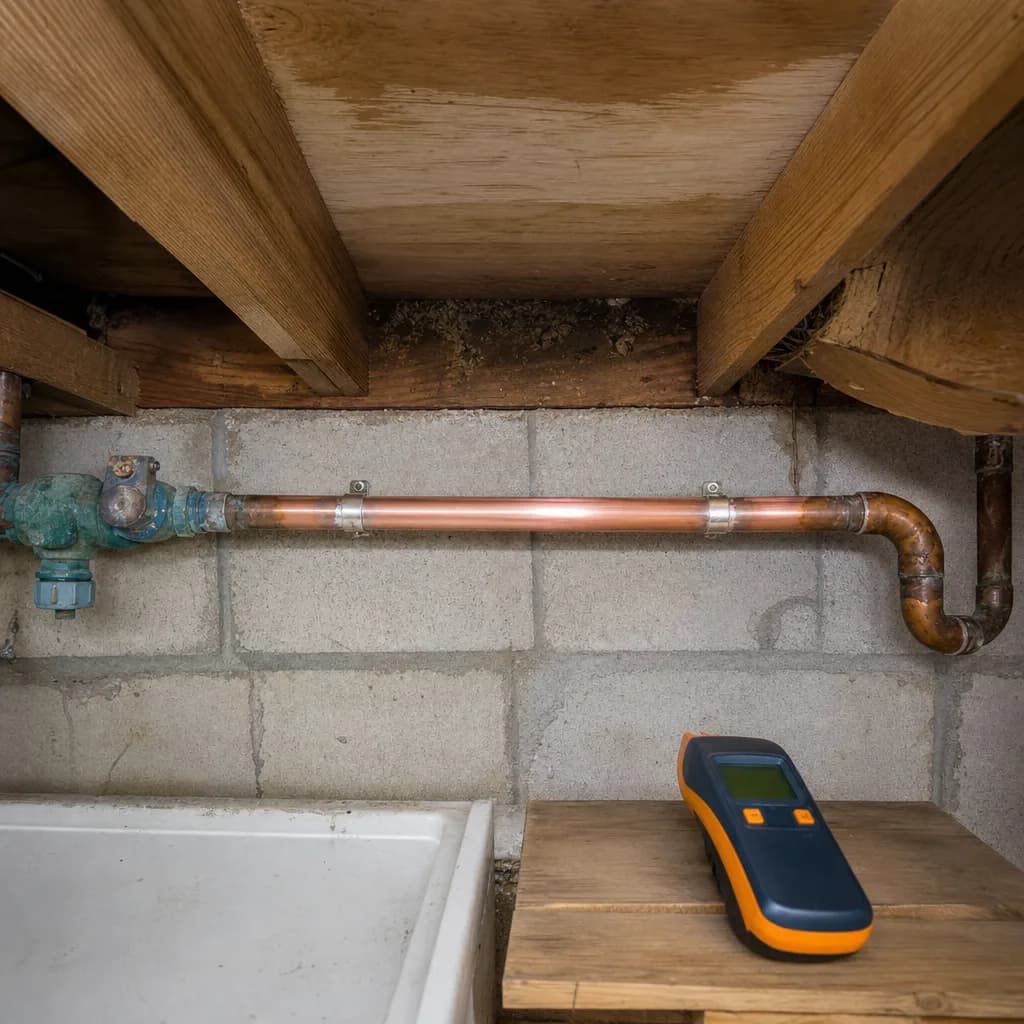
The first step splits the system: hot side or cold side, yard line or house piping, pressurized supply or drain. Closing valves one at a time while watching for the loss to stop points to the leaking part. From there, acoustic listening gear picks up the hiss of water forced through a crack and follows it through a slab, wall, or soil. Moisture meters map how wet drywall, plaster, or wood is across a wall. An isolated pressure test closes off one section, pressurizes it, and watches for a drop, which matters most under slabs and on buried lines.
No single method does everything, so two or three together get past a best guess. Once the spot is marked, the size of the opening and the repair are known before work starts. Fixing the pinpointed spot goes to leak repair, and a corroded or split section to pipe repair.
Leak Detection Cost and the Repair That Follows
Leak detection cost and repair cost are separate numbers. There's no trip fee to come find the leak, and the spot is marked and the repair quoted before any wall is opened.
- Location. Under a sink, it's easy; inside a wall costs more; under a slab or out in the yard more still.
- What comes out. Drywall opens and patches fast. Plaster, tile, and old wood floors take more time.
- The pipe. A pinhole in copper is small. Corroded galvanized may need a longer section replaced.
- More than one leak. Aging pipe doesn't always fail in one spot.
- Water damage. Soaked subfloor, rotted framing, or mold adds work.
For yard leaks, EWSU's ownership line decides who pays. From the house out to the stop valve EWSU keeps near the property line, the service line is the owner's, and so is any outside meter pit; EWSU owns the meter and the pipe running back to the main. EWSU may adjust the bill after a plumber repairs a leak, but the form is due no later than 90 days after the first high bill, and each meter gets one adjustment a year. If water is spreading too fast to contain, it needs emergency plumbing repair.
When You Don't Need Plumbing Leak Detection
Plumbing leak detection is for water you can't see. A visible leak already shows where it is.
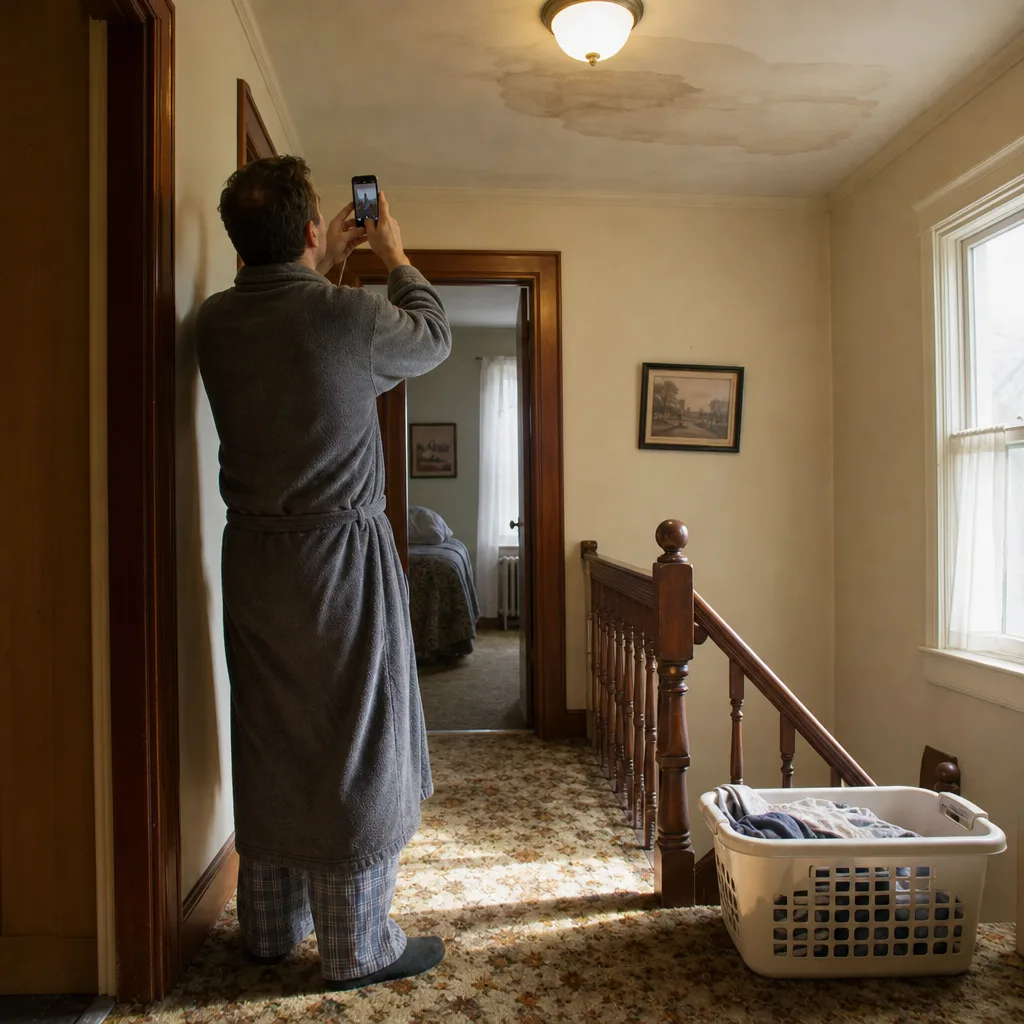
A faucet dripping from the spout, a soaked cabinet floor below the supply lines or trap, a puddle by the water heater, water behind the washer or fridge, a dripping hose spigot, or a toilet whose dye test failed all point straight to the part. Cold pipes sweating in humid weather bead up along their whole length rather than at one joint. A stain that appears only after hard rain points to the roof, a window, or flashing. A single old stain that's dry and hasn't grown can be pencil-marked and watched for a few weeks. A higher bill after watering a new lawn or filling a pool may be just that. Hidden leaks come up all the time in plumbing service in Evansville.
Common questions
- What are the main types of leak detection methods plumbers use?
- Acoustic listening devices, moisture meters, isolated pressure tests, and valve-by-valve isolation are the core methods. They're used together; one narrows the area and another confirms the spot. EWSU's 15-to-20-minute dye test rules the toilet in or out before any of that.
- How do you know where a hidden leak is coming from?
- By splitting the plumbing into sections and testing each one, not by guessing from the stain. Water travels along joists and pipes, so in a house built around 1961, Evansville's median year, the stain and the leak can be rooms apart.
- Does a bigger water bill always mean I have a leak?
- Not always. Lawn watering, a filled pool, or houseguests can raise use. Compare the bill to EWSU's typical figure of about 5,000 gallons a month and to your own past bills. If use stays high with nothing changed, have the leak found, and file EWSU's adjustment form within 90 days once it's repaired.
Where we do this work
This page is for plumbing leak detection based out of Evansville, IN. We also work surrounding communities. City pages cover each market; as demand grows we can add service pages for specific cities without rebuilding this silo.
Related work
We also do this work for businesses across the area.
Commercial plumbingReady to Get Started?
Call (812) 677-8484 Now.