
Plumbing pipe repair in Evansville, IN
The Census Bureau puts the median Evansville home's build year at 1961, so plumbing pipe repair here starts with a real question: is the problem one short section, or a sign that a whole run is wearing out? Most repairs follow the same path: find the leak, replace the bad piece, and prove the fix holds under pressure. Typical first signs are a pinhole spraying inside a cabinet, a fitting that split during a cold snap, a ceiling ring that keeps growing, or rusty water from the cold tap.
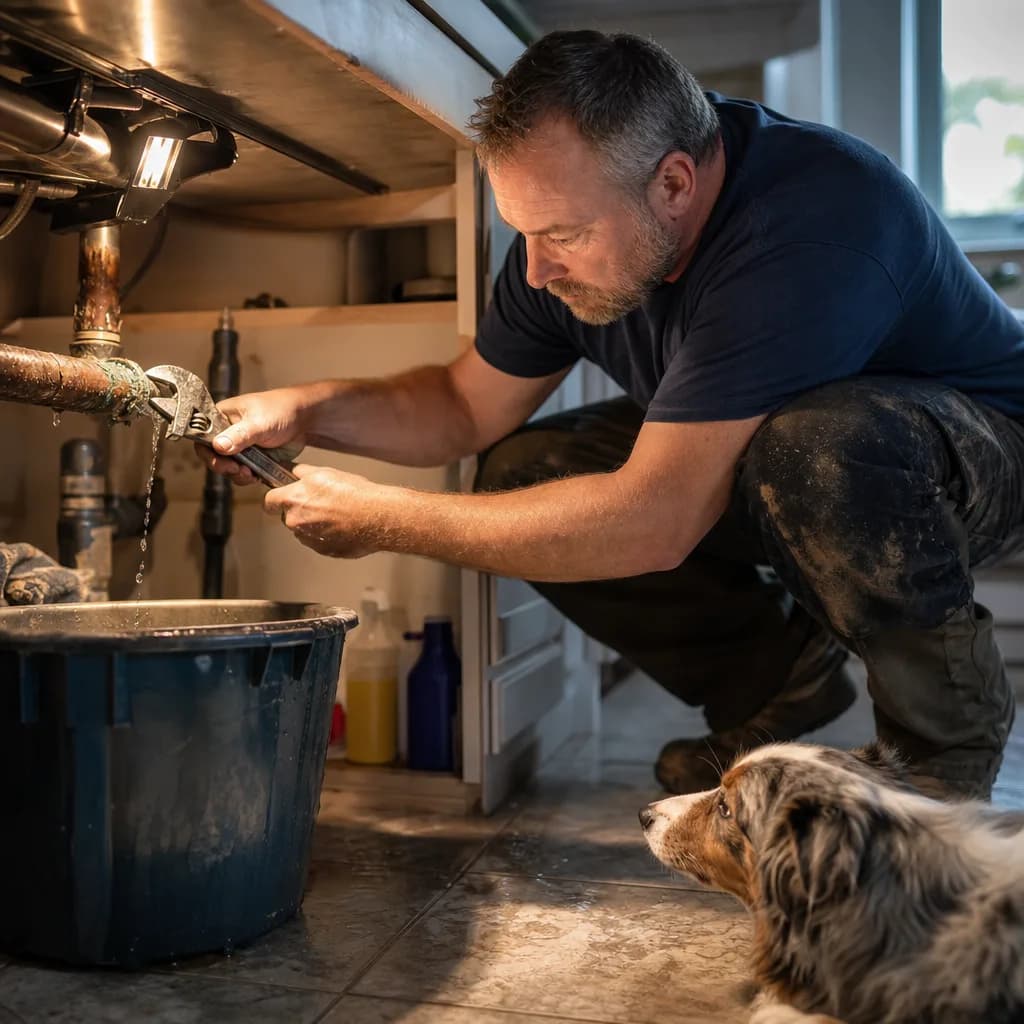
Pipe Repair Signs: Pinholes, Stains, and Rusty Water
Pipe repair is needed when water is getting out, the water looks wrong, or the problem keeps growing.
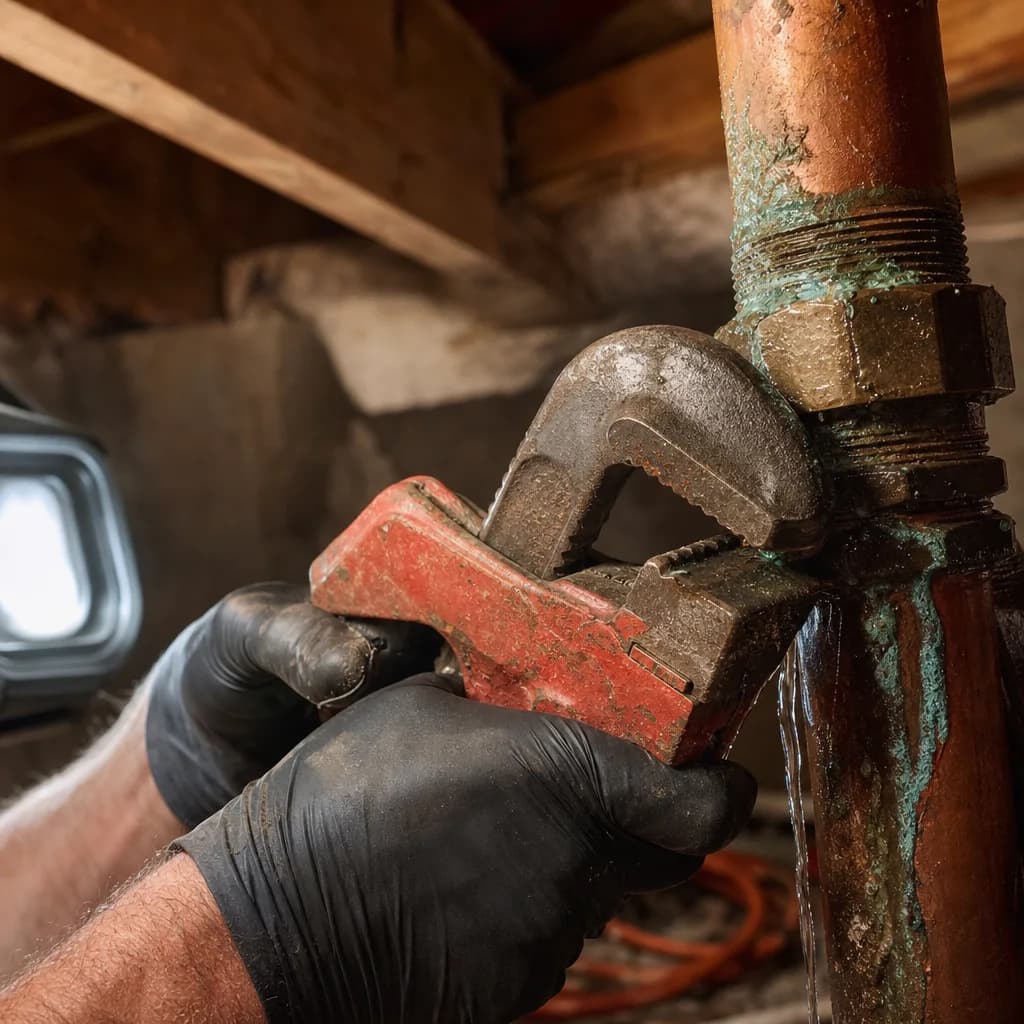
- A wet spot that keeps coming back under a sink, along a wall, or by the water heater.
- A stain that's soft or getting bigger.
- Hissing when every fixture is off.
- Brown or cloudy water from the cold side.
- Crusty green or white buildup on fittings, or pipe that looks pitted or flaky.
Some look-alikes aren't pipe failures. Sweat on a cold pipe in humid weather dries when the weather changes. Rust only on the hot side is usually the water heater. A basement that's damp after heavy rain is usually groundwater. When pressure is weak at one faucet, the aerator is often clogged. The most common cause of a jumping bill is a running toilet; EWSU's test is food coloring in the tank and a 15-to-20-minute wait without flushing.
Pipe material matters. Galvanized steel rusts out from within and gives way at threaded joints. Under Indiana's pipe-identification guidance, a magnet sticks to galvanized steel but won't stick to copper, brass, or lead. Gray plastic polybutylene went into many homes from 1978 to 1995, was the subject of a national class action, and is known to fail at its connectors.
Burst Pipe Repair After a Freeze
Burst pipe repair is a winter job in Evansville. Evansville Regional Airport averages 90.4 freezing nights a year (32°F or below) in NOAA's 1991–2020 normals, and EWSU's cold-weather warning covers homes where the basement is unheated and slab homes that have crawl spaces: in extreme cold, their lines can freeze and even burst. A frozen pipe can split and stay sealed by ice; nothing leaks until it thaws, and then water pours out, sometimes inside a wall.
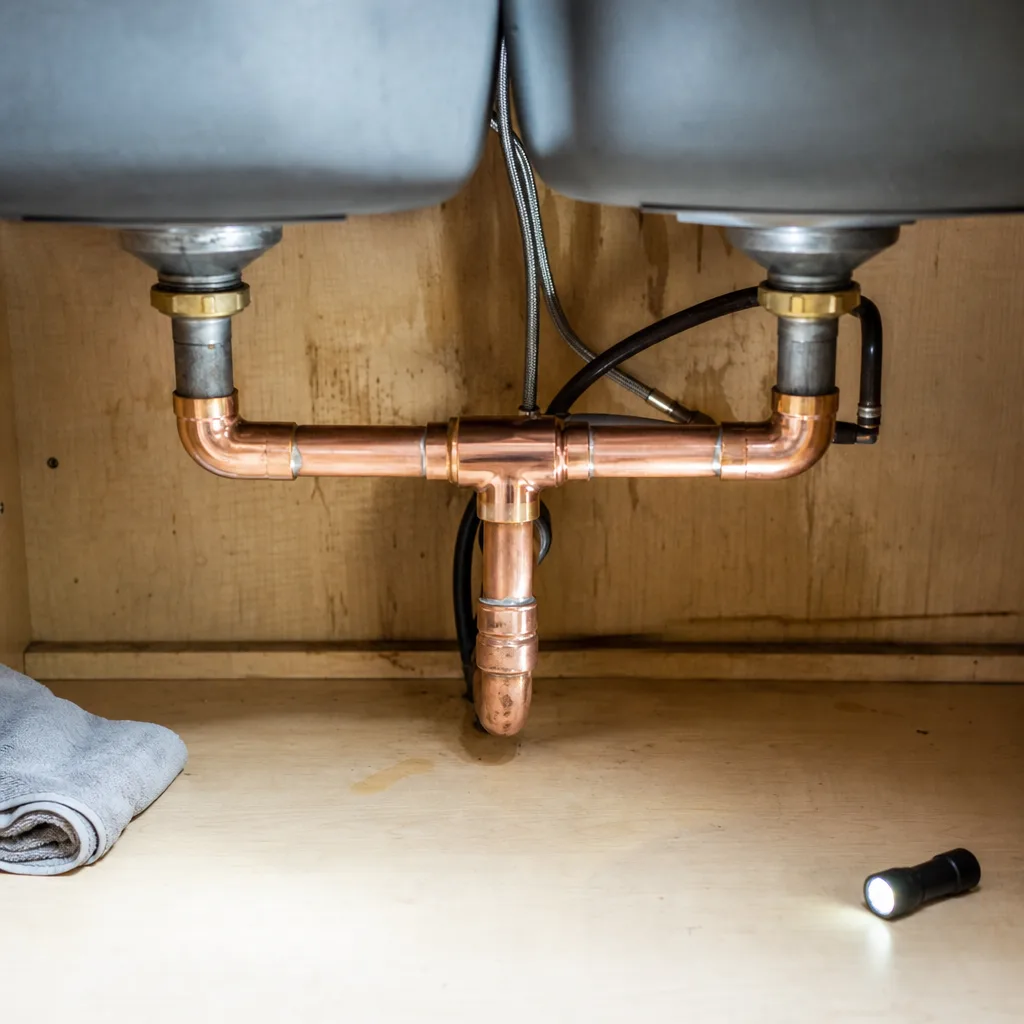
It's urgent if water is spraying or running steadily, a ceiling sags or drips from more than one spot, water pools faster than you can wipe it up, or a loud pop in a wall is followed by running water. Shut the nearest fixture valve; if that fails, the main shutoff. If water is coming through a light, an outlet, or a ceiling with wiring, stay clear: don't stand in water near anything electric. A pipe still spraying with the fixture valve shut needs (812) 677-8484.
Past EWSU's stop valve, freeze damage is on the owner under the utility's manual, so a burst within the house is a private repair. Indiana's plumbing code for commercial and multi-unit buildings bars water lines in attics, crawl spaces, or other freezing spaces unless they're protected; houses fall under the 2020 Indiana Residential Code, but the same logic is why a repaired line in a cold spot may get rerouted or insulated rather than simply patched.
How Plumbing Pipe Repair Is Done: Spot Fix, Section, or Repipe
Plumbing pipe repair starts by finding the leak, because water travels before it shows up. When the spot isn't obvious, plumbing leak detection comes first, before a wall gets opened.
- Spot repair. A single pinhole or crack gets the bad section cut out and new pipe fitted in with proper couplings. When only the fitting failed, leak repair is often enough.
- Section replacement. A corroded run, or copper joined to galvanized steel without a dielectric fitting, is replaced back to sound pipe.
- Reroute. Pipe in a freezing spot or buried in a slab can be rerouted. Indiana's amended commercial code says pipe may not be embedded in concrete or masonry directly, so new work under a house slab usually follows suit with a sleeve or a new path.
- Repipe. When leaks keep appearing in different places on galvanized pipe, the system is wearing out, and a whole-home repipe is the fix that lasts.
Once the new pipe is in, the water goes back on and each joint gets checked under full pressure. Indiana's commercial code, section 312.5, tests water piping at working pressure for 15 minutes; on a house repair, the practical test is the same idea: dry joints under pressure and a meter that stays still with everything off. A yard leak past EWSU's stop valve, on the owner's line, means digging instead of opening a wall.
What Plumbing Pipe Repair Costs Depend On
Nobody can pin down plumbing pipe repair cost before finding the leak and seeing the surrounding pipe.
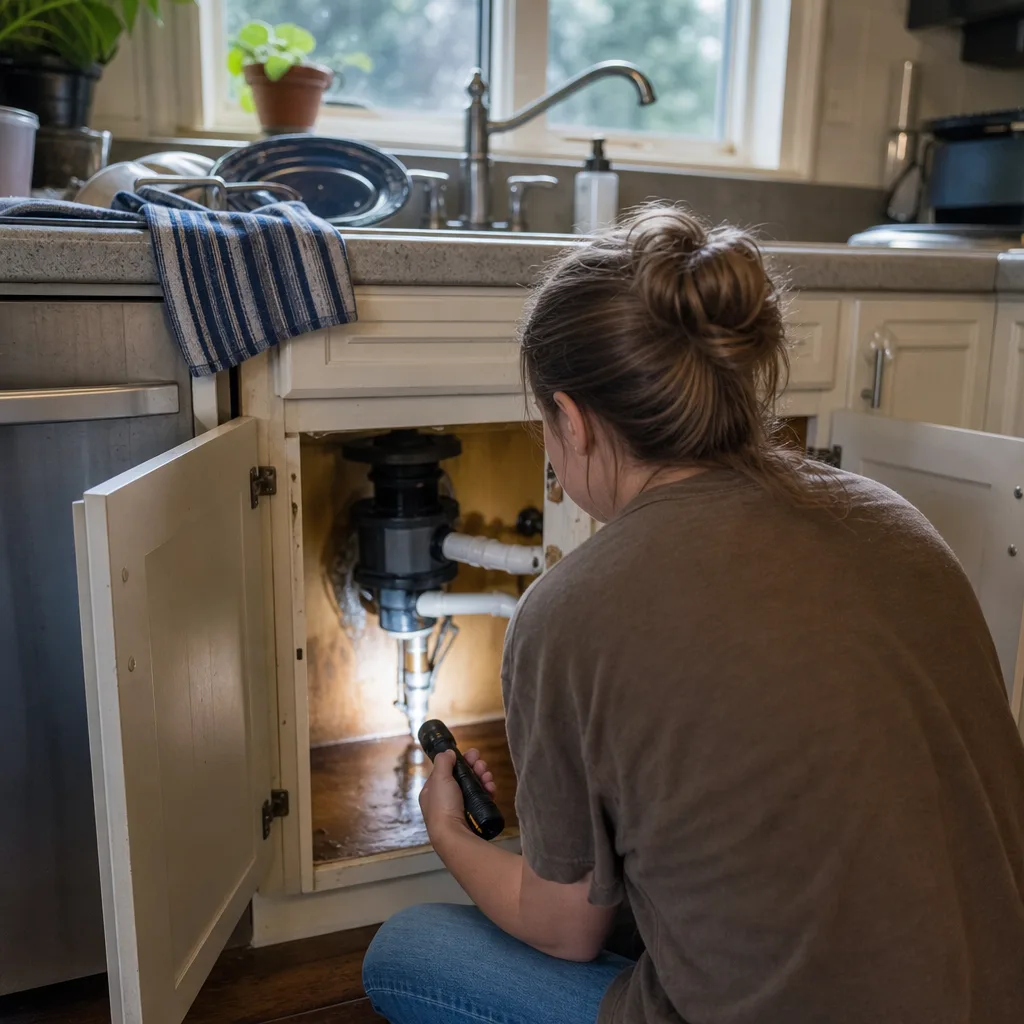
- Access. A pipe under a sink or exposed in a basement is quick; one behind tile, above a finished ceiling, or under a slab takes more opening and closing.
- How much is bad. One pinhole is short; a corroded run or several leaks means a longer section or a repipe.
- Location. An underground line means digging.
- Material. Galvanized, or polybutylene from the 1978–1995 era, tied into newer pipe needs transition fittings.
- Water damage. Soaked framing, insulation, or flooring can run more than the pipe.
You get a free estimate once the leak is found, priced on the pipe that's actually wet. Ask what happens if more turns up once drywall is off; the answer should be a stop and a conversation, not a bigger bill. Photograph damage before anything is torn out if insurance is involved. If a leak ran up the water bill, EWSU may adjust it after a plumber's repair provided the form is filed within 90 days after the high bill first appears. Fixing pipe is a daily job for plumbing in Evansville.
Common questions
- Can you repair just one section of pipe, or do you have to replace the whole line?
- A single pinhole or crack usually needs only a spot repair. If the surrounding pipe is corroded galvanized, which a magnet will stick to under Indiana's IFA pipe-identification guidance, patching one spot can push the leak down the line, and a longer section or a repipe makes more sense.
- Will you have to cut open my walls or ceiling to fix a pipe?
- Sometimes, but the opening starts small. A crawl space or basement check, or a small drywall opening, confirms the spot first. Under a slab, rerouting often beats breaking the floor; Indiana's commercial plumbing code (section 305.3) doesn't allow pipe embedded directly in concrete, and that's sound practice in a house too.
- How long will my water be shut off during a pipe repair?
- A spot repair under a sink is short. A burst line behind drywall, or a yard leak on the owner's end of EWSU's stop valve, takes more time since the pipe has to be reached first. Ask for the shutoff window up front, especially at a business.
- What if you find more damage once the wall is already open?
- Work should stop for a conversation before anything extra is done. Corroded pipe or soaked framing can show up once drywall comes off, especially in houses with galvanized lines or polybutylene from the 1978–1995 era.
Where we do this work
This page is for plumbing pipe repair based out of Evansville, IN. We also work surrounding communities. City pages cover each market; as demand grows we can add service pages for specific cities without rebuilding this silo.
Related work
We also do this work for businesses across the area.
Commercial plumbingReady to Get Started?
Call (812) 677-8484 Now.