
Whole-home repipe in Evansville, IN
A whole-home repipe replaces the supply piping from the main out to every fixture, so the patches stop. Leaks that keep turning up in new places, rusty water from both taps at every sink, or weak pressure house-wide usually mean the supply pipe is wearing out as a system. One bad section with sound pipe around it is still a case for pipe repair instead of opening every wall.
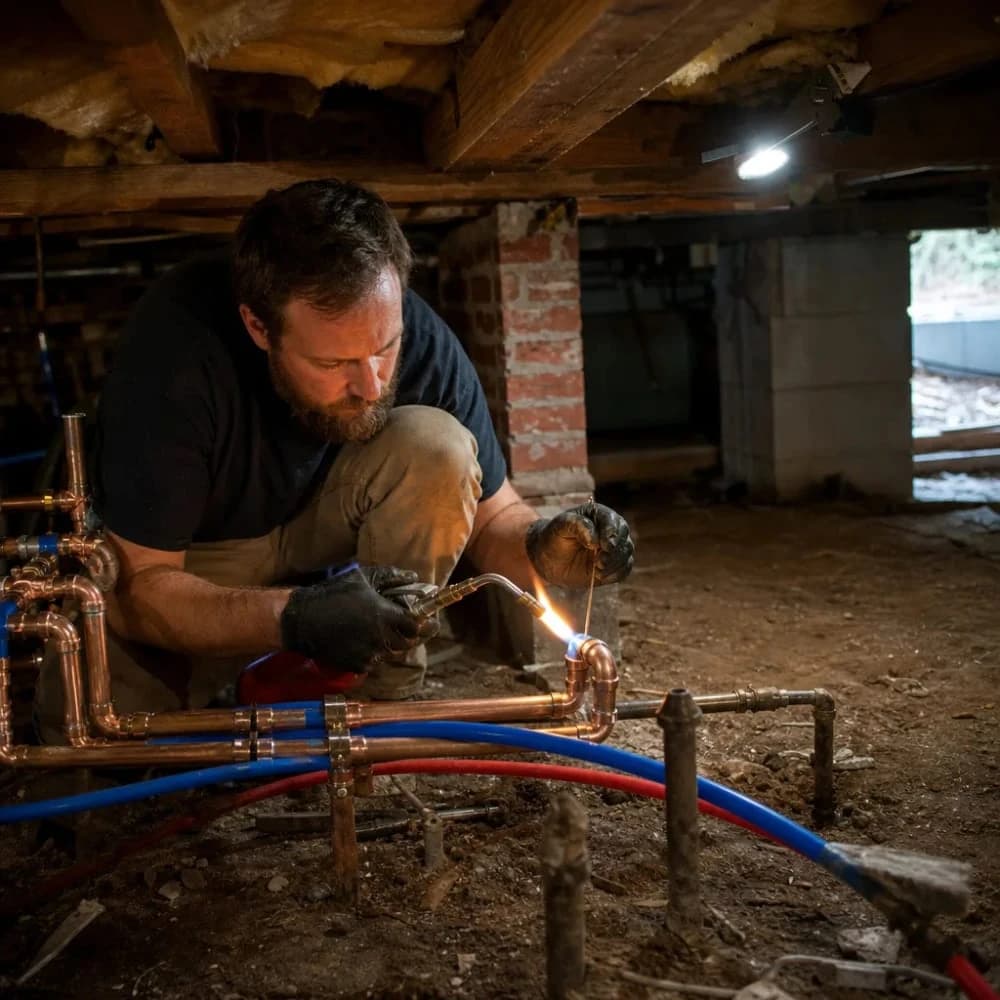
Whole House Repiping or Spot Repair?
Whole house repiping earns its keep when the pattern is the problem: is this the first leak or the third?
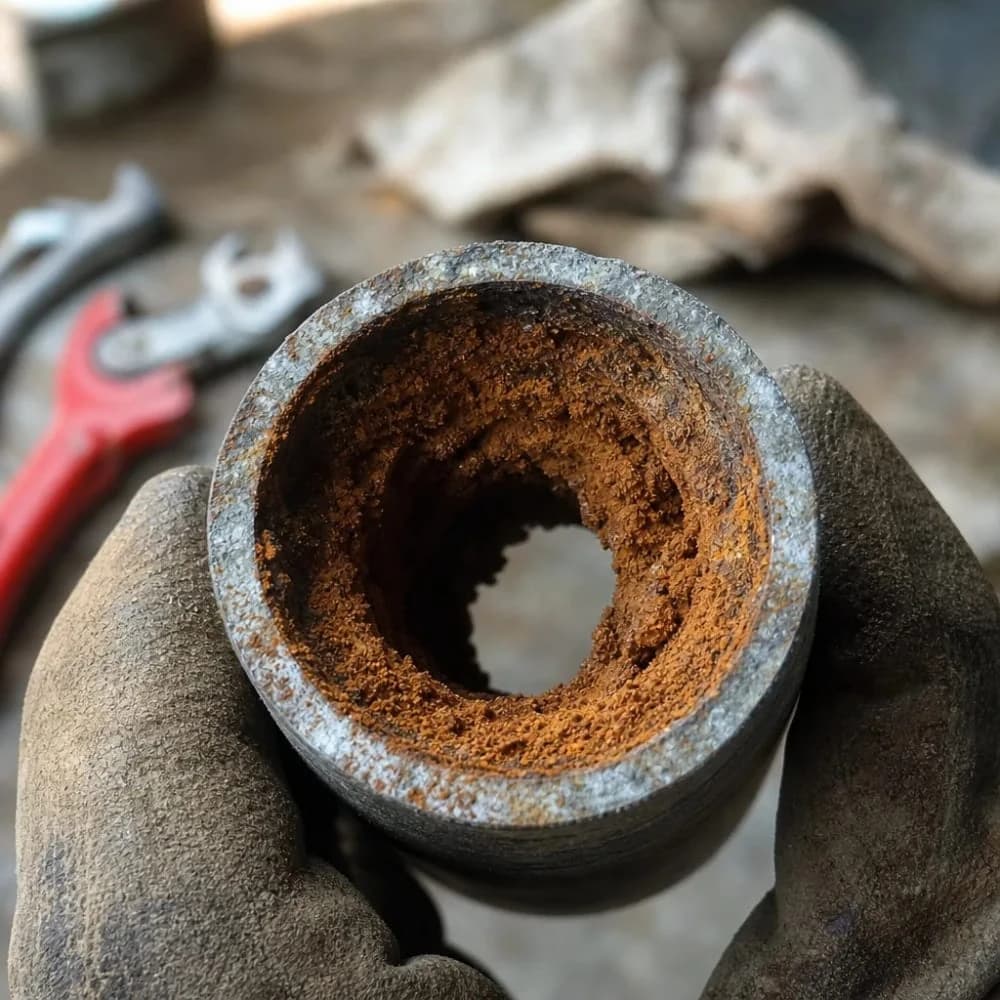
- Leaks in different places, failing on their own.
- Pinholes or green crust on copper, often with more close behind.
- Brown water from hot and cold at more than one tap; if it's hot only, the water heater is usually the source.
- Weak pressure at every fixture from steel pipe choked with rust inside.
- Gray, dull pipe with threaded joints, which is galvanized steel and rusts from the inside out.
- Gray plastic pipe stamped PB, which is polybutylene, installed in many homes between 1978 and 1995 and described by HUD as having connectors and pipe that are known to fail.
To check the pipe where the main enters, scratch it lightly with a key and hold a magnet to it. Copper shows a penny color and a magnet won't stick to it. Galvanized steel will attract a magnet; Indiana Finance Authority's pipe-identification guidance says scratched galvanized can look shiny silver, much like lead. A dull or silver pipe that does not attract a magnet may be lead, and EWSU says lead may remain in service lines and indoor plumbing of homes built before 1987. Have that one checked before anything else.
When You Don't Need a Whole-Home Repipe
A whole-home repipe isn't the fix for one pipe that froze and split, a nail through a line, or one failed fitting. Leaks that keep coming back where the pipe looks clean point to pressure first; the pressure regulator may be letting too much through. A soggy strip in the yard or a bill jump with no leak inside points to the service line, which is the owner's responsibility up to EWSU's stop valve; that's water line service, not the pipes in the walls.
Rust in the hot water only is a water heater sign. A drip at a supply hose or a fixture stop is fixture work. A house that was updated in pieces may need only one old run replaced. White crust on faucets is scale; EWSU's 2025 hardness average was 138 ppm, hard by USGS's scale, and that wears fixtures without meaning the pipes are failing. Old pipe that delivers clear water at good pressure with no leaks can stay. If a remodel is coming within the year, lining up the repipe with open walls saves patching.
Repiping Materials and How the Work Goes
Repiping usually uses PEX or copper. PEX is flexible and can often be fished through walls with fewer openings; copper is rigid and takes more access. Under the Safe Drinking Water Act, "lead free" now caps lead at a 0.25% weighted average across wetted surfaces, stricter than the 8% allowed in Indiana's adopted 2006 code text.
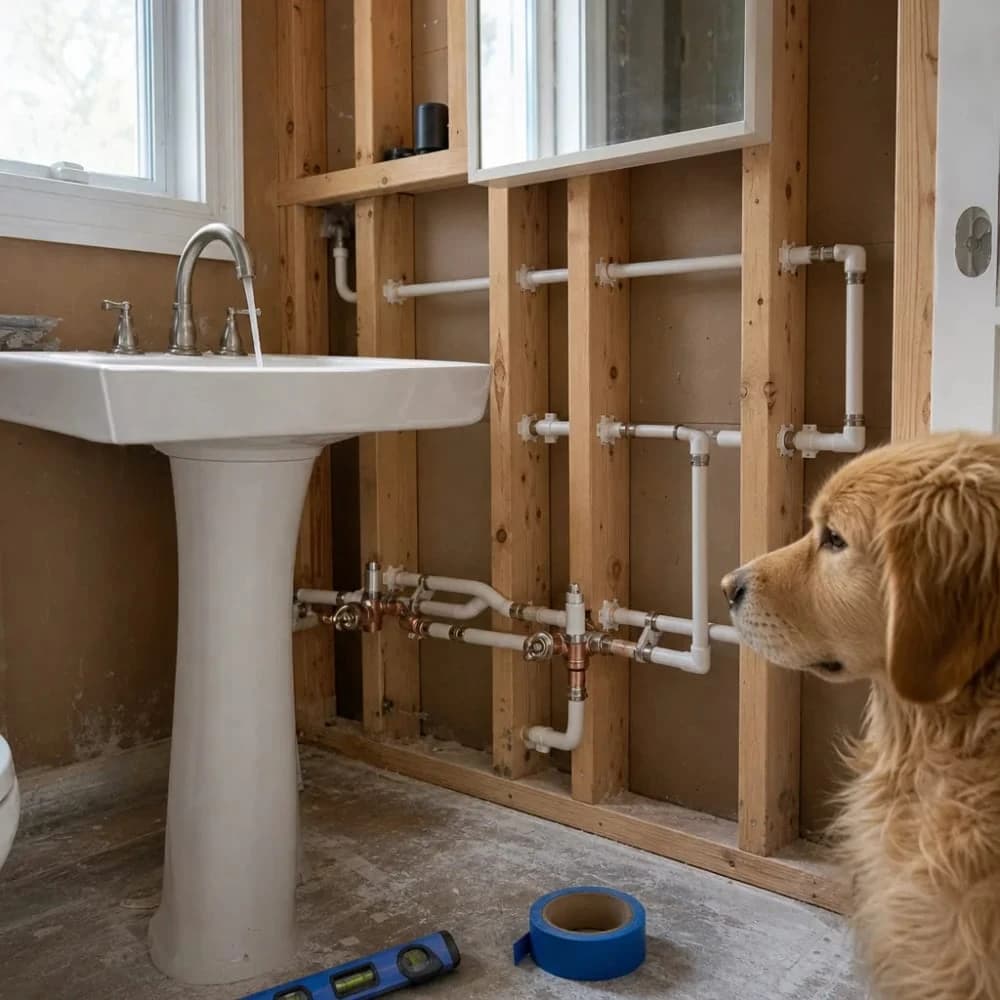
- A walkthrough finds the main, traces each run, and counts every sink, tub, toilet, washer box, and water heater hookup.
- The new lines run alongside the old system, so water stays on for most of the job.
- Openings are small and planned, with pipe pulled from a basement, crawl space, or attic where possible.
- The new system is pressure tested before walls close, then flushed and each fixture run.
- Fixtures switch over, the old pipe is capped or pulled where reachable, and openings are patched.
A building permit comes first for any plumbing job in Evansville and Vanderburgh County, and covered work has to pass the inspector's eye before walls close, so some openings may stay open a while. A commercial building is usually done by floor or branch so part of it keeps water.
Living at Home During Repiping
Most people stay home during repiping, with some noise, drywall dust near openings, and a few short shutoffs. Empty under-sink cabinets, clear paths to the basement, crawl space, and attic, keep pets in a closed room, and fill a few jugs of water in case a shutoff runs long.
For the first day or two after switch-over, sputtering faucets and milky water that clears from the bottom up in a glass are just air. A slow aerator may have caught a bit of old scale. Drips near openings, banging when a faucet shuts, brown water that won't clear, or pressure weak everywhere are worth a call back. Check under sinks daily for the first week, and compare the next bill; EWSU puts a typical home at about 5,000 gallons a month.
What Drives Whole-Home Repipe Cost
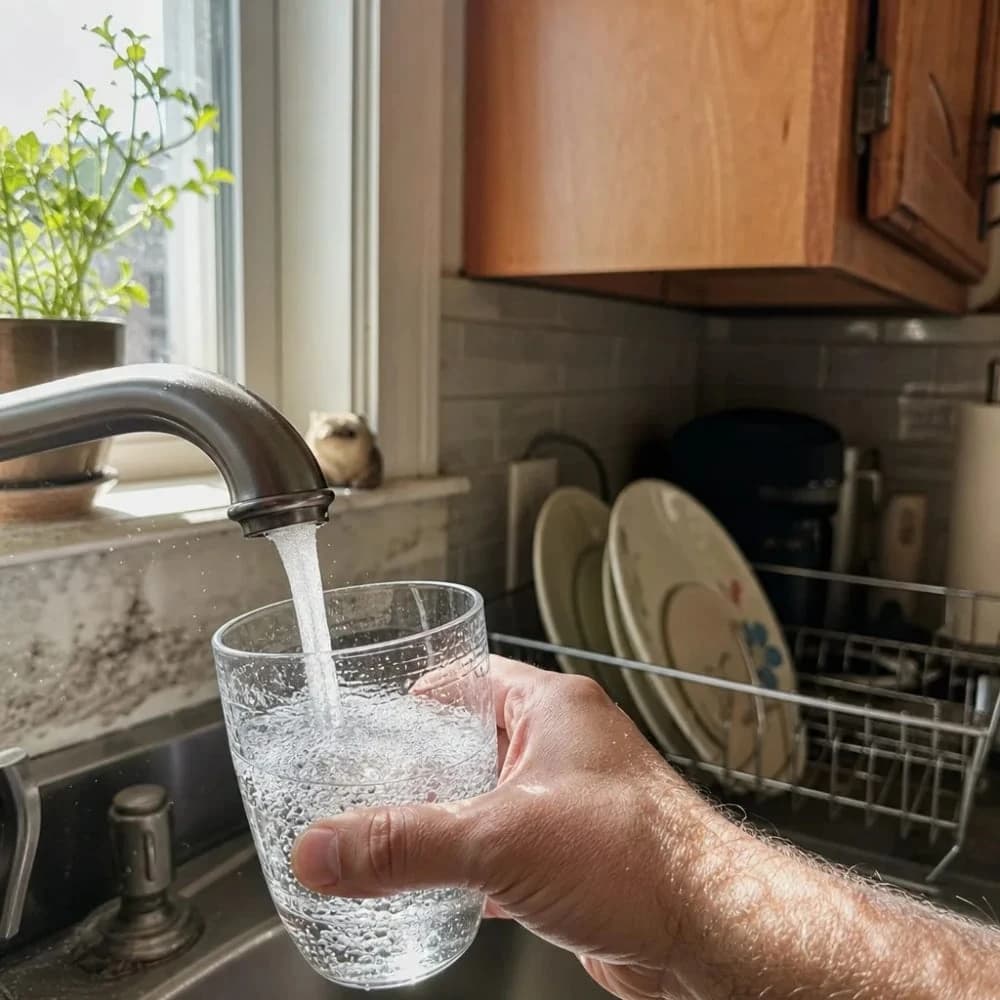
Whole-home repipe cost is usually one project price after a walkthrough. Two houses on the same street can come in far apart.
- Fixture count; a three-bath house needs more pipe than a one-bath.
- Access; an open basement ceiling or roomy crawl space is faster than a finished basement or a second floor with no attic access.
- Walls; plaster takes more care than drywall. With the Census Bureau's median Evansville build year at 1961, many houses still have plaster.
- PEX or copper.
- Extras like new fixture stops, a pressure regulator, or a new service line from the stop valve.
- Permit, inspection, and whether drywall patching is in the price.
Compare quotes on what's included: every fixture and hose bib, the water heater connections, new stops, a pressure check, and what happens if a wall hides a surprise. A low quote often leaves out drywall, valves, or the permit. Repiping ranks as a big job with any plumber in Evansville.
Common questions
- Does a house on a slab cost more to repipe?
- Usually. With no basement or crawl space, new lines often run through the attic and drop down walls, which means more ceiling and wall openings. Indiana's commercial code bars embedding pipe directly in concrete (section 305.3), and house repipes avoid the slab the same way.
- Is repiping a whole house a hard job to do right?
- It takes planning more than disruption. Every fixture is mapped first, new pipe runs beside the old so water stays on, and the new system is pressure tested before walls close and before the inspection EMC 15.05.100(A) requires for covered work.
- Should I repipe if my house was built before 1987?
- Not on age alone. EWSU says lead may remain in service lines and indoor plumbing of homes built before 1987, so check the pipe at the main with a scratch and a magnet first. A pipe that doesn't attract a magnet and scratches shiny silver should be checked for lead; galvanized that attracts one and pinholing copper are the usual repipe candidates.
Where we do this work
This page is for whole-home repipe based out of Evansville, IN. We also work surrounding communities. City pages cover each market; as demand grows we can add service pages for specific cities without rebuilding this silo.
Related work
We also do this work for businesses across the area.
Commercial plumbingReady to Get Started?
Call (812) 677-8484 Now.