
Sump pump installation in Evansville, IN
Sump pump installation is more than the pump: a pit big enough that the pump isn't short-cycling, a check valve that holds, and a discharge line that carries the water far enough from the house that it doesn't seep straight back in. In Evansville, that discharge also has to stay out of the sanitary sewer. People call after a pump hums without moving water, a pit reaches the rim in every hard rain, or a basement that never needed a pump starts taking on water.
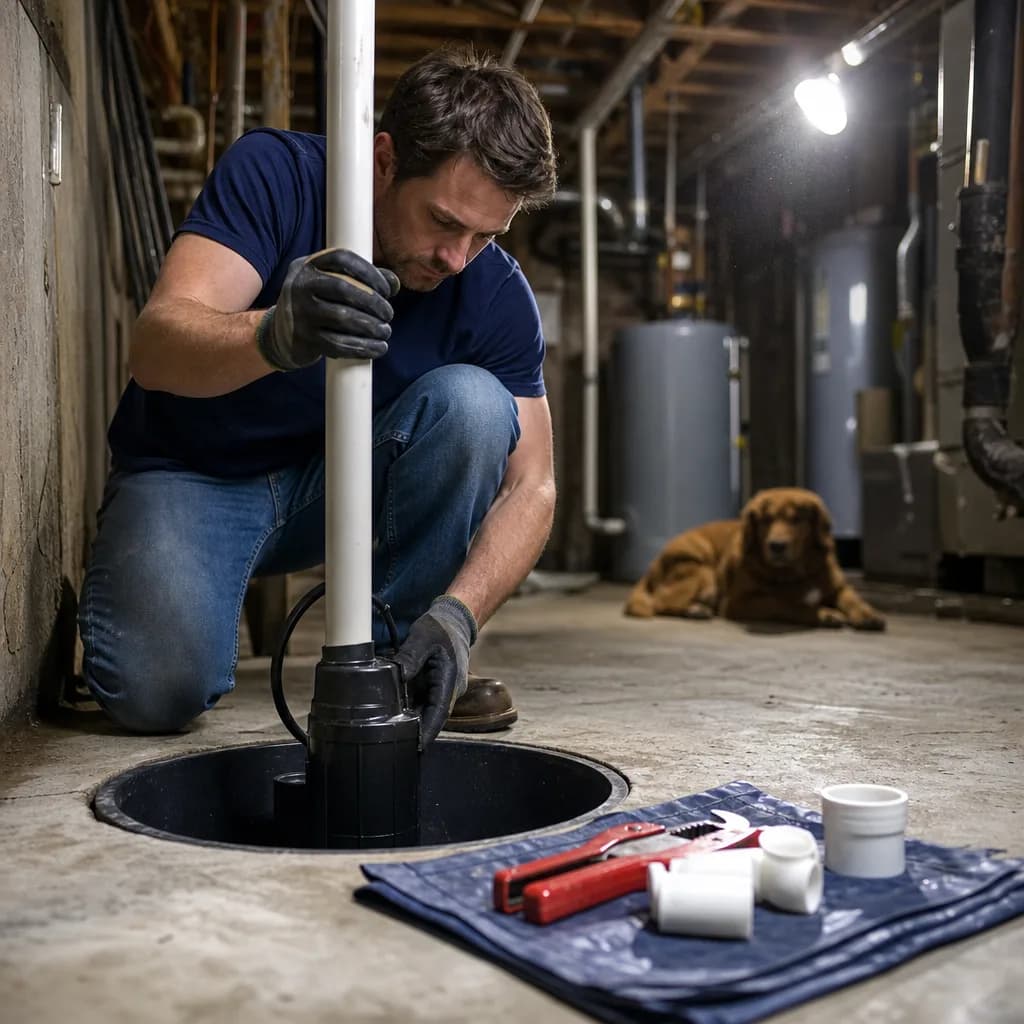
Sump Pump Installation or Sump Pump Replacement?
Sump pump installation means a new system or a new pit; sump pump replacement means a new pump in a pit that already works. Not every bad pump needs either. A stuck float, a tripped GFCI that resets, a clogged intake screen, a check valve that failed, or a frozen discharge line can often be handled by sump pump repair.
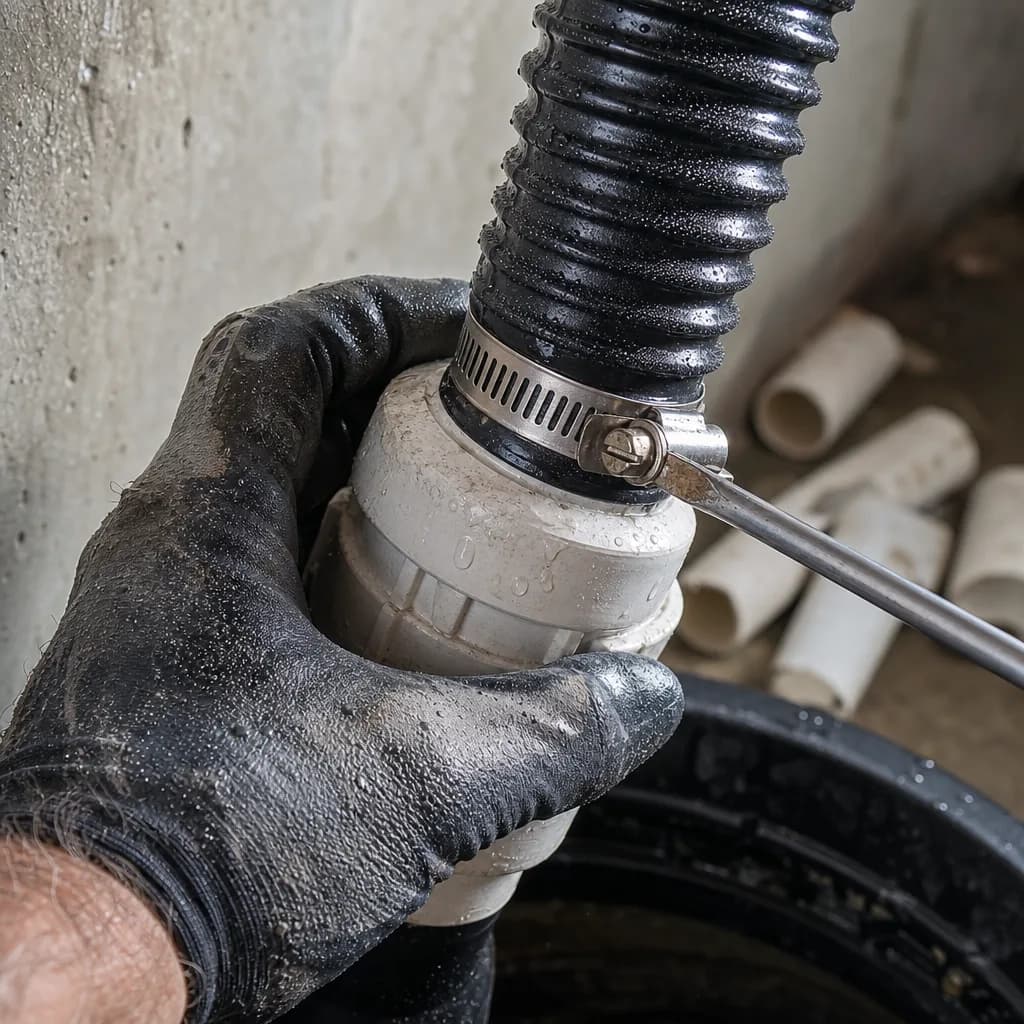
These signs point to replacement:
- The motor hums but water doesn't move with the intake and line clear.
- Grinding, rattling, or squealing from worn bearings or a damaged impeller.
- The pump keeps tripping the breaker or GFCI, an electrical risk next to water.
- Water rises faster than the pump can move it in a hard rain, so it's undersized.
- The housing is rusted or cracked, or the pump sat underwater in a flood or ran dry for a long time.
- Nobody knows its age, and it's been there as long as you've owned the house.
Soil helps explain why pits fill. In USDA's soil survey, Hosmer soils are about 70% of an association that covers roughly 27% of Vanderburgh County; they formed over a dense fragipan and, in most years, hold a perched seasonal water table 1.5 to 2.5 feet down between December and April.
When a Sump Pump Installation Isn't the Answer
A sump pump installation only helps with water that drains to the pit. When the pit stayed low and the wet spot is on a wall far from it, water came in at a window well, gutters overflowed, a downspout dumps at the foundation, or the yard slopes toward the house; the fix is outside the pit.
City engineering only takes drainage complaints for easements and road right-of-way, so grading and gutters on private property fall to the owner. An undersized pit makes the pump short-cycle, and one with no lid collects debris that jams the float. A discharge line ending beside the house just lets it soak back toward the pit.
A fairly new pump that handled the last hard rain, runs quietly, and shuts off on its own can wait. Watch it in the next storm: it should start, empty the pit, and stop.
Sump Pump Installation: Pit, Check Valve, and Discharge Line
Sump pump installation is a chain: water drains into the pit, the float starts the pump, the pump pushes water up through a check valve and out the discharge line, and power keeps it all running.
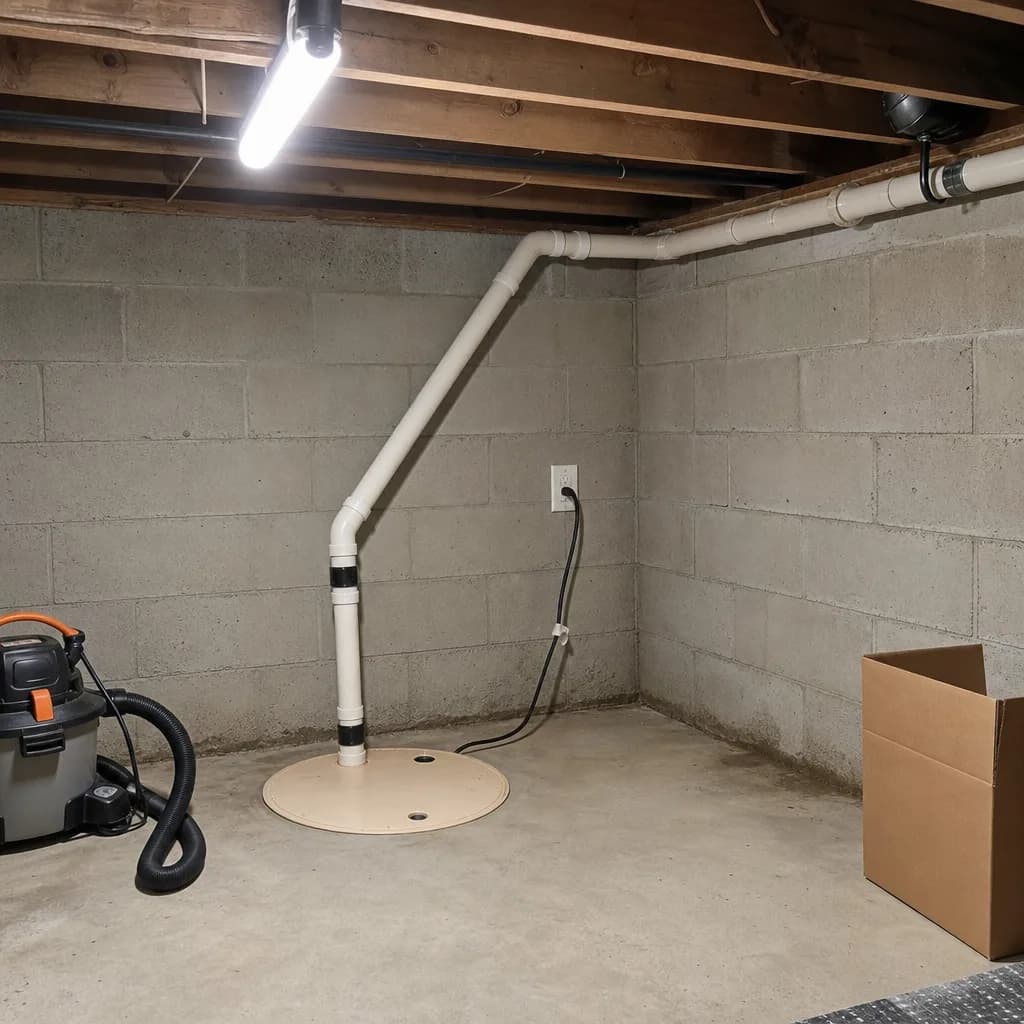
- The old pump comes out, the pit is pumped down, and silt and gravel are cleaned from the bottom.
- A cracked or undersized basin is replaced. Where there's no pit, the floor is cut and a basin set. For commercial buildings, section 1113 of Indiana's adopted plumbing code wants a pit at least 18 inches across and 24 inches deep unless approved otherwise, and that's a sensible minimum in a house as well.
- The pump sits level on a firm base, with the float clear of the wall and cord.
- A check valve goes in the discharge, often with a small weep hole below it so trapped air doesn't air-lock the pump.
- The pump gets its own outlet, not a shared cord or extension, and the pit gets a sealed lid. Indiana's amendment bars air admittance valves from venting sump pits.
- The pit is filled with a hose until the pump starts, empties it, and shuts off, and the check valve stays shut.
Two Evansville rules govern the discharge. Under EMC 13.05.070(A), groundwater and foundation drainage, sump pumps included, can't go into the sanitary sewer. The City points the line instead toward a vegetated area past the road right-of-way, and it often ends at a pop-up valve. When water already covers the basement floor, emergency plumbing repair comes first.
After Sump Pump Installation: What Normal Looks Like
After sump pump installation, a good system is easy to forget.
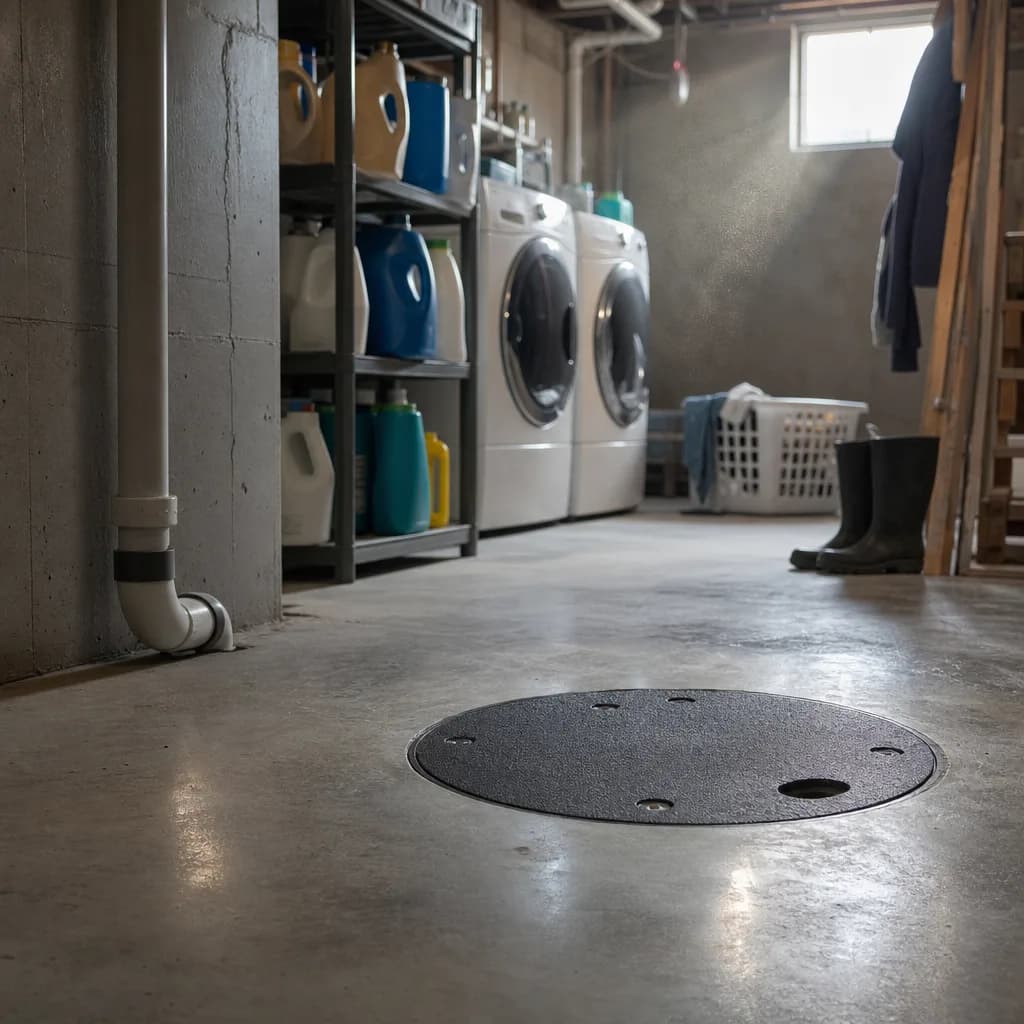
After rain it runs in short bursts and rests; in dry weather it stays quiet. Each run ends on its own at the same low point, with a soft thunk as the check valve closes. Outside, water leaves the line's end and flows away from the house. Leaves, mulch, or a mower can block or knock loose the outlet, and ice can seal it in winter.
Worth a look before the basement is wet: a pit level that barely drops as the pump runs, on-off cycling in light rain, running in dry weather, a warm cord or a GFCI that keeps tripping, nothing at the outlet while it runs, or new grinding or banging. Spring is the real test: in NOAA's 1991–2020 normals, April is Evansville's wettest month, 5.14 inches on average, with May not far behind. Evansville's levee system stops the Ohio River from backing up into the sewers, but it does nothing about how much rain soaks into a yard. A working pump is one of the quieter parts of plumbing in Evansville.
Common questions
- Where should my sump pump discharge line drain to?
- Well away from the foundation, to a vegetated spot away from the road right-of-way as the City advises, often ending in a pop-up valve. The sanitary sewer is off limits: that connection is illegal under EMC 13.05.070(A).
- My sump pump runs constantly during heavy rain. Does that mean it's failing?
- Not always. If it cycles nonstop but the pit never nears the rim, it's keeping up. If the level climbs anyway while it runs, it's undersized, worn, or its discharge is blocked. With a seasonal water table 1.5 to 2.5 feet down in Hosmer soils from December through April, long run times in late winter are common.
- Can heavy rain overwhelm a sump pump that's been working fine?
- Yes. A pump sized for an average storm can fall behind when soils are already saturated after days of rain, and NOAA's normals give the area 47.91 inches of precipitation yearly. Pit size and pump capacity have to match the worst rain, not the average one.
Where we do this work
This page is for sump pump installation based out of Evansville, IN. We also work surrounding communities. City pages cover each market; as demand grows we can add service pages for specific cities without rebuilding this silo.
Related work
We also do this work for businesses across the area.
Commercial plumbingReady to Get Started?
Call (812) 677-8484 Now.