
Sump pump repair in Evansville, IN
A pump that hums but doesn't lower the water, runs and won't shut off, kicks on every few seconds, or grinds and clunks usually needs sump pump repair before the next storm. The cause is often past the motor: a float switch that hangs up, a check valve that lets water fall back, or a discharge line that's clogged or frozen. Finding which part failed first keeps a new pump from going into the same problem.
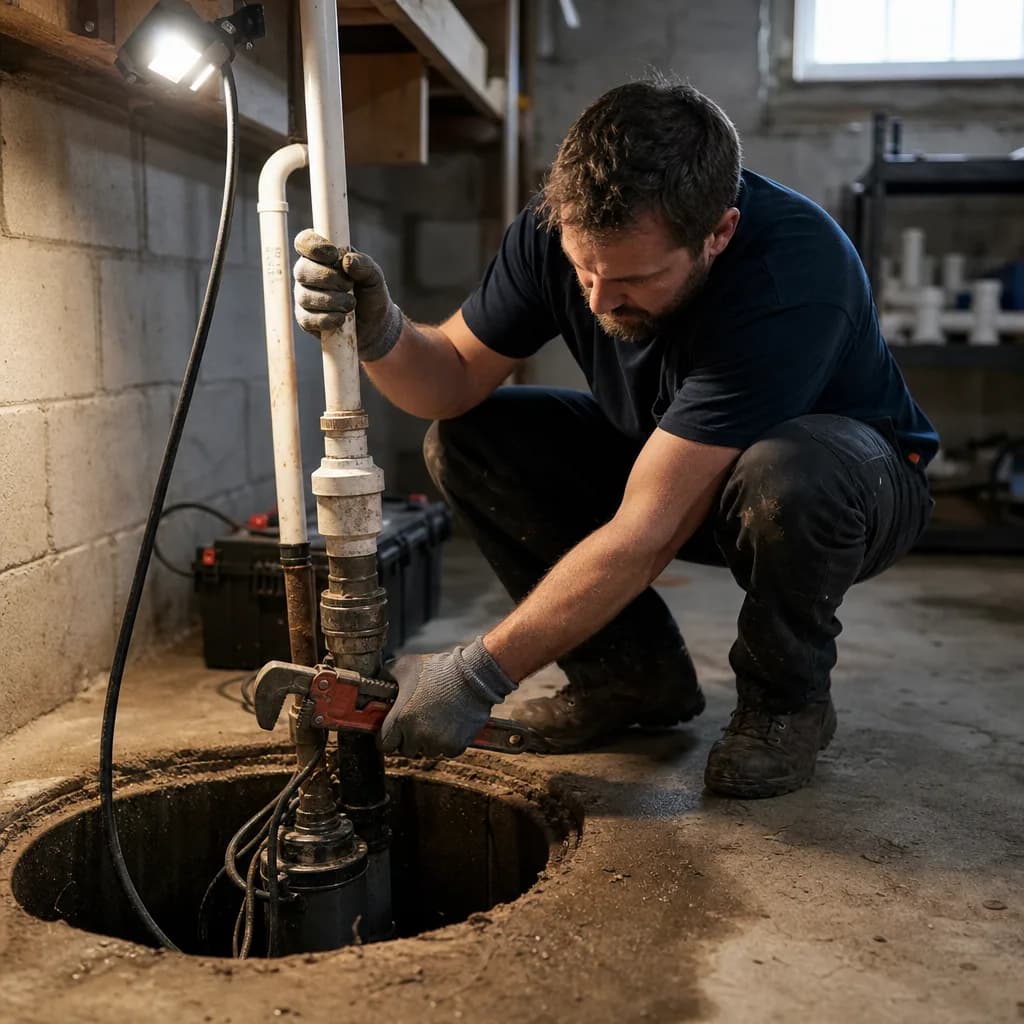
Sump Pump Repair Signs: Humming, Short Cycling, Grinding
Sump pump repair signs usually show up while the floor is still dry.
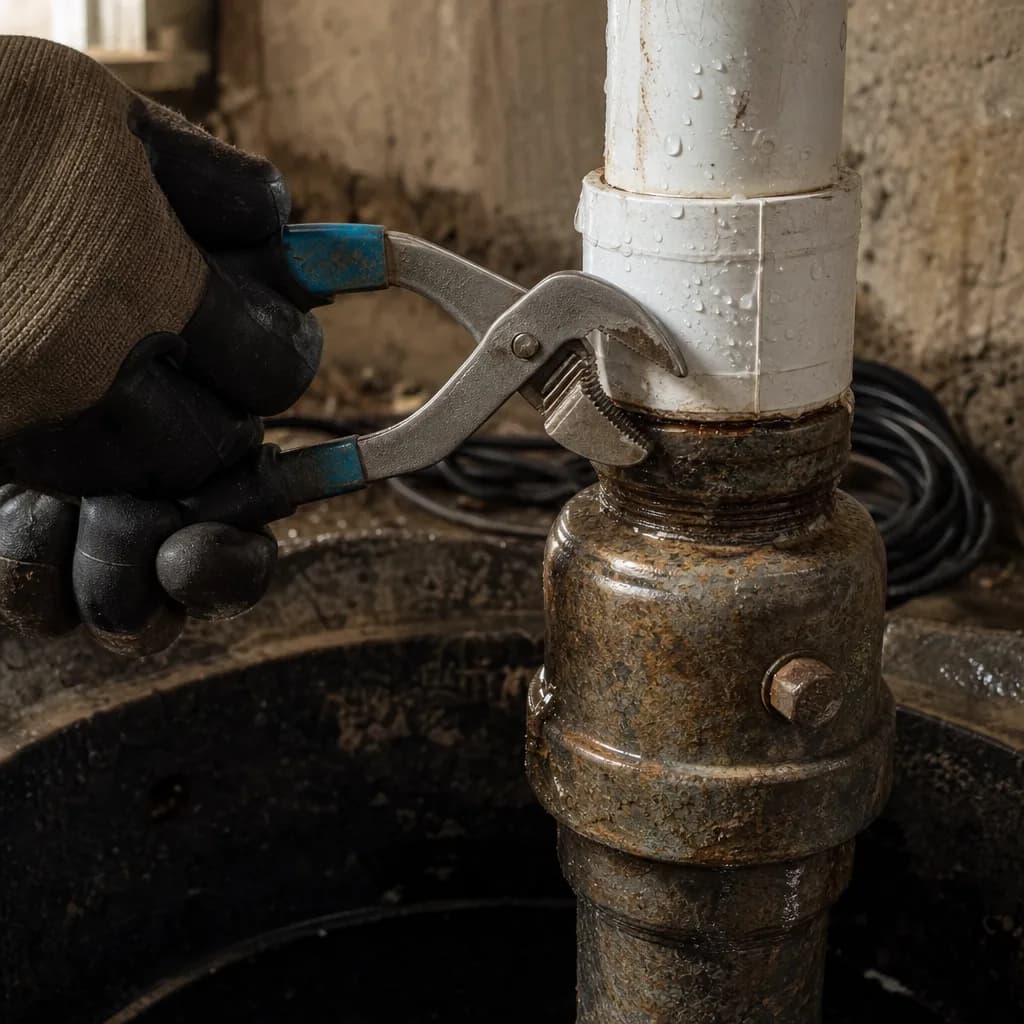
- Humming with no drop in the pit: the impeller may be jammed or the motor near done.
- No start as water rises: often the float switch, sometimes power or the motor.
- Running without stopping: a float stuck in the up position.
- Starting and stopping every few seconds: a float set wrong, a failed check valve, or a pump that's the wrong size.
- Grinding, rattling, or a hard thud at shutoff: worn bearings, a damaged impeller, or the check valve slamming.
- Water at the floor around the pit while the pump runs: the discharge line may be blocked, cracked, or frozen.
Quieter signs count too: rust or buildup on the pump housing, a pit full of silt or gravel, or a motor hot after a short run. In Evansville, the wet season stacks the odds; NOAA's 1991–2020 normals put April and May at 5.14 and 5.12 inches of precipitation, the two wettest months of the year.
Sump Pump Float Switch: Checks Before a Sump Pump Repair
Some fixes cost nothing. Before a sump pump repair, check the cord and plug, press reset on the GFCI outlet, and look for a tripped breaker after a storm. Shine a flashlight in the pit: a sump pump float switch pinned against the wall, tangled in the cord, or buried in debris can keep the pump from starting or stopping. Walk to where the discharge ends and clear leaves, mulch, or snow. Then pour a bucket into the pit; a working pump should start, drain it, and shut off.
A GFCI that trips again and again means something is wrong with the pump, cord, or circuit, so stop resetting it. If the bucket test fails with power and float both fine, the simple causes are ruled out. If water is already nearing the top of the pit and won't stop, that's emergency plumbing repair; with the pit over the rim and the pump dead, call (812) 677-8484.
Sump Pump Repair Beyond the Motor: Check Valve and Discharge Line
Sump pump repair has to look at the whole path, because a new pump on a failing system becomes the next victim.
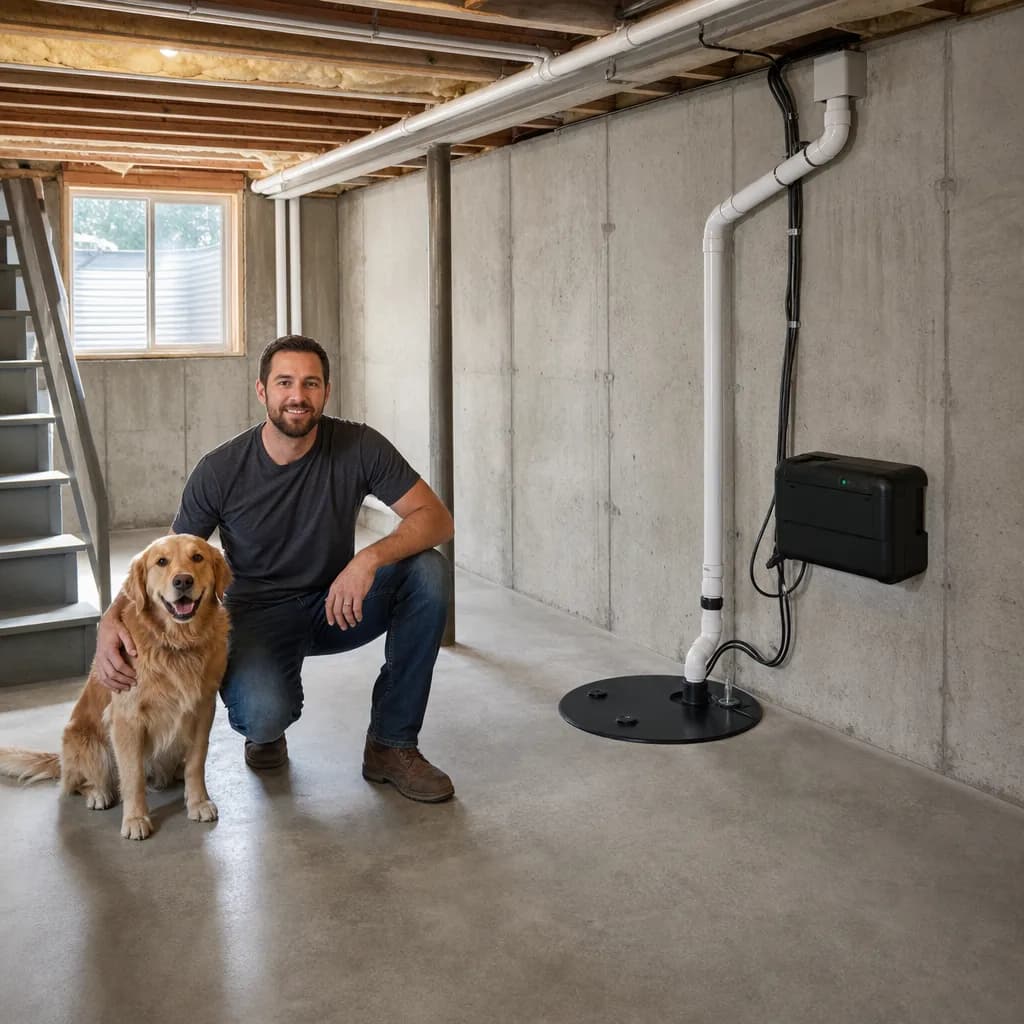
- Check valve. It keeps pumped water from falling back into the pit. When it fails, the pump moves the same water again and again.
- Discharge line. A clogged, crushed, or sagging line makes the motor strain every cycle.
- Outlet location. A line that empties beside the house lets water soak back to the pit.
- Basin. A pit that's too small short-cycles the pump; a cracked liner or open pit lets in grit that winds up in the impeller. For scale, an 18-by-24-inch basin is the smallest pit Indiana's commercial code text (section 1113) allows without special approval, and house pits smaller than that tend to short-cycle.
- Float room. A crowded pit lets the float catch on the wall or cord.
If a pump has already been replaced once and the same trouble came back, something else in the system is doing the damage. When the motor really is done and the pit and line are sound, the work moves to sump pump installation.
Sump Pump Repair and Evansville's Wet Soils
Sump pump repair calls here follow the soil and the rain more than anything else. USDA's soil survey describes Hosmer soils, which dominate the county's uplands, as having a perched seasonal water table 1.5 to 2.5 feet deep, December through April, in most years. On the Ohio River bottom lands, the Wakeland-Stendal-Birds association, about 9% of the county, is somewhat poorly to poorly drained, and Wakeland's water table reaches 0.5 to 1.5 feet from November through May in undrained areas.
Long run times wear every part, not just the motor. Back-to-back spring storms keep the pit filling, a fast thaw sends a lot of water into cold ground at once, a discharge line holding water can freeze where it leaves the house, and the storm that fills the pit can also cut the power. Indiana's commercial code says a water-powered backup pump must meet its backflow chapter, and the Evansville gauge (NWS EVVI3) marks minor flooding at 42 feet, moderate at 48, and major at 52, with a record of 53.75 feet on January 31, 1937.
How Sump Pump Repair Tracks Down the Real Cause
A good sump pump repair starts with questions: when the problem began, if it happens only when it rains, and if the pump has been replaced before.
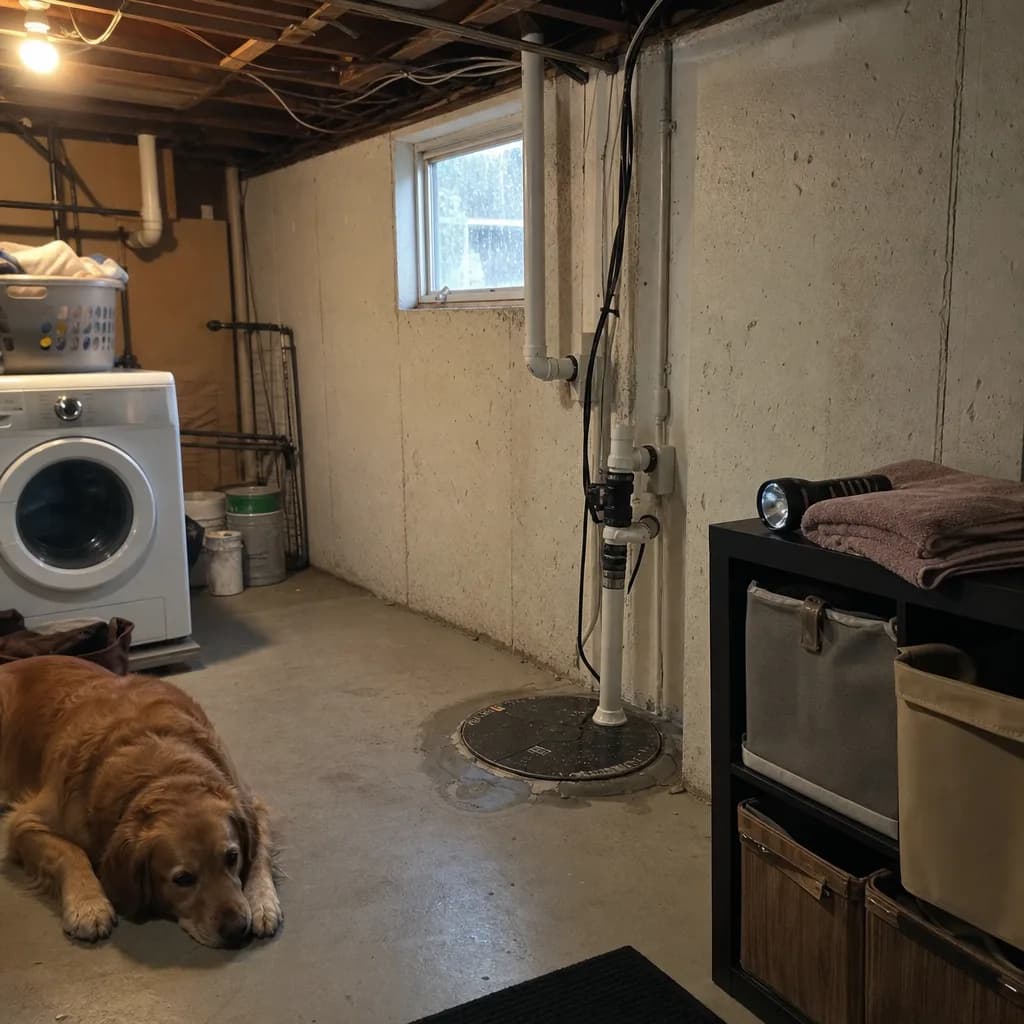
Water goes into the pit so the pump has to run. Then the check follows the path: power and circuit, float travel, impeller and motor heat, check valve hold, pit condition, and the discharge all the way to its outlet. The fix matches the cause: free or replace the float, clear the impeller, swap the check valve, or clear or reroute the line. After the repair, a full cycle is watched again.
A free estimate names the failed part, whether motor, float switch, or line, before anything gets swapped. Evansville's levee, approved after the 1937 flood, includes 20 pumping stations and keeps the river out of the sewer system, but private pits still do the work on private lots. Sump work is regular plumbing in Evansville.
Common questions
- Who is responsible for sump pump or drainage problems that start outside my property line?
- The sump system and any drainage on your own lot are yours. Evansville's engineering office handles drainage problems only within drainage easements or the road right-of-way, so a blocked city drain there goes to the City.
- Do I need a sump pump if I live near the Ohio River or in a low-lying area?
- Often, if the basement takes on water. Bottom-land soils near the river can hold water within 0.5 to 1.5 feet of the surface from November through May, per USDA. The levee, built after the 1937 flood, stops the river backing into the sewers, yet wet soils and rainfall still reach basements.
- Can a sump pump handle heavy storm drainage from my yard, roof, or patio?
- No. A sump pump moves only water that reaches the pit. Surface water from a yard, roof, or patio needs grading, gutters, or a yard drain, and EMC 13.05.070(A) bars that runoff from the sanitary sewer.
Where we do this work
This page is for sump pump repair based out of Evansville, IN. We also work surrounding communities. City pages cover each market; as demand grows we can add service pages for specific cities without rebuilding this silo.
Related work
We also do this work for businesses across the area.
Commercial plumbingReady to Get Started?
Call (812) 677-8484 Now.