
Washing machine box / laundry plumbing in Evansville, IN
Your washing machine box is the recessed panel in the wall that holds both valves, hot and cold, and the drain standpipe. A hose is often a do-it-yourself swap; the valves, fittings, and drain behind the wall are plumbing. Washing machine box and laundry plumbing work starts with things like water on the floor behind the washer, a valve handle that won't turn, a standpipe that spills when the washer pumps out, or a plan to move the laundry upstairs.
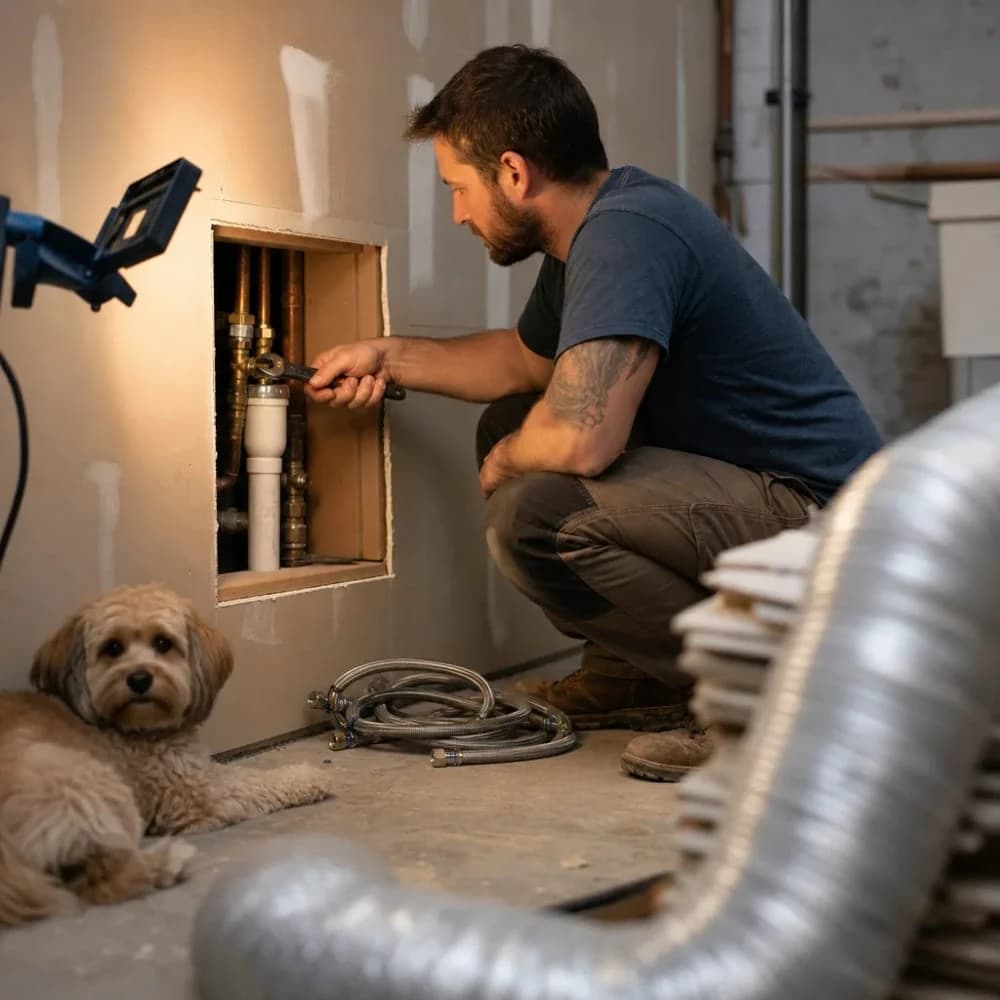
Washer Box Leak or Hose Leak: How to Tell
A washer box leak and a hose leak look alike on the floor, so timing is the test. Dry everything, lay paper towels down, and watch when the water comes back.
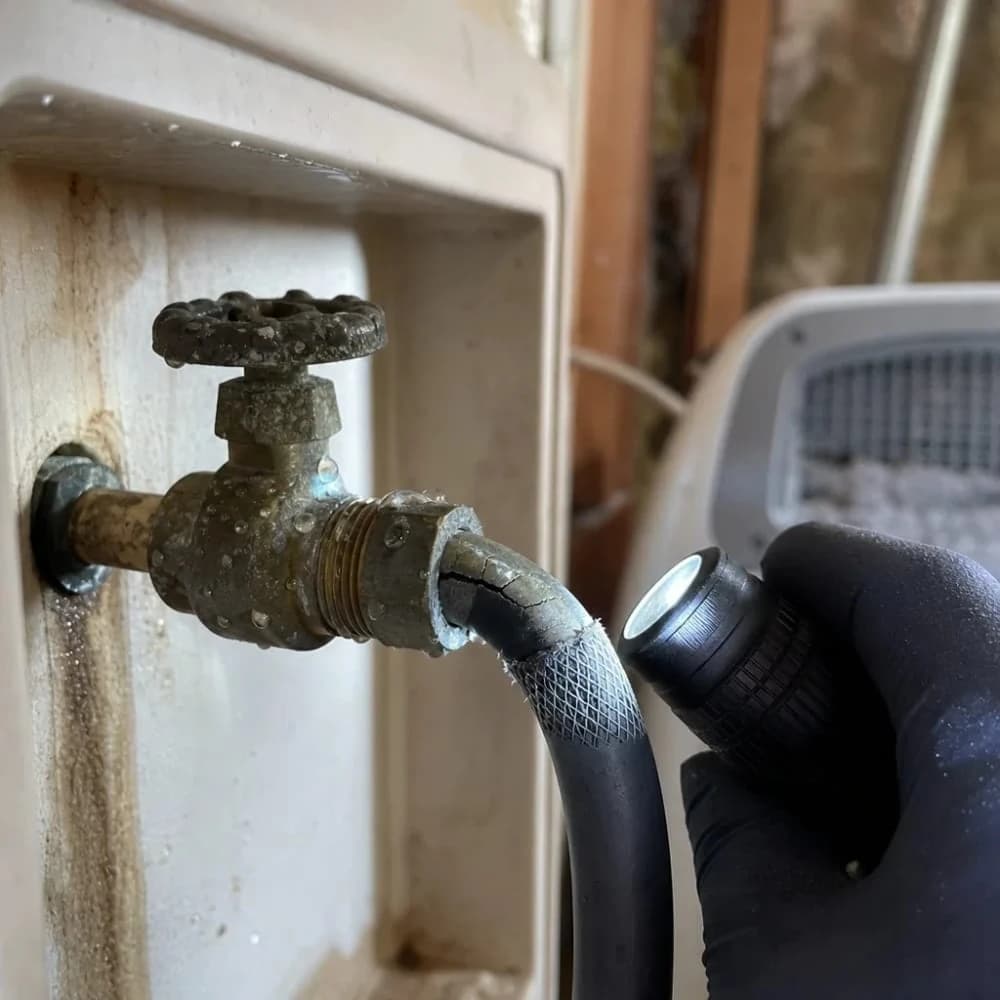
- Wet with the washer off: the valves or the pipe behind the box, since supply lines are always under pressure.
- Wet only during fill: the supply hoses, at either end.
- Wet only during drain: the standpipe, the drain hose, or a clog farther down.
- Wet with no pattern: water running inside the wall to the baseboard.
A hose that bulges, cracks near the metal ends, or drips at the threads is worn out. Valves look different: dripping at the handle or stem, white or green crust, or a handle seized in place. In EWSU's 2025 report, Evansville's water averaged 138 ppm hardness, which USGS's scale calls hard, and mineral crust on old valve stems is common. A box leak shows as a stain below the box, soft drywall, paint that bubbles, a swollen baseboard, or water in the room below.
Washing Machine Outlet Box Repair or Replacement
A washing machine outlet box gets repaired when one part failed and the rest is solid: one valve drips while the other works, a fitting behind the valve loosened, or the box is firm with no cracks.
Replacing the box wins out when problems stack up. Both valves may be seized or crusted, the plastic box may flex or crumble, or there may be no box at all, just two faucets and a pipe out of the wall. Galvanized supply with rust at the joints also argues for a new box, and a magnet tells it from copper, since by Indiana's pipe-identification guidance it clings to galvanized steel and not to copper. Some boxes get replaced for a single-lever shutoff, which closes hot and cold together. In commercial buildings, 2006 IPC section 606.2, part of the code Indiana adopted, requires an accessible shutoff for each appliance's water; in a house, a box valve that actually closes does that job.
A bang in the wall when the washer stops filling is water hammer. Indiana's amendment says "an air chamber is not a water hammer arrestor," so a real arrestor at the box is the fix rather than a capped pipe stub.
Washing Machine Drain and Washer Drain Pipe Backing Up
A washing machine drain that spills out over the standpipe's rim during pump-out usually has a lint and soap clog, a standpipe that's too short, or a drain line undersized for the flow.
- Height. Indiana's residential code allows a 1½-inch standpipe 30 to 42 inches tall; the general rule in Indiana's adopted code is 18 to 42 inches above the trap weir.
- Trap size. Indiana's residential trap table lists a clothes-washer standpipe trap as 1½ or 2 inches.
- Trap location. Indiana's commercial code amendment says a washer standpipe trap can't sit below the floor.
A standpipe that backs up again after cleaning is often the wrong size or height. When the washer drain pipe is clear but the pipe downstream is slow, that's drain cleaning. A dishwasher on a nearby cabinet wall is its own job, dishwasher supply and drain hookup, even when the floor looks like laundry water.
Laundry Room Plumbing for New Hookups in Older Houses
Laundry room plumbing in a new spot comes down mostly to the drain. A washer dumps lots of water fast, so the new drain needs a trap and venting so flow doesn't siphon the trap or gurgle.
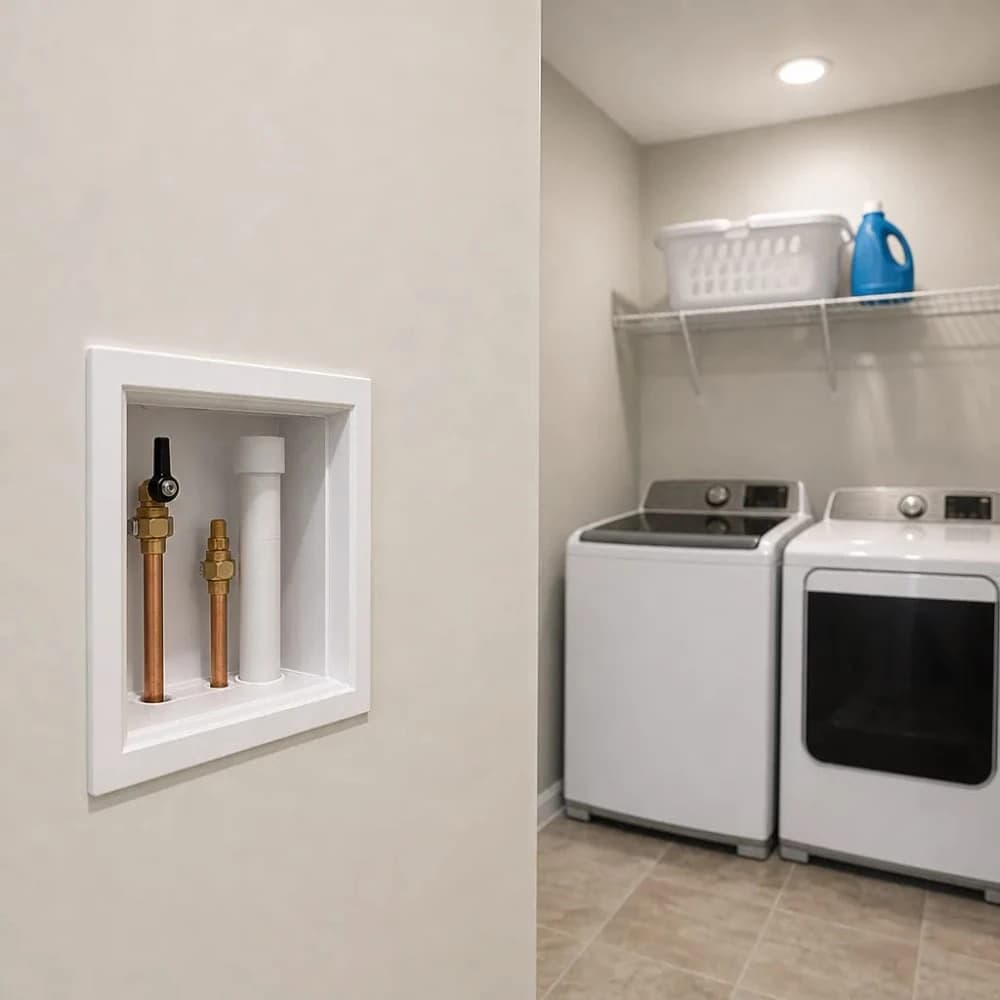
Water is usually the simpler side; supply lines can often branch off nearby pipe. If that pipe is old galvanized, tapping it can mean weak flow, and pipe repair may come first. Moving the laundry to a main or second floor means a leak lands on finished space, so a drain pan and a single-lever shutoff are worth considering. Putting it in a basement below the sewer line may need a basin and pump to lift the water.
Evansville and Vanderburgh County won't let plumbing work start without a building permit, and covered work must pass inspection first. A hookup that moves drains, adds a vent, or opens walls is the kind of job that falls under that rule.
Washing Machine Drain Box Install, Checked Before the Wall Closes
A washing machine drain box install opens the wall, sets the new box between studs at the right height for the drain, ties both supply lines into new valves, and connects the standpipe to its trap.
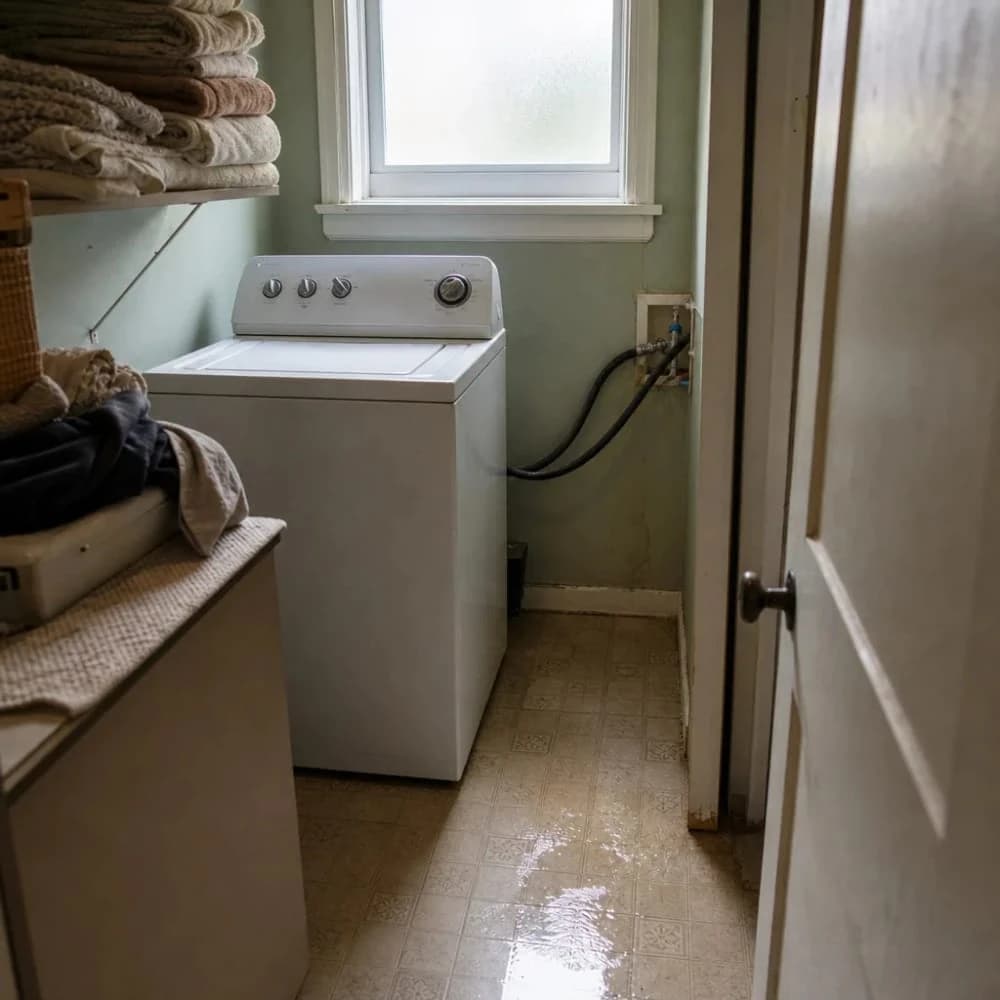
- Water off, at the laundry or the whole house if old valves won't close.
- Wall opened and old box, valves, and worn fittings removed; this is when a weeping joint or wet framing shows up.
- New box fastened firm, supply lines strapped so they don't shake when the washer's valves snap shut.
- Lines pressurized and every joint checked with the wall open.
- A real wash cycle, filling and draining, to prove the drain keeps up and the valves hold.
Before the patch, look for dry joints, a box that doesn't move, a visible trap under the standpipe, and no pipe resting against a nail. Dark but hard studs usually dry out; soft ones need attention. Indiana's residential trap table calls for a 1½- or 2-inch washer standpipe trap, so the visible trap under the standpipe should match. On an outside wall, pipe should run on the warm side of the insulation; at Evansville Regional Airport, NOAA's normals show it hitting 32°F or lower on 90.4 nights a year. Laundry work is everyday plumbing in Evansville.
Common questions
- Can I replace a washing machine box myself?
- A hose swap is a reasonable DIY job. The box, valves, and pipe behind the wall are plumbing work, and under Evansville's EMC 15.05.100(A), anything the drywall will cover has to get inspected before the wall is closed up.
- Do I need a permit for a new laundry hookup?
- Often. Evansville and Vanderburgh County require a building permit, issued by the Building Commission at the Civic Center, before plumbing work starts. A job that moves drain lines, adds venting, or opens walls is the kind that needs one; a front-reachable valve swap usually isn't.
- How long does a washer box replacement take?
- A single valve or standpipe repair can often be done from the front without opening drywall. A full box replacement takes longer because the wall is opened, joints are tested open, and the washer goes through a full cycle to check the work, and it can wait on an inspector before the wall closes.
- What should I do before the plumber arrives for a laundry hookup job?
- Pull the washer out or empty it, clear a path, and move anything stored on the other side of the wall. If the old valves won't close, find the main shutoff; an old valve crusted with minerals from 138 ppm EWSU water may not seal.
Where we do this work
This page is for washing machine box / laundry plumbing based out of Evansville, IN. We also work surrounding communities. City pages cover each market; as demand grows we can add service pages for specific cities without rebuilding this silo.
Related work
We also do this work for businesses across the area.
Commercial plumbingReady to Get Started?
Call (812) 677-8484 Now.