
Bathroom faucet install in Evansville, IN
People ask for a bathroom faucet install when a drip survives two cartridge changes, when a handle starts to wobble, or when the new faucet is bought and waiting. Mounting the faucet is quick. The parts that keep it dry sit under the lavatory: the shutoffs, the supply lines, and the pop-up drain. A kitchen faucet is a separate job with its own sink, sprayer, and drain, so this page stays with the bathroom sink.
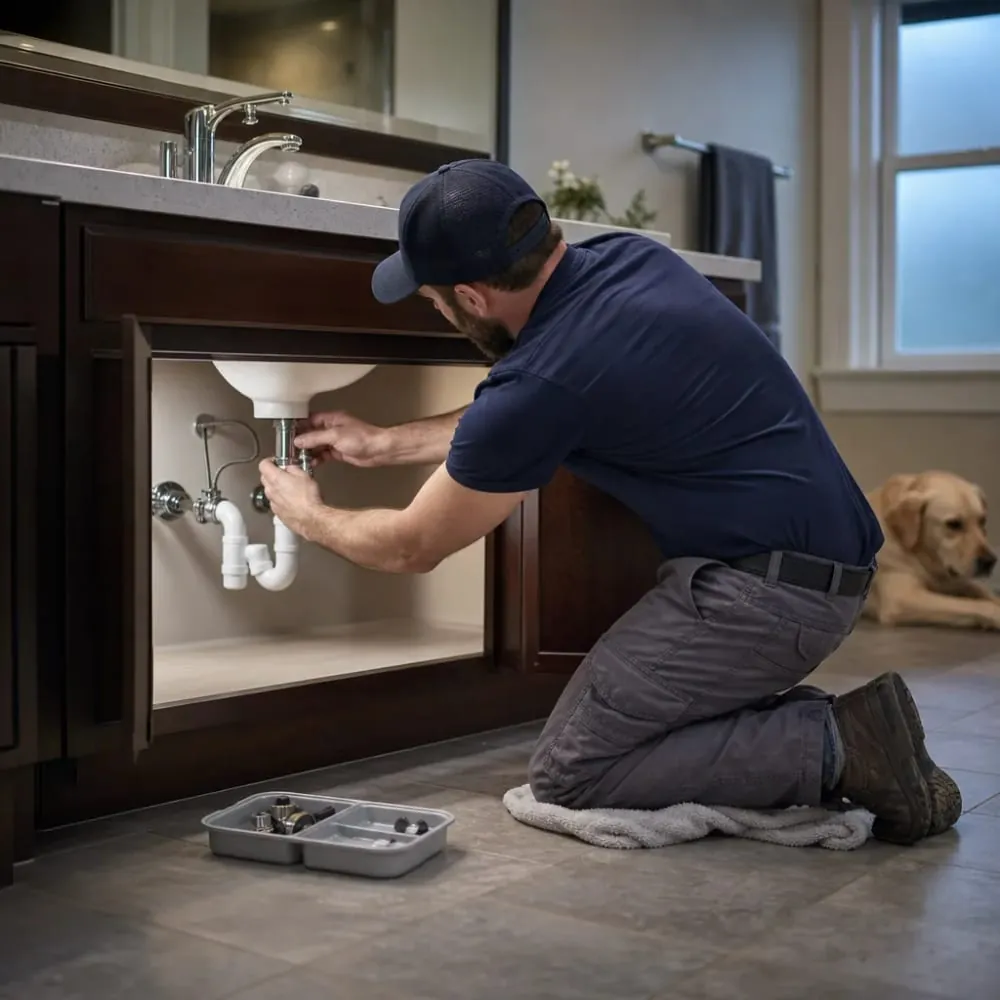
What a Bathroom Faucet Install Includes Besides the Fixture
A bathroom faucet install includes four checks under the sink before the old faucet comes off: the shutoffs, the hole pattern in the sink, the supply lines, and the drain.
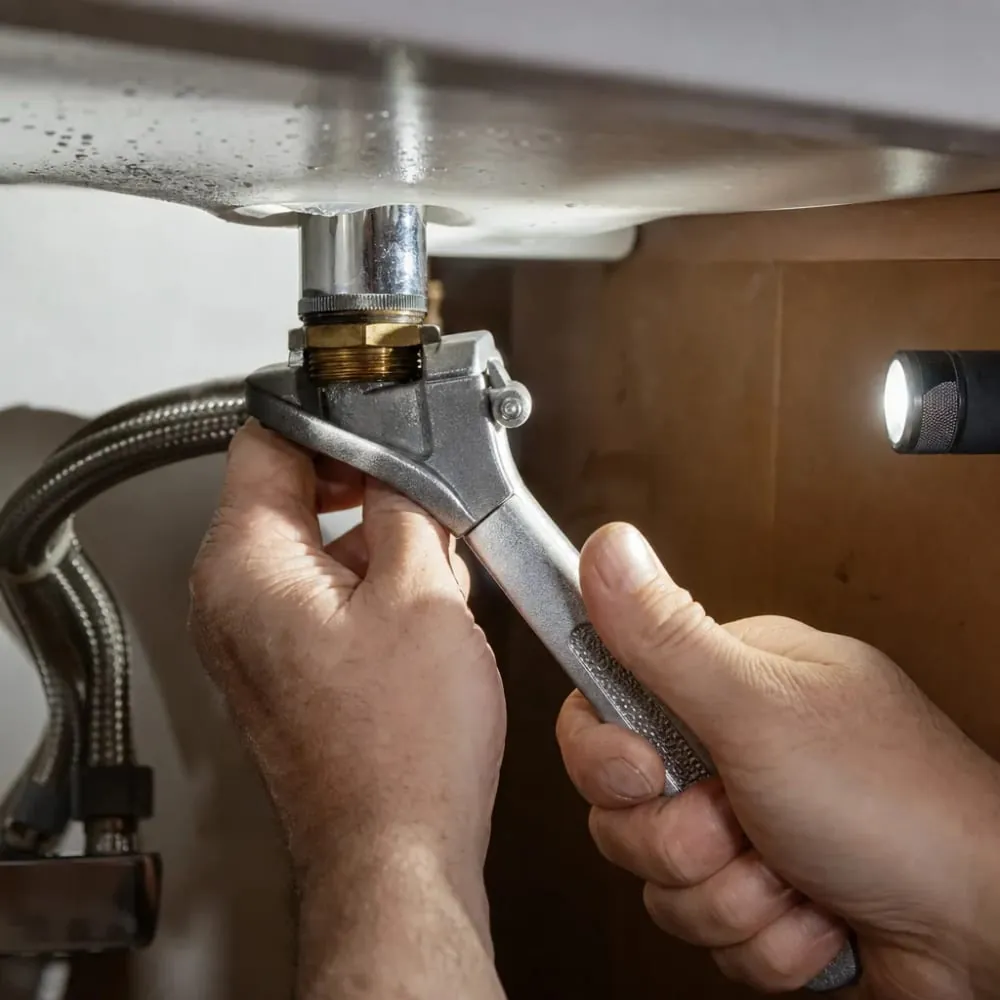
- Shutoff valves. In commercial and public buildings, Indiana's plumbing code wants an accessible shutoff on each sink's supply, and a house, though it comes under the 2020 Indiana Residential Code instead, needs stops that work for a faucet swap too. If an old stop never fully closes, or weeps once it's turned, it gets replaced while the water is off anyway.
- Supply lines. Stiff, kinked, or too-short lines from an older faucet often don't reach the new one. New lines cost little next to a burst one in a vanity.
- Hole pattern. Lavatory sinks are drilled for one hole, three close-set holes, or three holes spread wider apart. The faucet has to match, or it needs a cover plate that hides the extra holes.
- Drain and stopper. Most new bathroom faucets ship with their own pop-up drain. Fitting it means taking the drain apart below the bowl and resealing it. Indiana's residential trap table puts a lavatory's trap at 1¼ inches or larger, and the new tailpiece has to meet a trap of that size.
Water stains, soft particleboard, or rusted mounting nuts on the cabinet floor say something has leaked for a while. Those are worth seeing before the new faucet hides them again.
Then there's lead. Under the federal Safe Drinking Water Act, a faucet sold today as "lead free" can't go over a 0.25% weighted average of lead across its wetted surfaces. Back when Indiana adopted the 2006 code, its text allowed 8%, so a faucet from those years can hold far more.
Bathroom Faucet Replacement or a New Cartridge: How to Tell
Bathroom faucet replacement is the fix for a faucet that's back to dripping after one or two repairs. EWSU's water-use tips count a drip landing once every 3 seconds as 86 gallons a month, out of about 5,000 gallons a month for a typical home, so a drip that returns after every fix is worth ending for good.
Signs that point to replacement:
- The drip returns soon after a new cartridge or washer, which suggests wear in the faucet body itself.
- Water seeps from under the handles or pools around the spout's base while the faucet runs.
- Handles grind, spin too far, or won't stay tight, and nobody stocks parts for that model anymore.
- The finish is flaking or pitted, not just dull.
- Temperature jumps from cold to hot with a tiny turn of the handle.
Signs that point to a part instead:
- One problem on a fairly new faucet that you otherwise like.
- A cartridge or stem that is easy to buy for that model.
- Weak flow at this one sink only. Unscrew the aerator at the tip of the spout and rinse it first.
Evansville's water can explain some of that grit. EWSU's 2025 water report put average total hardness at 138 ppm (8.1 grains per gallon), which USGS rates as "hard" water. USGS adds that hard water leaves deposits inside fixtures, so a clogged aerator or a stiff cartridge may just be mineral crust, not a dead faucet.
Bathroom Faucet Replacement Won't Fix These Sink Problems
Before buying a new faucet, rule out the problems that start somewhere else, because a bathroom faucet replacement leaves each of these exactly as it was.
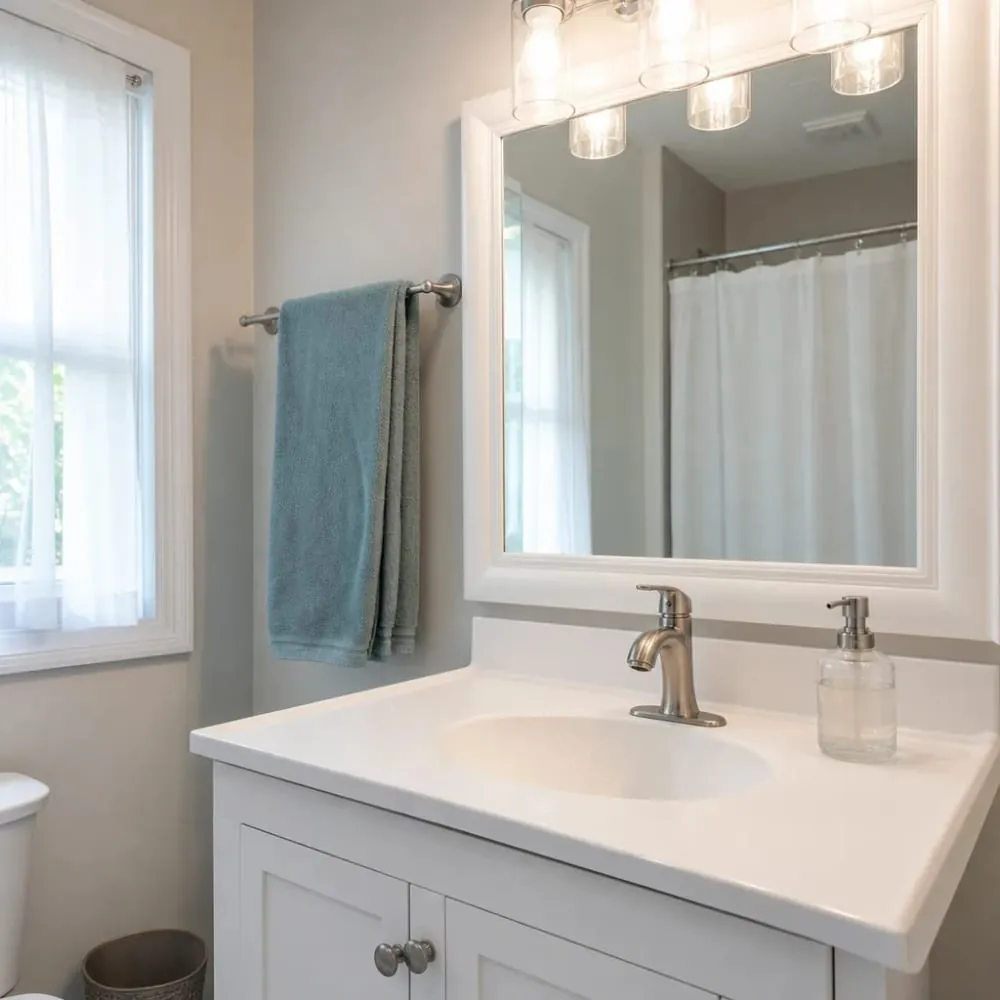
- Weak pressure everywhere. When the tub, kitchen, and lavatory are all weak, the faucet isn't the problem. EWSU builds its mains for 35 psi static at minimum, so if it's low all through the house, look at the house's own plumbing.
- A wet cabinet floor with a dry faucet. A loose slip nut on the trap is common, and a hand-snug often stops it.
- A cracked bowl or a swollen vanity. A new faucet on a failing sink doesn't last; replacing the vanity and sink handles both at once.
- A slow drain. Clearing the pop-up stopper or the line below it is the fix, not new trim.
- A ceiling stain below the bathroom. Look for a leaking pipe or drain hidden in a wall or the floor; the faucet isn't it.
Timing matters too. With a remodel planned for next year, the new vanity top may be drilled for a different pattern, and it often makes sense to pick the faucet and sink together. If the whole room is being redone, a bathroom remodel takes in the faucet, sink, and tub together. A chipped tub that still holds water belongs with a tub repair instead.
Swapping the faucet yourself is reasonable when the shutoffs turn freely and stop the water, the new faucet matches the holes, and the old nuts come loose by hand. If a nut won't budge halfway through, leave the water off and stop there. Forcing it is how sinks crack.
Bathroom Faucet Install Cost: What Moves the Price
Two bathroom faucet installs can look alike and still cost different amounts, and the faucet is rarely why. The price follows what's under the sink and how much of it needs replacing along the way.
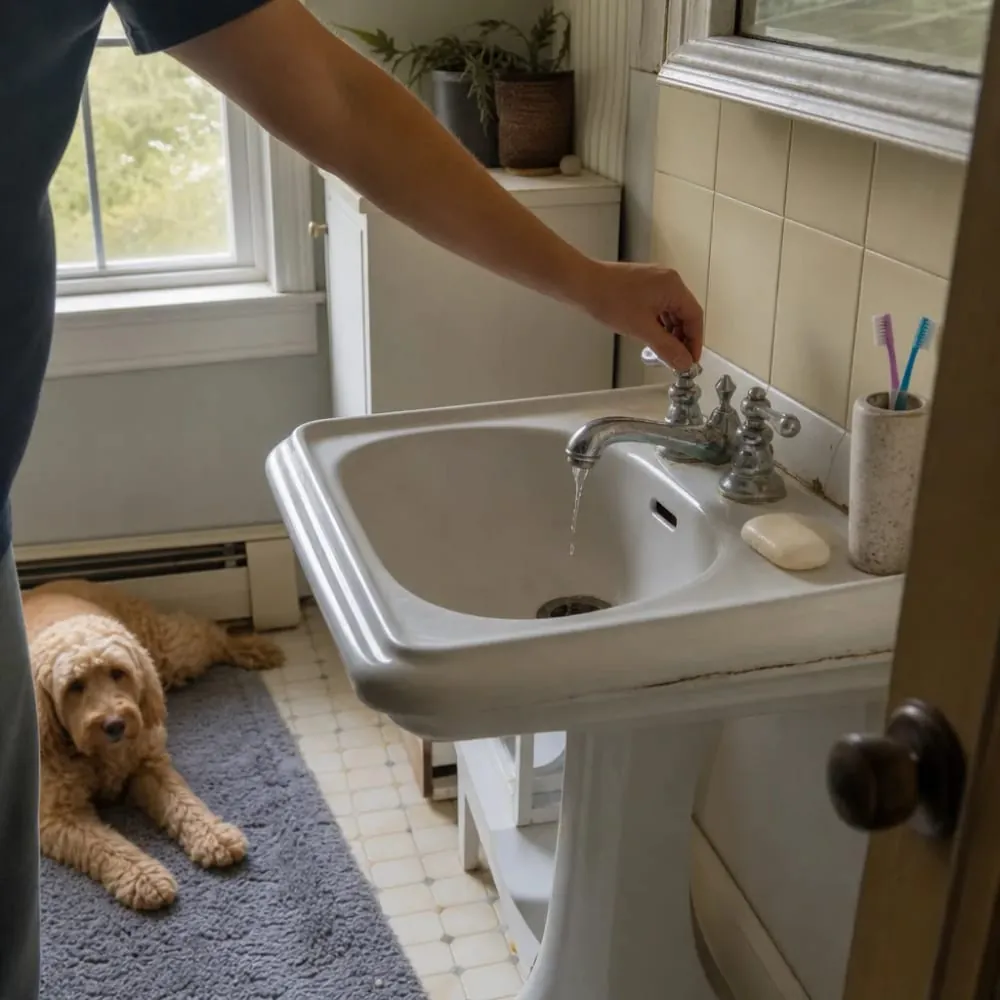
- Stops and supply lines. Good ones stay put. A stop that leaks through, or a tired line, means more parts and more time.
- Rusted mounting nuts. Freeing them without cracking a china or cultured-marble bowl takes patience, and it's hard to predict until someone is under the sink.
- The pop-up drain. Fitting the drain that came with the faucet means opening and resealing the drain, which is more work than a faucet-only swap.
- Access. An open vanity is quick. A pedestal sink, a cramped cabinet, or a wall-mounted faucet takes longer.
- Damage under the sink. A soft cabinet floor or a leaking drain is its own repair, and you see it before any extra work happens.
A business with several restroom sinks is usually better off having them done in one trip, the same way fixture installation groups work. Indiana doesn't require a state design release for like-for-like fixture replacement in commercial buildings, provided the fixtures stay where they are, although local permit rules still apply.
The last step is a slow test. The water is turned back on a little at a time, each connection gets touched with a clean, dry towel, and the bowl fills and drains to prove the pop-up seal holds. Run the hot and cold yourself while we're still there, and keep the faucet box, since it lists the cartridge part number you'll want later.
Common questions
- Can a handyman install my bathroom faucet instead of a plumber?
- A handy person can manage a simple swap when the shutoffs work, the faucet matches the sink's holes, and the old nuts come loose. If the stops are old, the pop-up drain and its 1¼-inch trap need resealing, or a nut is rusted tight, a plumber is the safer choice so a stuck valve or a cracked bowl doesn't turn a faucet swap into a bigger repair.
- What should I expect to pay for a bathroom faucet install?
- What's under the sink drives the price more than anything. Stops and lines in good shape keep the job simple. A failing valve, rusted nuts, or a pop-up drain needing a reseal add time and parts. Ask if a quote is flat-rate or hourly, and if it covers new stops or lines when they're needed. Against EWSU's figure of 86 gallons a month for a faucet dripping every 3 seconds, ending a stubborn drip also shows up on the water bill.
- Does a new bathroom faucet have to be lead free?
- Under the federal Safe Drinking Water Act, "lead free" means a weighted average of 0.25% lead or less on the surfaces that touch water. Faucets sold for drinking water today are made to that limit, which sits far below the 8% that the 2006 code Indiana adopted used to allow.
Where we do this work
This page is for bathroom faucet install based out of Evansville, IN. We also work surrounding communities. City pages cover each market; as demand grows we can add service pages for specific cities without rebuilding this silo.
Related work
- Tub-to-shower conversion01
- Bathtub replacement01
- Bathtub installation01
- Vanity / bathroom sink install01
- Plumbing fixture installation01
- Bathtub repair01
We also do this work for businesses across the area.
Commercial plumbingReady to Get Started?
Call (812) 677-8484 Now.