
Vanity / bathroom sink install in Evansville, IN
Evansville's median home was built in 1961, so the pipes behind a vanity or bathroom sink install are often decades older than the cabinet going in. The job is usually set off by a new vanity still boxed, a cracked sink bowl, or a cabinet floor that's gone soft under a slow leak. You pick the cabinet for looks; the drain arm, trap, supply lines, and shutoff valves behind it have to meet the new sink at the correct height and spacing, or the new vanity leaks inside its own cabinet.
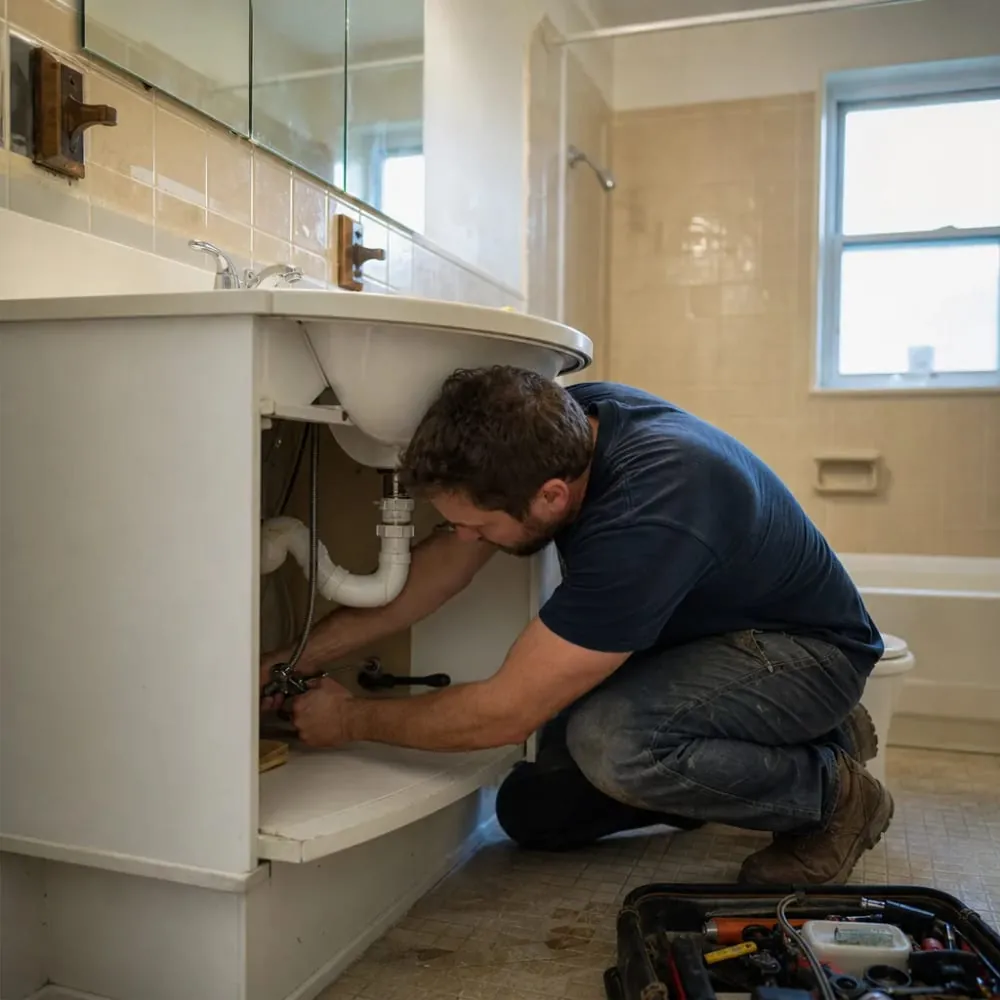
Bathroom Vanity Installation: Drain, Supply Lines, and Shutoffs
How simple a bathroom vanity installation is depends on the pipes reaching the old sink from the wall. A new sink can sit higher, lower, or off to one side of the old one's spot.
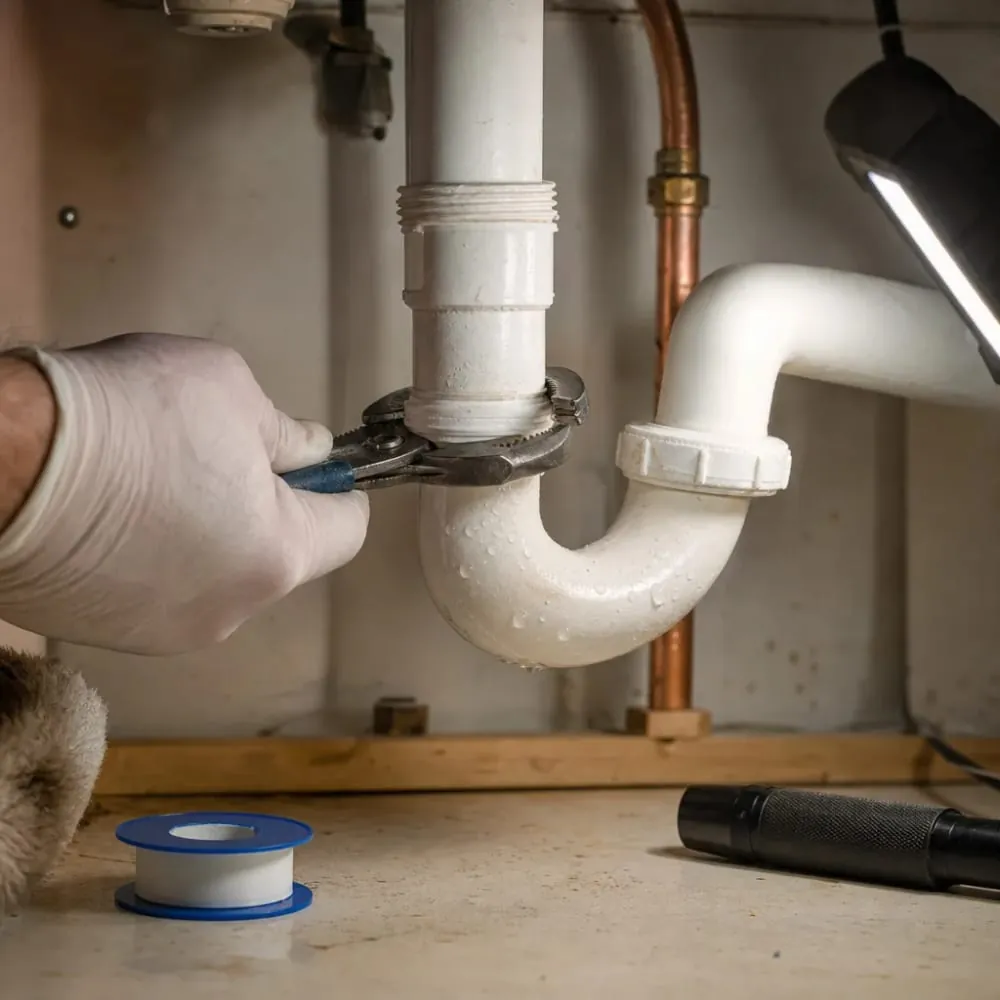
- The drain. The trap and drain arm have to meet the new tailpiece at a clean angle, or water drains slowly and sits in the line. A lavatory trap can't go below 1¼ inches on Indiana's residential trap-size table, so any trap we rebuild goes back at that size or larger.
- The shutoffs. Every sink supply in a commercial or public building needs an accessible shutoff under Indiana's plumbing code. At home, swapping the vanity is a good moment to replace stops that stick or weep when they're turned.
- The supply lines. Stretched or kinked lines, or lines too short for the new faucet's position, are a common leak point.
- The layout. Going from one sink to two, or from a drop-in bowl to a vessel sink, can mean moving the drain, adding a supply branch, or changing heights.
Once the old cabinet is out, look at the floor and wall behind it. A slow drip can soak particleboard and subfloor for months before anyone sees it, and the new vanity shouldn't be set over it.
The faucet usually changes with the sink. If the vanity is staying and only the faucet is tired, swapping the bathroom faucet is the smaller job.
Bathroom Vanity Installation in Older Evansville Homes
Older houses were plumbed for wall-hung sinks and small pedestal sinks, and their pipe heights and spacing often miss a modern cabinet. That matters here: by Census figures, about 49% of homes in Evansville were built before 1960, and the median build year is 1961.
What tends to show up behind an old sink:
- Galvanized steel supply pipe. Rust builds inside it, so the sink loses pressure and the first water can come out brown. The quick check is a magnet: galvanized steel grabs it, while copper, brass, and lead don't. Since scratched galvanized can shine silver like lead, trust the magnet over the color.
- Lead in older plumbing. EWSU has removed all known lead mains, but it says lead may still be present in the service lines and inside plumbing of houses built before 1987. A soft, dull gray pipe that ignores the magnet should be identified before anyone reuses it.
- Old drain arms of galvanized or cast iron, crusted inside or thin at the threads.
- No shutoffs at all, which means shutting the main to work on one sink.
- Lines rising from the floor right where the new cabinet's back or bottom panel sits.
None of this stops a new vanity. It means replacing a short run of old pipe, moving the drain arm, or adding stops, planned before the install day. When the vanity is part of a bigger change, such as a tub-to-shower conversion, doing the pipes in one pass saves opening the walls twice.
Bathroom Sink Replacement Without a New Vanity
A bathroom sink replacement without a new vanity works when the cabinet is sound and only the bowl or top has failed.

- A cracked or chipped bowl, or a top with a stain that won't come out, can be replaced on the existing cabinet if the new top fits its footprint.
- A slow sink usually needs the stopper or trap cleared, not a new sink.
- White crust around the drain or overflow is often mineral buildup: EWSU's report gave 138 ppm as the 2025 average hardness, "hard" on USGS's scale. That kind of water leaves deposits on fixtures.
- Water inside the cabinet while the faucet stays dry often comes from a loose trap nut or a worn supply line; that's a repair, not a replacement.
- A cabinet that is swollen, delaminating, or soft along the bottom is the point where the whole vanity should go.
For businesses, a restroom sink gets far more use than a home bathroom, so a drain that's slightly off or a stop that weeps gets worse faster. Several sinks done in one visit are what fixture installation groups together.
Bathroom Vanity Installation Cost and What Changes It
What the old pipes need in order to meet the new cabinet drives vanity installation cost more than the cabinet does.
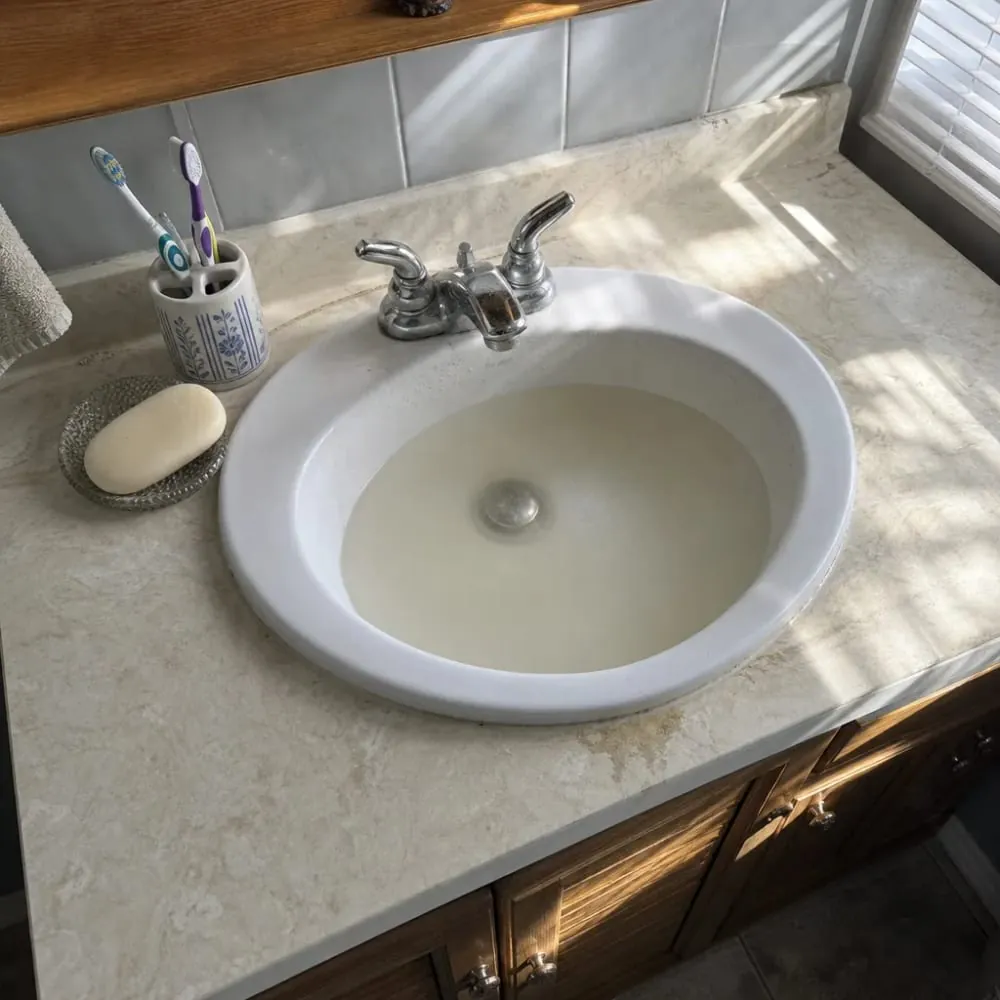
- Pipe that lines up. A new cabinet that fits the old drain and supply locations is the simplest case.
- Pipe that moves. A drain arm that sits too low, lines rising from the floor, or going from one sink to two adds plumbing work. A moved drain needs Evansville's Building Commission to issue a permit before work starts, and EMC 15.05.100 has the new pipe inspected before drywall goes back.
- Old material. Replacing a short run of galvanized pipe, or adding stops where none existed, adds parts and time.
- Damage to the subfloor or wall under the old cabinet gets fixed first, before a new one goes in.
- Who supplies the vanity. You can buy your own, as long as it suits where the drain and water lines are.
When the bathroom is changing beyond the sink, a bathroom remodel handles the vanity together with the floor, tub, and lighting.
Common questions
- Can you install a vanity I bought myself?
- Yes. Bring the model or measurements ahead of time so the quote reflects whether the drain arm, supply stubs, and stops line up with it or need to move, and whether the lavatory trap needs rebuilding to the 1¼-inch minimum.
- How long does a vanity or sink install usually take?
- When the new cabinet fits the old drain and supply lines, the swap can often be finished in one visit. Galvanized pipe, missing shutoffs, or a drain that must move add time, and moving a drain also takes an Evansville permit.
- Do I need to turn off water to the whole house during the install?
- Not if the sink has working shutoffs. Some older homes never had stops under the sink; there, the main has to go off. Adding stops during the install fixes that, and in commercial buildings Indiana's code already requires one on every sink supply.
- What should I do if I find water damage after removing my old vanity?
- Stop and have it checked before the new cabinet goes on top. A soft or stained floor usually means a slow leak ran for a while, and the subfloor or wall behind it may need repair first. Any new drain or supply pipe in that wall has to pass inspection under EMC 15.05.100 before it's covered.
Where we do this work
This page is for vanity / bathroom sink install based out of Evansville, IN. We also work surrounding communities. City pages cover each market; as demand grows we can add service pages for specific cities without rebuilding this silo.
Related work
- Tub-to-shower conversion01
- Bathtub replacement01
- Bathtub installation01
- Bathroom faucet install01
- Plumbing fixture installation01
- Bathtub repair01
We also do this work for businesses across the area.
Commercial plumbingReady to Get Started?
Call (812) 677-8484 Now.