Crawl space / basement drain in Evansville, IN
A crawl space or basement drain problem shows up as standing water under the house after a storm, a basement floor drain that gurgles or backs up, or a musty odor that never quite leaves. The timing tells most of the story: water after rain points to groundwater, water while fixtures run points to a drain line, and water on dry days points to a leaking pipe.
Crawl Space Drainage: Where the Water Comes From
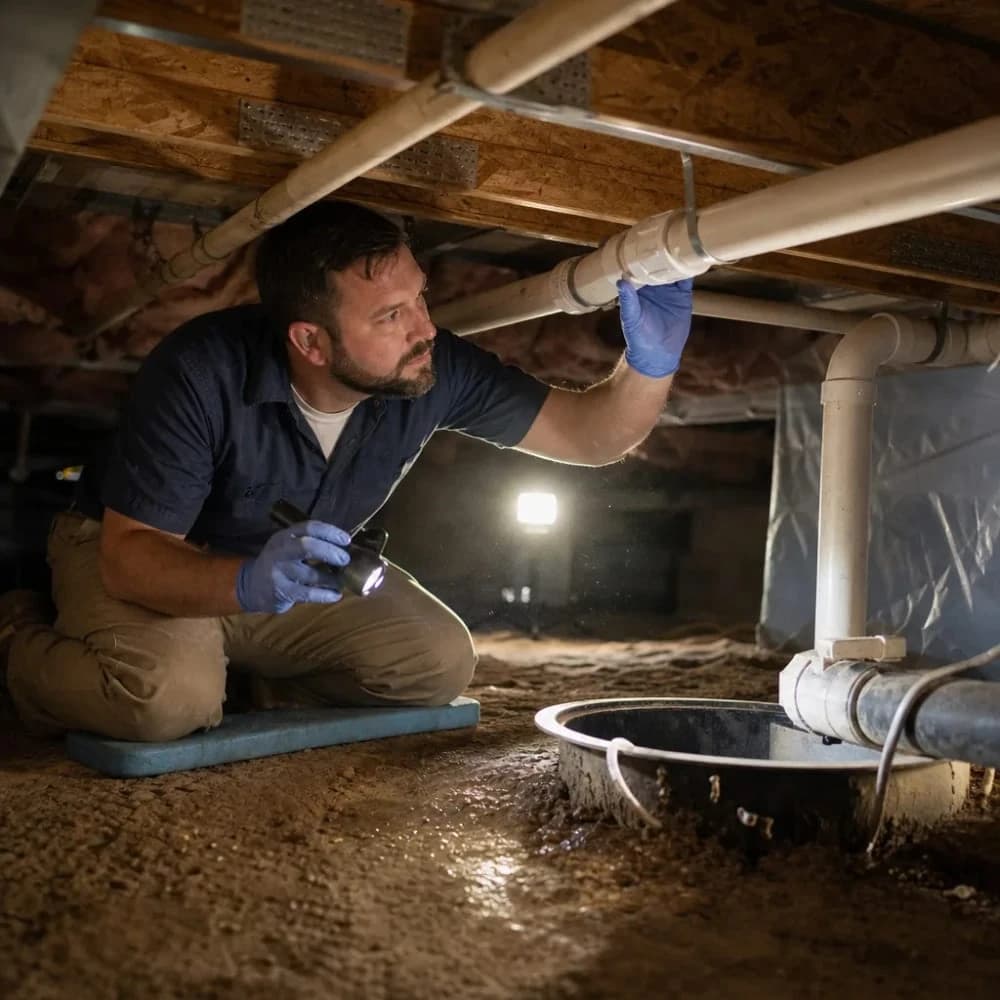
Water under a house after every hard rain is a crawl space drainage problem, and the soil is often the reason. Hosmer soil covers much of upland Vanderburgh County, with a dense fragipan about 30 inches down; in most years, USDA says, a perched water table sits 1.5 to 2.5 feet down from December through April. Rain can't soak through that hard layer, so it runs sideways, and a crawl space dug below the layer catches it.
Spring rain adds to it. April is the wettest month in NOAA's 1991–2020 normals for Evansville Regional Airport, at 5.14 inches, and May runs close behind.
Start with the cheap checks. A clogged gutter or a downspout that dumps right at the foundation can flood a crawl space by itself. Fix that, watch the next rain, and if the space stays dry, you're done. If water still collects, the next steps are a drain along the inside edge of the crawl space leading to a sump pit, or a French drain that stops the water outside, short of the wall.
Clear water that appears on dry days is different. That's usually a supply pipe, and it won't stop by itself. Crawl spaces also freeze: EWSU names homes with unheated basements, and slab homes with crawl spaces, as the ones whose lines can freeze or burst in extreme cold, and its advice for the coldest nights is a pencil-thin stream at a faucet.
Basement Floor Drain Backing Up or Slow
A basement floor drain that backs up with gray or brown water when someone flushes, showers, or runs the washer is carrying sewage, not groundwater, and it gets worse with every use.
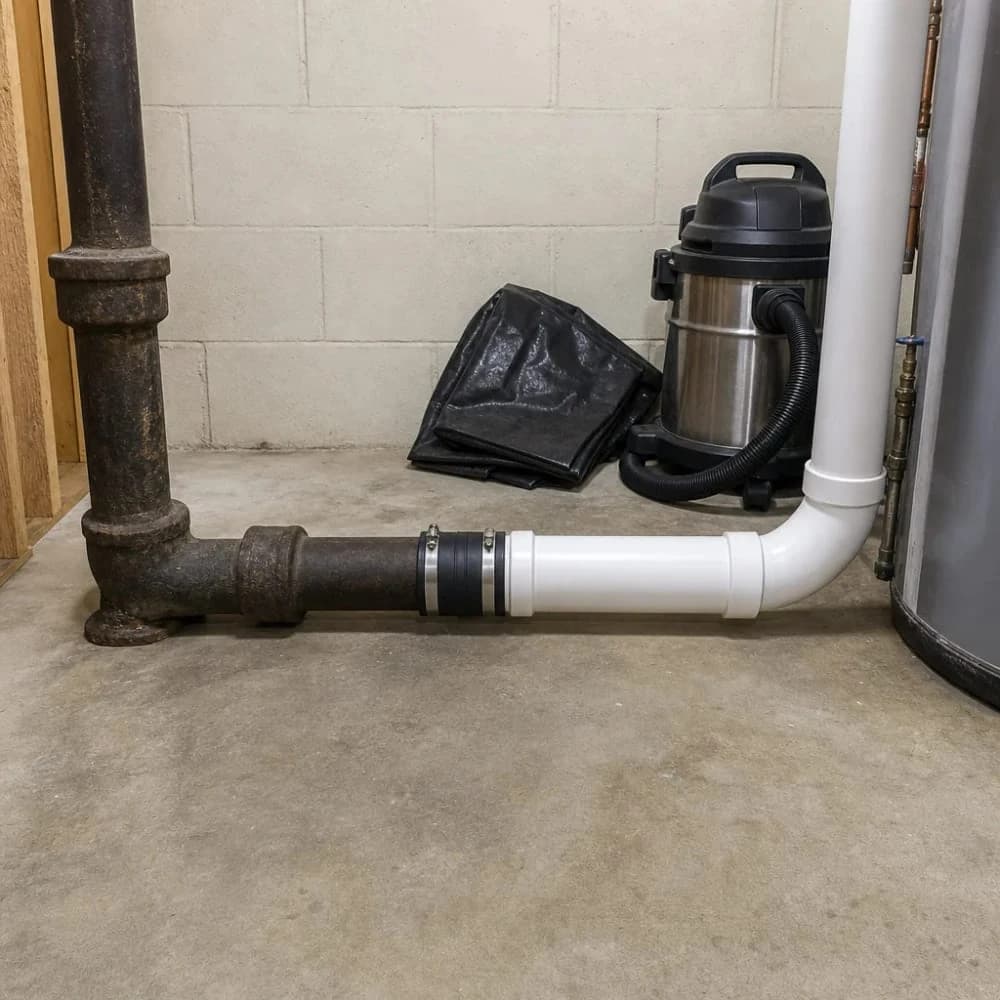
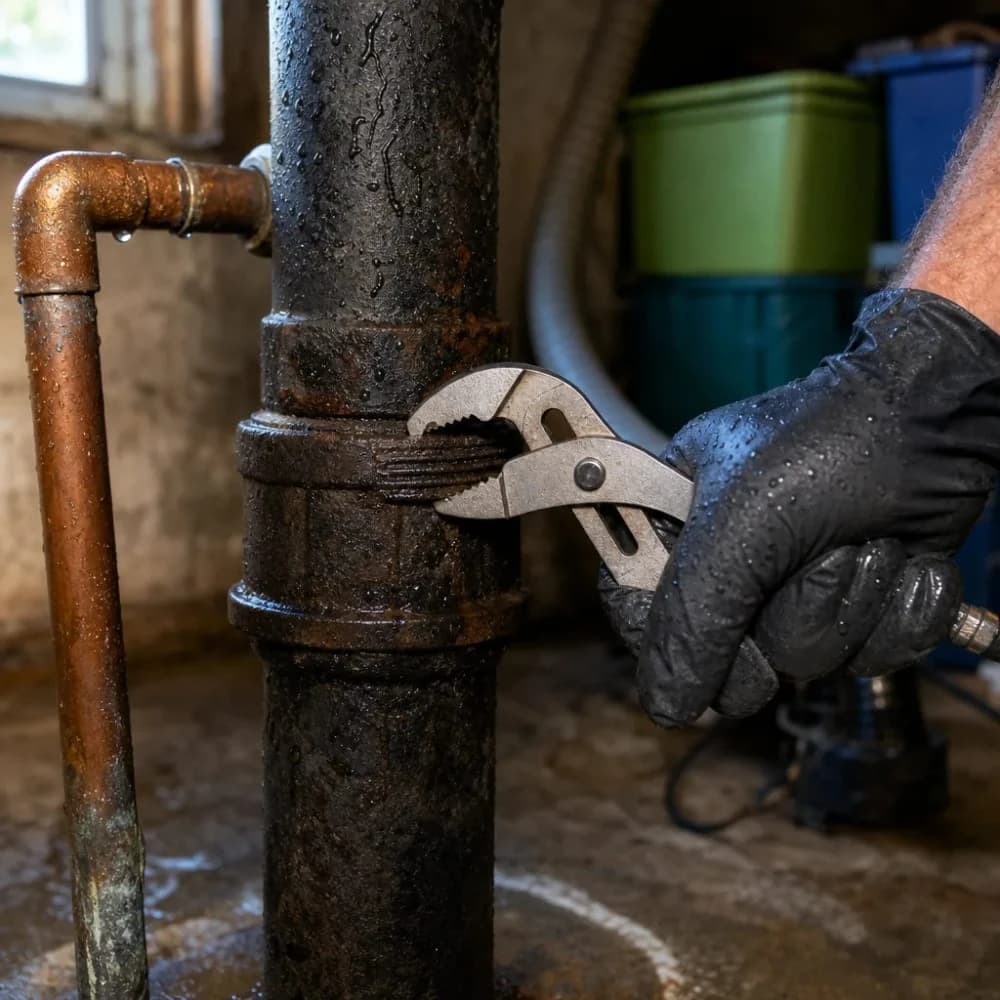
EWSU traces sewer backups to the private sewer line, which the homeowner owns and maintains, or to the City's main, so finding which side holds the blockage comes first. A merely slow floor drain is often a backup that hasn't happened yet, and clearing it costs less before another storm or a heavy laundry day.
Low basements face a second risk. The City calls much of Evansville a combined sewer, carrying storm water and sanitary flow together, so heavy rain can push the main up. Under EMC 13.05.240, an approved backwater valve has to protect any fixture or floor drain with its rim below the cover of the next sewer manhole upstream. EWSU's design manual puts the lowest fixture at least 1 foot higher than that rim, and EWSU's backup flyer tells owners to consider a backwater valve.
Act fast when water is rising, touching the furnace, water heater, or electrical panel, or when sewage is coming up. Stay out of standing water near electrical equipment.
Crawl Space Sump Pump and Discharge Line Checks
A crawl space sump pump only works if the pit collects the water and the discharge line gets it far enough away. When either fails, the same water cycles back under the house.
- The pit. A pit set too high misses the water, and one without a lid fills with debris.
- The pump. If it runs nonstop, won't start, or sets off its alarm in a storm, look at it before the next rain.
- The discharge line. Frozen, crushed, or emptying right beside the foundation, it sends the water straight back under the house.
The City sets where that water goes. Evansville's guidance for sump pump and downspout lines is a vegetated spot clear of the road right-of-way, and the line often ends in a pop-up valve. EMC 13.05.070 bans tying a sump pump, footing tile, or downspout into the sanitary sewer.
If your water runs onto a neighbor's lot, that's yours to fix too. The City only handles drainage inside drainage easements and the road right-of-way, and on private property the owner corrects it. A cracked or separated discharge line or yard drain calls for the yard drain repaired.
Crawl Space Drainage Cost: What Moves the Price
Crawl space drainage cost climbs with each step up the ladder, so starting at the bottom matters.
- Extending a downspout or discharge line so water lands farther from the house.
- Clearing a slow or backed-up floor drain line.
- Getting a pump that quit, or can't keep up, running again.
- Setting a new sump pit, pump, and discharge line.
- Running a drain along the inside edge of the crawl space or basement.
- Digging exterior drainage around the foundation.
A backwater valve on a basement line, concrete cutting, a cramped crawl space, and yard repair after a trench all add cost, and so can an outlet for the pump if there isn't one. The estimate is free and starts with the lowest step that could stop the water, before anything bigger is priced. Bigger yard projects are part of drainage work overall.
Common questions
- Can I dig out my own crawl space to make more room or add a drain?
- You can, but lowering the floor changes how water moves under the house, and you may hit footings or utility lines. Indiana law requires a call to 811 at least two working days before digging outside. If the digging is for water, find the source first; on Hosmer soils with a perched winter water table, a deeper crawl space can collect more water, not less.
- What should cover the dirt floor in my crawl space?
- A vapor barrier is the usual way to keep ground moisture from rising into the air under the house. It won't stop water that floods in after rain, so drainage comes first, especially from December through April, when USDA puts the perched water table in Hosmer soils 1.5 to 2.5 feet down.
- How does a French drain in a crawl space work?
- A perforated pipe set in gravel under the dirt floor runs along the crawl space's inside edge and carries water to a sump pit. The pump then sends it out a discharge line to a vegetated area, which is the City's recommendation, and never into the sanitary sewer, which EMC 13.05.070 forbids.
Where we do this work
This page is for crawl space / basement drain based out of Evansville, IN. We also work surrounding communities. City pages cover each market; as demand grows we can add service pages for specific cities without rebuilding this silo.
Related work
We also do this work for businesses across the area.
Commercial plumbingReady to Get Started?
Call (812) 677-8484 Now.