
French drain / exterior drainage in Evansville, IN
French drain or exterior drainage work catches water in the soil or on the surface and carries it downhill to a place it can soak in, before it reaches the foundation. It's what a yard needs when part of it stays a pond after every storm, water runs across the lawn toward the house, or a basement wall darkens by the back door. A wet spot on dry days, or one that smells, is more likely a pipe or sewer problem.
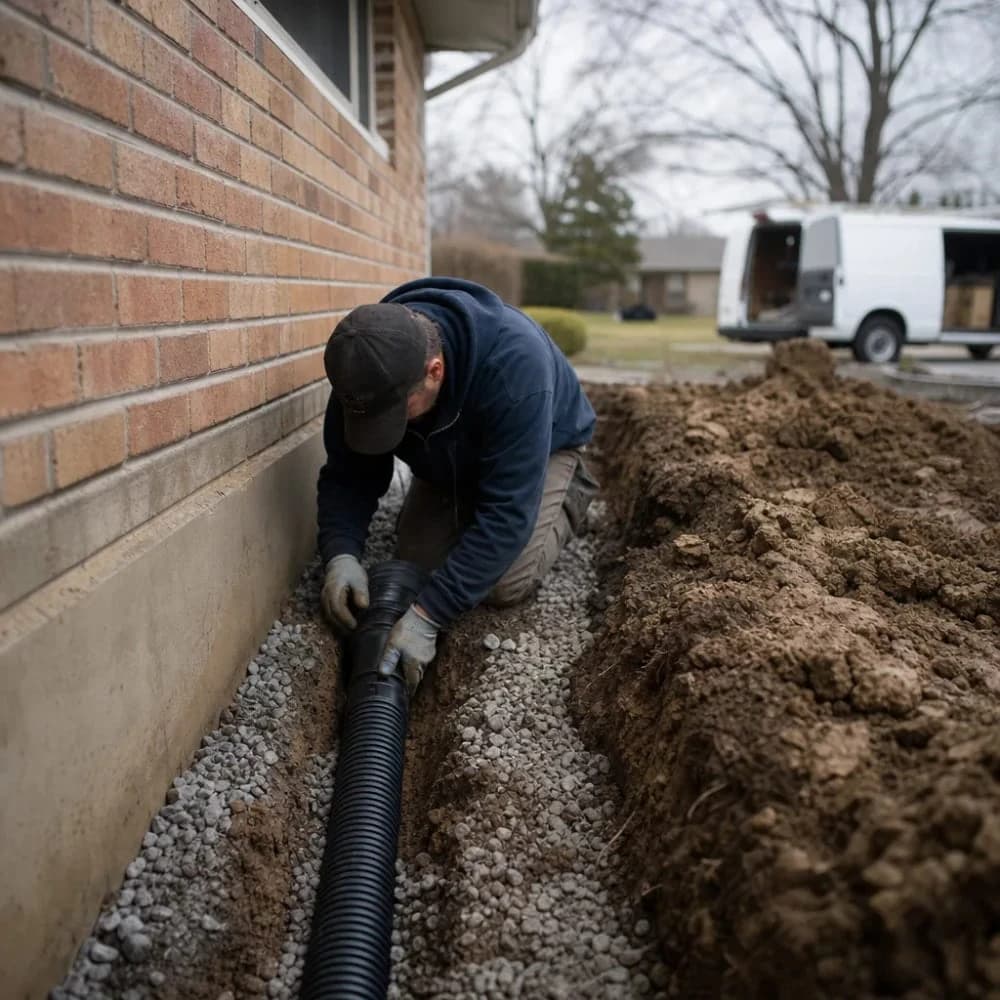
French Drain Installation: Depth, Slope, and Outlet
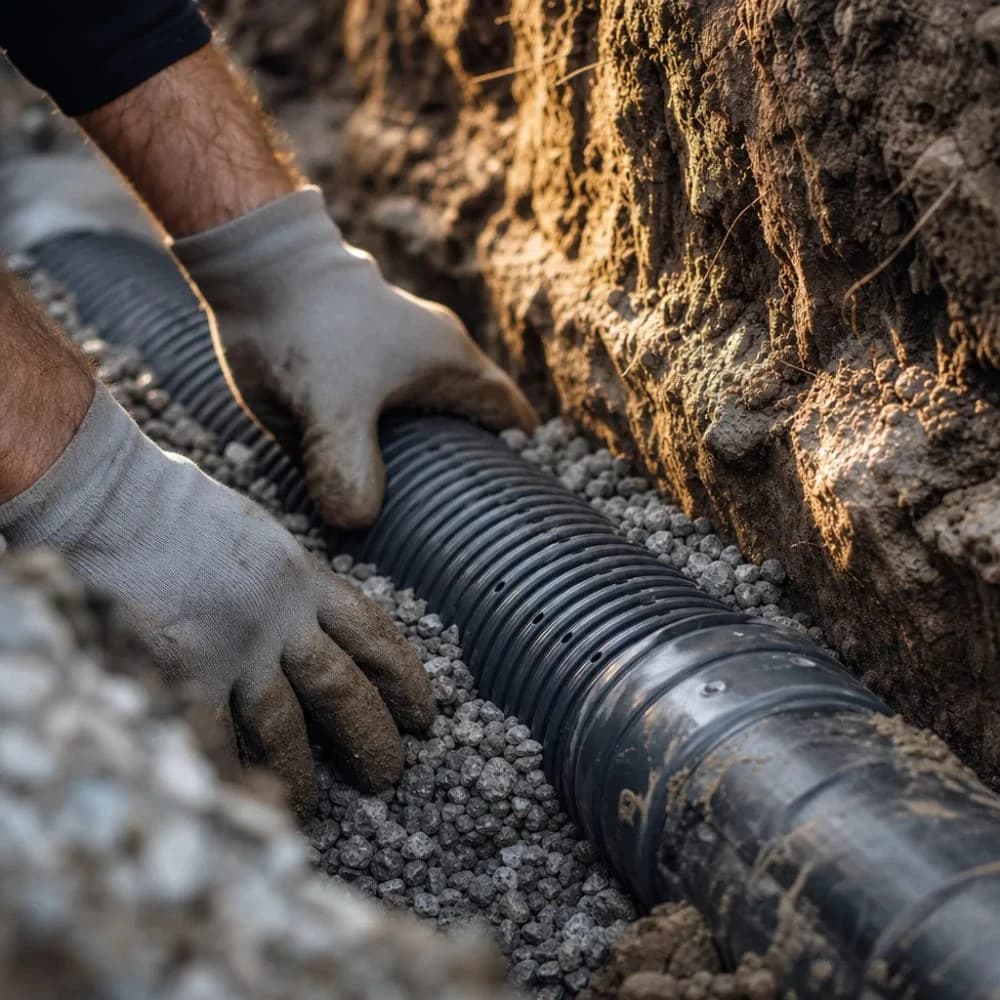
French drain installation comes next when the easy fixes haven't stopped water that returns with every rain: a trench lined with filter fabric, perforated pipe laid with a steady fall, and clean, washed stone around it.
Evansville's soil explains why so many yards need one. Hosmer soils cover much of the county's uplands and sit on a fragipan, which is dense soil about 30 inches under the surface; for December through April, USDA lists water perched 1.5 to 2.5 feet down. Since that water can't sink through the fragipan, it travels sideways along the top of it, so a shallow drain that intercepts it at that depth may catch winter and spring water a surface swale misses. That depth is our reading of the soil data, so the trench is still sized to the yard in front of us.
- Slope. Water only moves downhill. A pipe that runs flat or dips in the middle becomes a buried puddle.
- Outlet. The drain needs a real exit lower than the house. The City points to a vegetated area beyond the road right-of-way, where a pop-up valve often sits at the end.
- Fabric and stone. Without fabric, silt washes into the stone and pipe and clogs them. Small, round, or dirty gravel packs tight.
- Cleanout. An access point lets roots and silt be flushed out years later.
- Downspouts kept separate. A roof dumps a big volume of water at once; feeding it into a drain built for slow seepage makes it back up.
Before the trench, Indiana law requires a call to 811 at least two working days ahead, which gets gas, water, and electric lines marked.
Yard Drainage Solutions Besides a French Drain
Before digging, try the yard drainage solutions that cost less and cause less mess. Any one of them can stop the water.
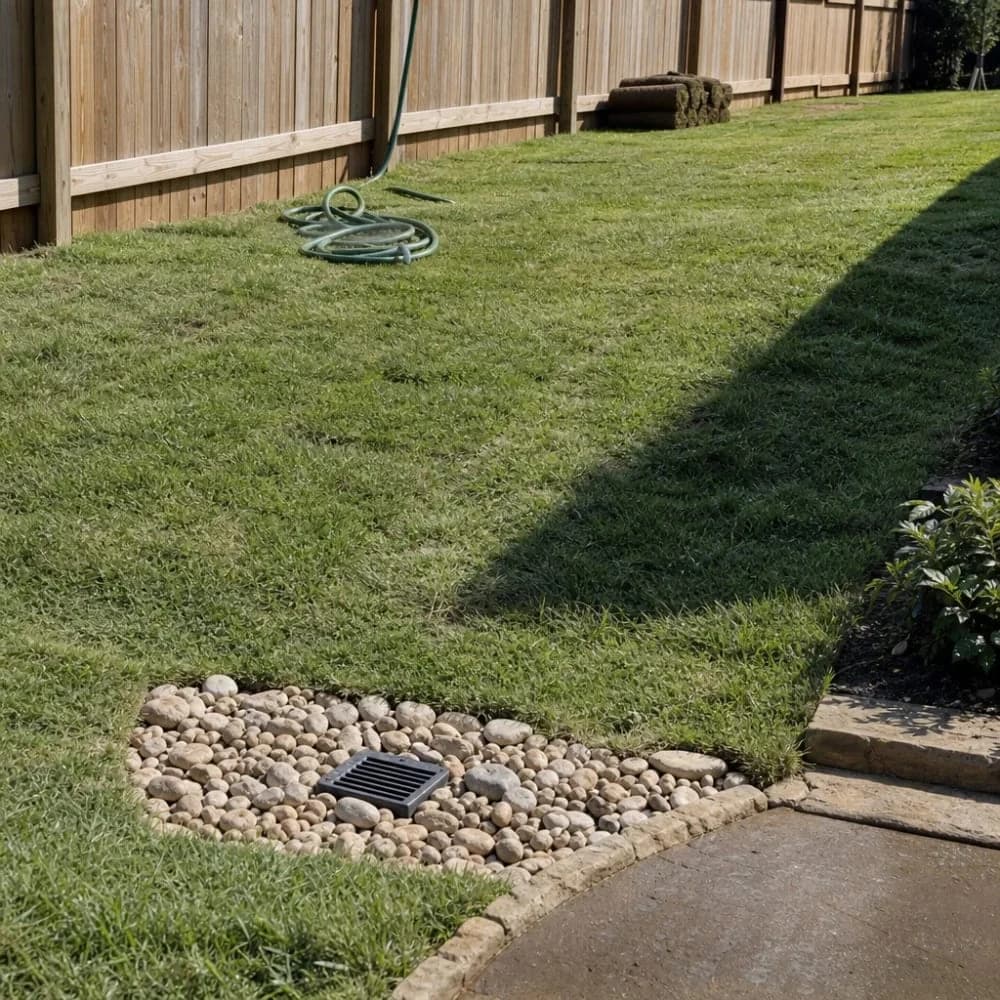
The usual list: regrade soil that has sunk into a trough along the foundation, pull mulch and beds back below the siding line, raise a patio or walk that now tips toward the house, shorten sprinkler runs that hit the foundation, clear window wells, and move a sump discharge line farther out so the same water doesn't come right back.
Make one change at a time and watch the next soaking rain. Evansville gets about 47.9 inches of rain a year on NOAA's 1991–2020 normals, and April tops the list at 5.14 inches, so a spring storm is a fair test. New sod, fresh fill around a new addition, or one record storm can make a yard look worse than its drainage really is.
Where the water lands is also your call. Evansville's engineering office deals with drainage only within easements and along the road right-of-way, which leaves a wet yard on private land to the owner, and pushing runoff toward a neighbor just moves the problem. A French drain, footing tile, or downspout can't legally be tied into the sanitary sewer under EMC 13.05.070.
French Drain Repair When an Old Drain Stops Working
A French drain that worked for a season and quit, with the same soft spot back and a sunken line where the trench was, usually has a pipe that sank, clogged with silt, or never had enough fall. French drain repair begins at the outlet and the cleanout, with water run through the line to see where it stops.
Location matters too. Down in the Ohio River bottoms, USDA puts the water table in undrained Wakeland soils 0.5 to 1.5 feet down from November through May, so a drain there may be fighting groundwater, not just runoff. A clogged line with a good grade can often be flushed. A line with no fabric, the wrong stone, or a flat run usually has to be dug up and rebuilt on a proper slope. An older yard drain or buried downspout line that has cracked or separated calls for a different fix; repairing that existing yard drain costs far less than a new French drain.
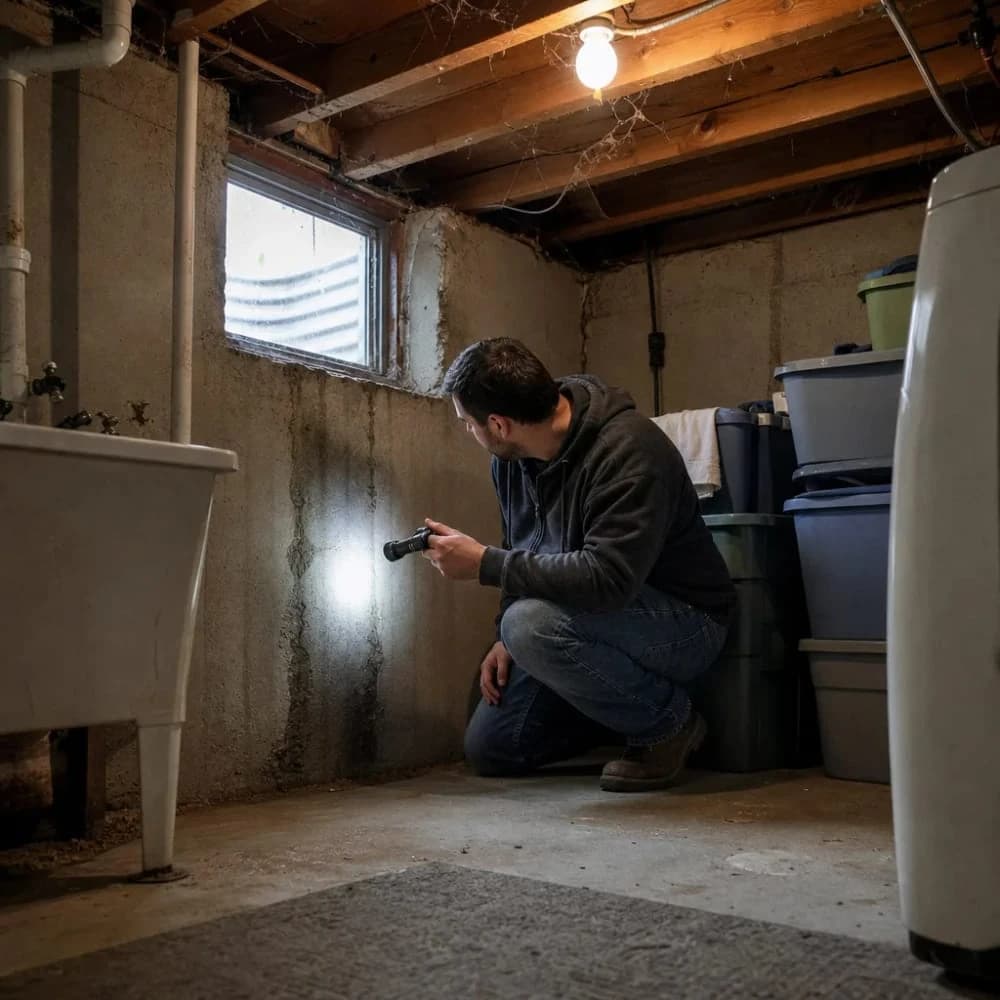
Interior water is the other split. Water running across the yard and piling against one wall is an exterior drainage problem. Water rising at the joint of floor and wall, or under the house in long wet stretches, often needs a crawl space or basement drain tied to a sump pit instead. Some homes need both.
French Drain Installation Cost: What Moves the Price
French drain installation cost turns on how long the run is, how deep it goes, and what's in the way.
- Length and depth. A short, shallow drain across a soggy spot is one job. A drain along a foundation, near the footing, is much bigger and has to be dug carefully so the soil holding the wall isn't weakened.
- The outlet. A natural low spot in your own yard is simplest. A long run to reach a vegetated outlet adds pipe and trench.
- Obstacles. Driveways, patios, trees, and buried utilities marked by 811 add hand digging and restoration.
- Materials. Rigid or heavy-wall pipe near a driveway, fabric, washed stone, and a cleanout.
- Restoration. Sod, beds, and walks put back after backfill, which is easier after April and May have passed, since NOAA's Evansville normals rank those two as the wettest months.
A short drain from a soggy spot to a lower corner of your own lot can be a fair weekend project. Long runs, flat lots, and drains near the foundation are where a mistake costs more than the drain. Bigger site work falls under drainage work as a whole.
Common questions
- Are exterior French drains effective at keeping water out?
- Yes, when they have steady slope, fabric-wrapped clean stone, and an outlet lower than the house in a vegetated area, as the City recommends. On Evansville's Hosmer soils, where water perches 1.5 to 2.5 feet down in winter and spring, a drain that intercepts that water keeps it off the foundation.
- How deep does an exterior French drain need to be?
- The answer depends on what it's catching. A drain for surface water across the yard can sit fairly shallow. One that protects a foundation wall runs much deeper, near the footing, and needs care so the soil under the wall isn't disturbed. Either way, 811 has to mark utilities at least two working days before digging.
- Should I get a French drain or an interior drain for my basement?
- If water runs across the yard and piles up against one wall of the house, an exterior French drain usually stops it before it reaches the wall. If water rises at the floor-wall joint or under the house in long wet stretches, an interior drain tied to a sump pit usually works better. Its discharge has to go to the yard, since EMC 13.05.070 bars sending it into the sanitary sewer.
Where we do this work
This page is for french drain / exterior drainage based out of Evansville, IN. We also work surrounding communities. City pages cover each market; as demand grows we can add service pages for specific cities without rebuilding this silo.
Related work
We also do this work for businesses across the area.
Commercial plumbingReady to Get Started?
Call (812) 677-8484 Now.