Exterior drain repair in Evansville, IN
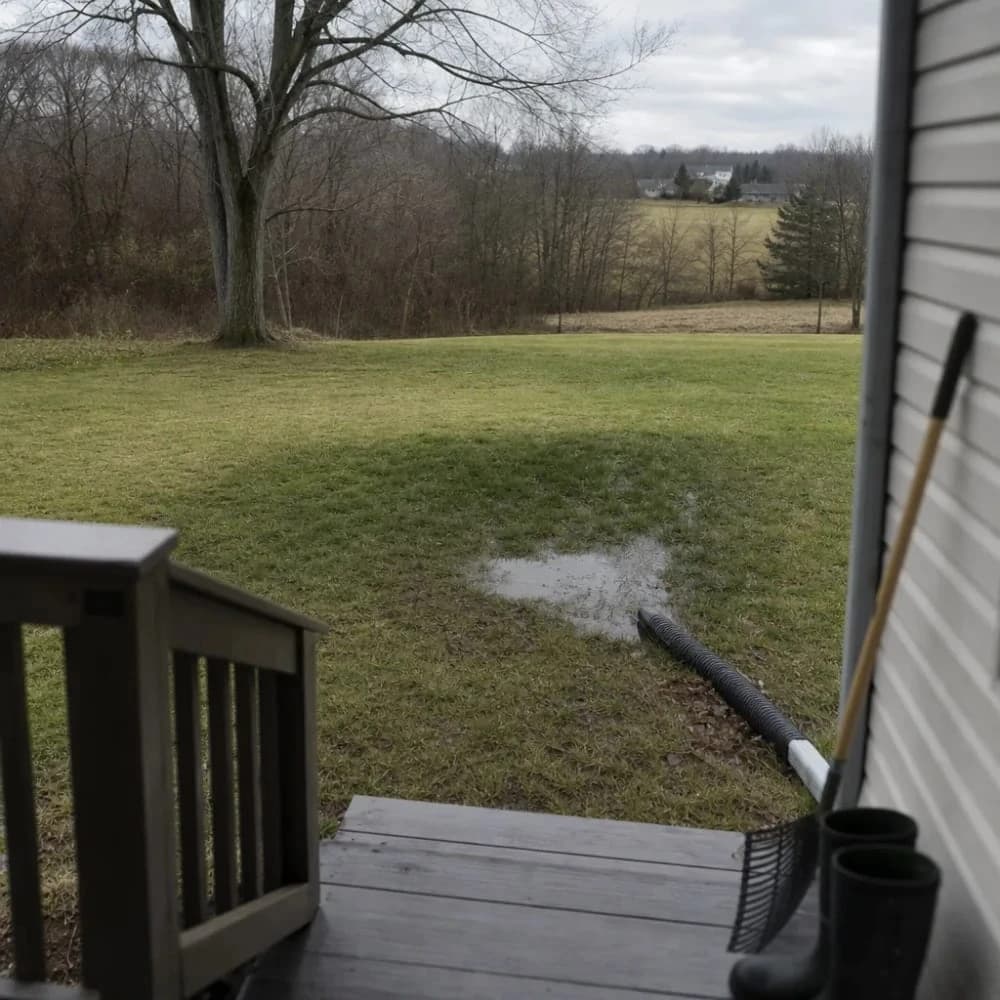
In Evansville, exterior drain repair means fixing the buried pipe and also sending its water somewhere the City allows, which rules out the sanitary sewer. Water bubbling out of a yard grate, a downspout overflowing where it meets a buried pipe, or a sunken strip along a drain line means a pipe that is clogged, cracked, pulled apart, or emptying where it shouldn't. Water that soaks in within a day of a hard storm usually isn't a broken line.
Yard Drain Repair or a Yard Drainage Problem?
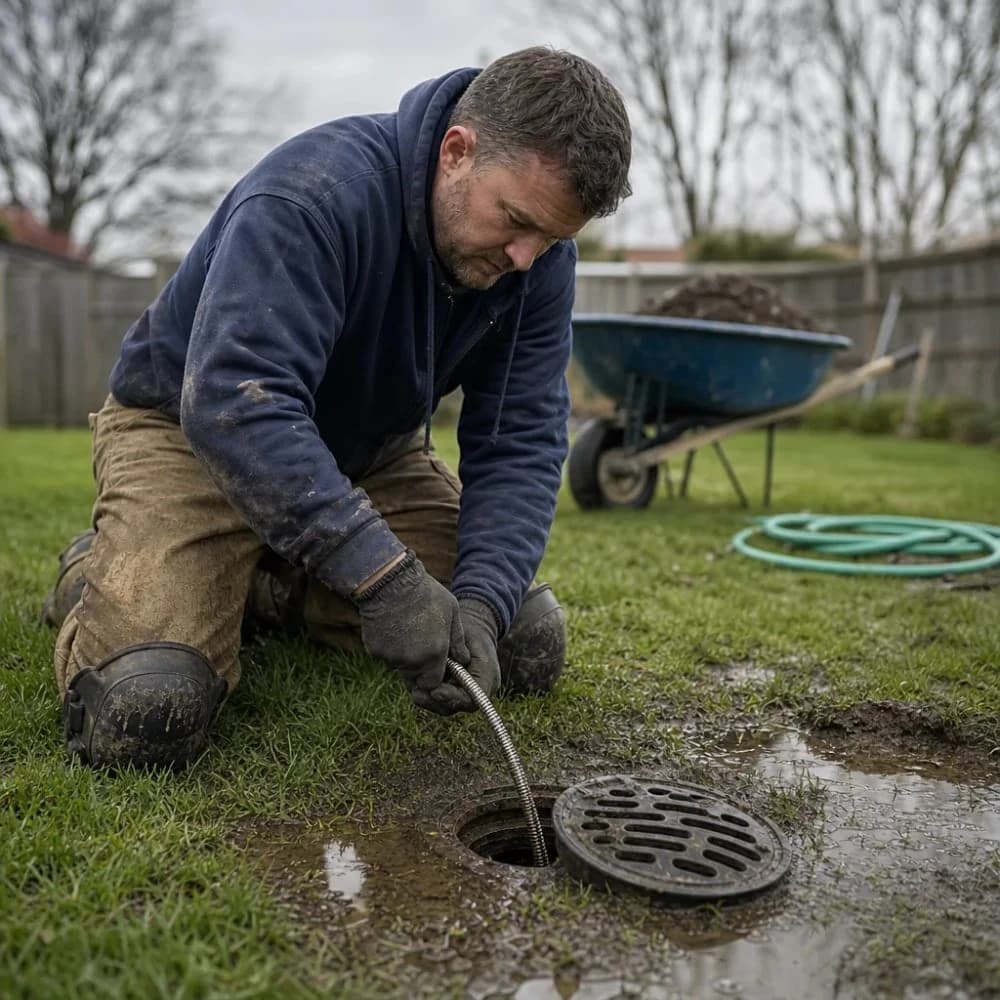
If the wet spot sits on top of a buried pipe or right at a grate, it's likely a yard drain repair. If it sits in a low part of the lawn with no pipe anywhere near it, that's yard drainage, and grading or a French drain is the likelier answer than a repair.
Timing helps tell them apart. A broken or blocked line shows the same symptom after every rain, even a light one: water backing up at the inlet, ground staying soft along the pipe's path, or a downspout spilling at the joint where it enters the ground.
Season matters on upland lots. USDA soil data puts Hosmer soils on about 70% of the Hosmer association, roughly 27% of Vanderburgh County. Those soils have a dense layer about 30 inches down and a perched seasonal water table 1.5 to 2.5 feet below the surface from December through April. A lawn that stays soggy in late winter may be that soil, not a cracked pipe, so a flow test should come before any digging.
Water collecting under the house instead of in the yard is a job for a crawl space or basement drain. Move first on water standing against the foundation from a failed outdoor line, because each rain pushes more of it into the soil beside the wall.
Underground Downspout Drain Backing Up: Clog or Broken Pipe?
When a downspout overflows at the ground connection during rain, the buried pipe under it isn't moving water. An underground downspout drain usually fails one of three ways: leaves and grit packed at the elbow, roots in a joint, or a section crushed or separated underground.
A garden hose run into the inlet is a fair first check. Clean, strong flow at the far end means loose debris was likely the problem; water that backs straight up, a snake that stops on something hard, or mud and root bits coming out mean the pipe itself needs work.
The other half of the question is where that line ends. Evansville code (EMC 13.05.070) makes it illegal to send downspouts, sump pumps, footing tiles, window-well drains, or driveway drains into the sanitary sewer. If a repair turns up an old tie-in to the sanitary lateral, the fixed line has to go somewhere else.
The City's drainage FAQ says sump pump, private drain, and downspout discharge should go to a vegetated area outside the road right-of-way, and that in most cases a pop-up valve can go on the end of the pipe. Evansville's stormwater ordinance (EMC 13.25) also lists foundation drains, footing drains, and crawl-space pump water among the clear water allowed into the storm system.
Catch Basin Trouble on Driveways and Lots
Standing water at a driveway grate, at the bottom of a sloped drive, or at a parking-lot inlet usually means the catch basin or the pipe leaving it is blocked. A catch basin has a box below the grate where sand and debris collect; once that box fills, water stands at the grate even when the pipe beyond it is sound.
Clearing the box by hand and running water through it shows which part is at fault. Water that drains after the box is emptied points to buildup; water that still stands points to the outlet pipe, which then needs the same flow check as any other buried line.
On a commercial lot, the same signs come with a slip risk at entrances and loading docks, so the work is usually timed around business hours with the area coned off.
Cleaning or Replacing a Section of Yard Drain
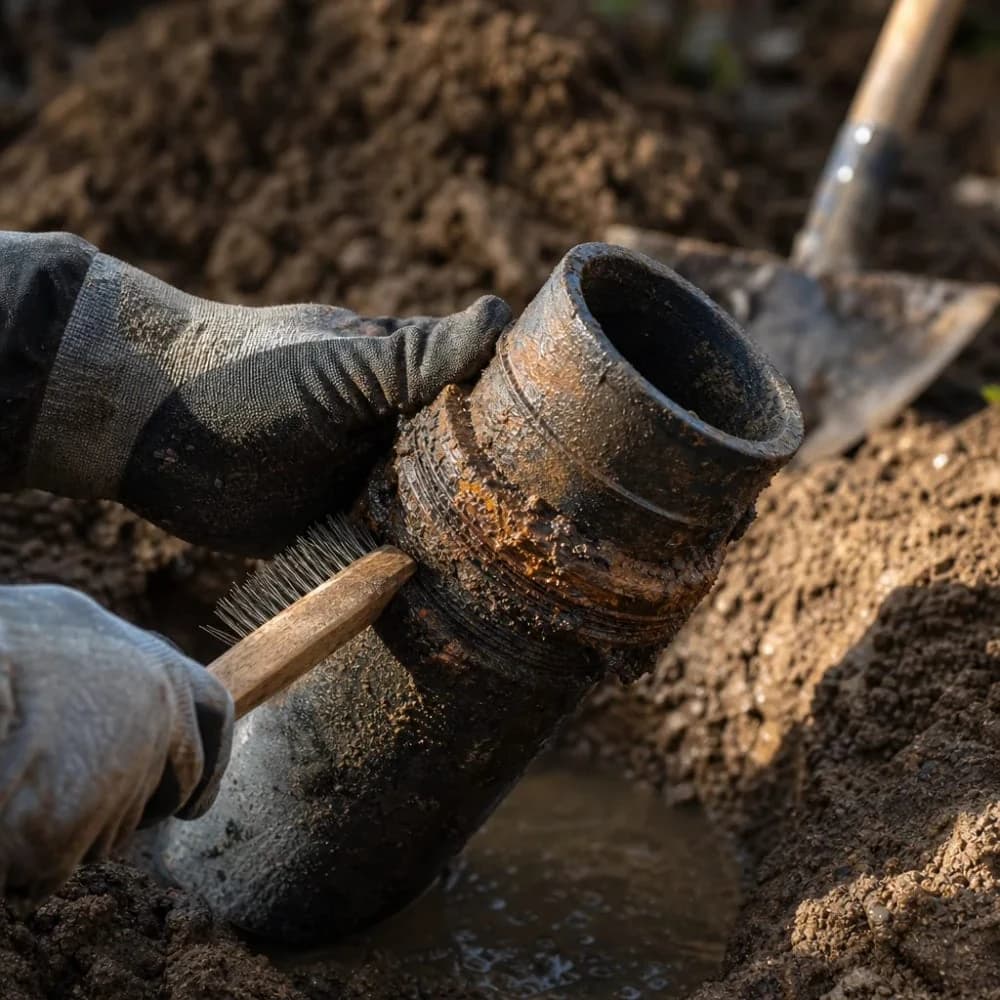
When a hose or hand snake opens a yard drain only for a while, the choice is between clearing it properly and cutting out a section to replace. A line that flows freely after it is cleared and stays clear through the next rain was clogged. Pipe that clogs again, carries soil, or sits under a sinking strip of lawn has a break that lets dirt in and water out.
The size of the job comes from finding the bad spot first, by running water through the line and watching where it stops. There is no trip or diagnostic fee to find out whether your line needs clearing or a section replaced, so you know which job you are paying for before any trench is opened.
Before a shovel goes in, buried utilities get marked. Indiana law requires a call to 811 at least two working days before digging, and gas, power, water, and cable lines often run close to a yard drain.
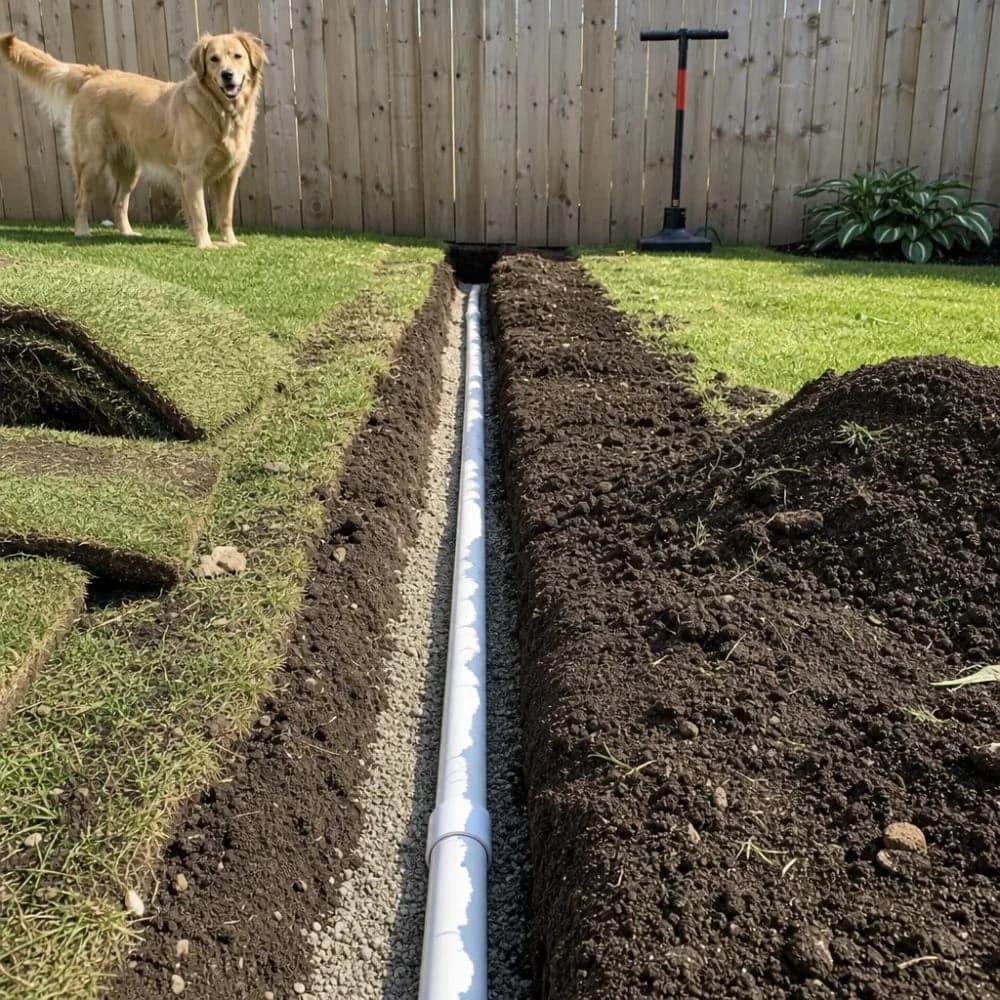
If a section does come out, only the bad run is opened: sod lifted in strips, concrete cut over the damage only, new pipe coupled to sound pipe on each side and set on a steady downhill slope. Water runs through the repair before backfill so the joints are seen working, and the real proof is the next storm draining away instead of pooling.
Cost moves with depth, the length of the damaged run, what sits on top of it (lawn, a flowerbed, a sidewalk, a driveway), and whether roots are involved. If the repaired line still has nowhere legal to empty, the outlet becomes part of the job, and broader grading or a buried gravel system falls under drainage service.
Common questions
- Can a downspout or sump pump drain tie into the sewer in Evansville?
- Not into the sanitary sewer. Evansville code bans connecting downspouts, sump pumps, footing tiles, window-well drains, and driveway drains to it. The City's guidance is to discharge into a vegetated area outside the road right-of-way, often through a pop-up valve.
- Will tree roots come back after a yard drain repair?
- They can, especially when the tree stays close to the line. Roots found in the pipe are cut out during the repair and the joint is replaced, and asking how the new joint is sealed is the best way to slow regrowth at that spot.
- Does fixing a yard drain mean tearing up the whole yard?
- No. We find the bad section first and open only that run: sod comes up in strips, and concrete is cut just over the damage. A shallow dip can form along the trench after a few rains and is easy to top off.
Where we do this work
This page is for exterior drain repair based out of Evansville, IN. We also work surrounding communities. City pages cover each market; as demand grows we can add service pages for specific cities without rebuilding this silo.
Related work
We also do this work for businesses across the area.
Commercial plumbingReady to Get Started?
Call (812) 677-8484 Now.