
Bathtub installation in Evansville, IN
In Evansville, bathtub installation means new plumbing that the Building Commission inspects while the walls are still open: supply lines, a drain and trap, and a valve where none sat before. That covers a basement bathroom being finished, a tub moved to another wall, or a soaking tub set where a shower stall used to be. Swapping a worn tub into its old opening isn't this job, and neither is fixing a cracked tub.
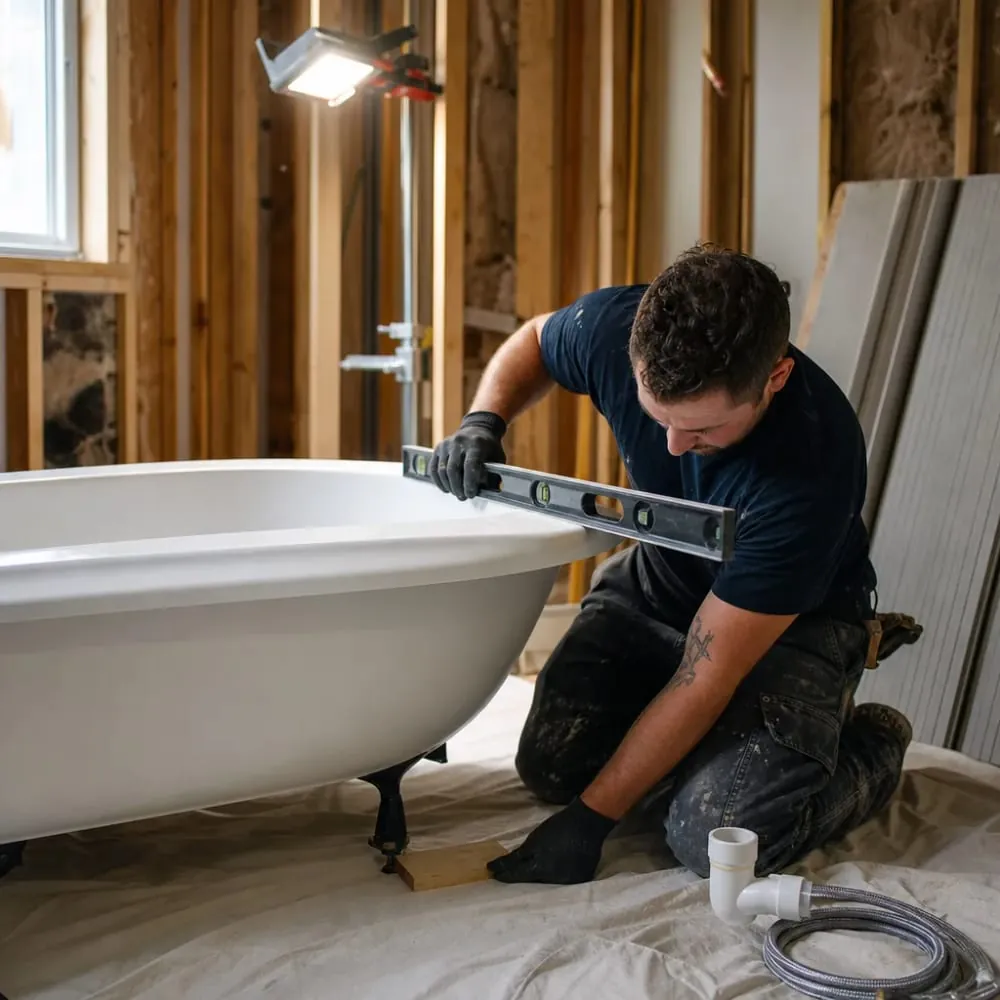
Bathtub Installation for a New or Relocated Tub
When there is no tub to swap in place, bathtub installation starts with where the drain can go. A tub is the heaviest fixture in most bathrooms once it's full, and its drain needs room for a trap, a slope, and a vent, so the floor and the framing decide the layout as much as the tub catalog does.
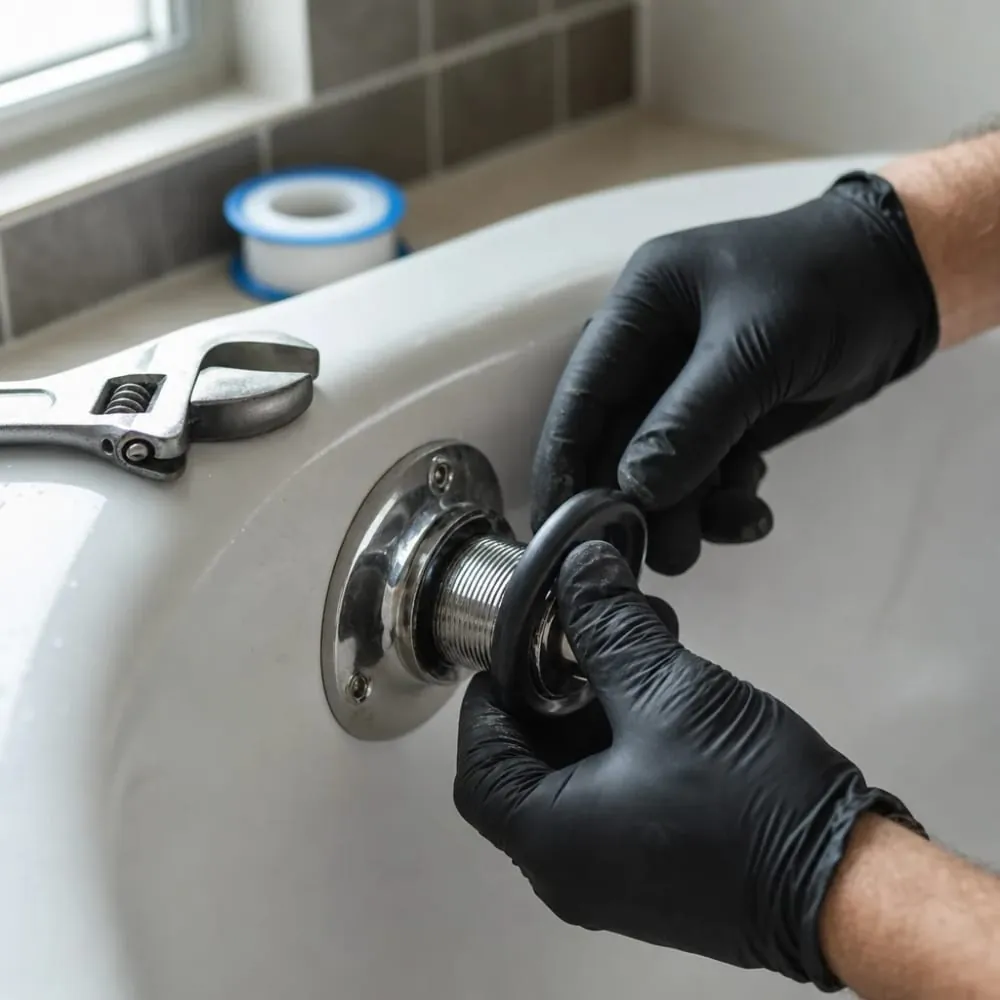
Evansville's houses make that planning matter. Census figures count 59,180 homes in the city, 21.7% of them from 1939 or earlier, with a median build year of 1961. Moving a tub in a house that age often means opening old framing, finding a vent path, and tying into drain pipe that has been in the floor for decades.
Basement tubs add one more check. Under EMC 13.05.240 in the Evansville code, a fixture whose rim sits lower than the next manhole cover upstream on the sewer has to drain through a backwater valve, and EWSU's design manual asks for the lowest fixture to sit 1 foot or more above that manhole rim. A tub in a low basement may need that valve, or even a pump, before it drains safely.
If the old tub can stay where it is and only the shell has failed, the shell replaced is less work. A drip, a chipped surface, or a slow drain usually calls for a repair with the tub left in place instead. And when nobody in the house takes baths anymore, turning the tub into a shower may fit better than a new tub.
How Bathtub Installation Works: Drain, Valve, and Leak Test
Most of a bathtub installation happens before the tub is ever visible. The rough plumbing goes in first: supply lines to a new valve, a drain and overflow, and a trap below the floor.
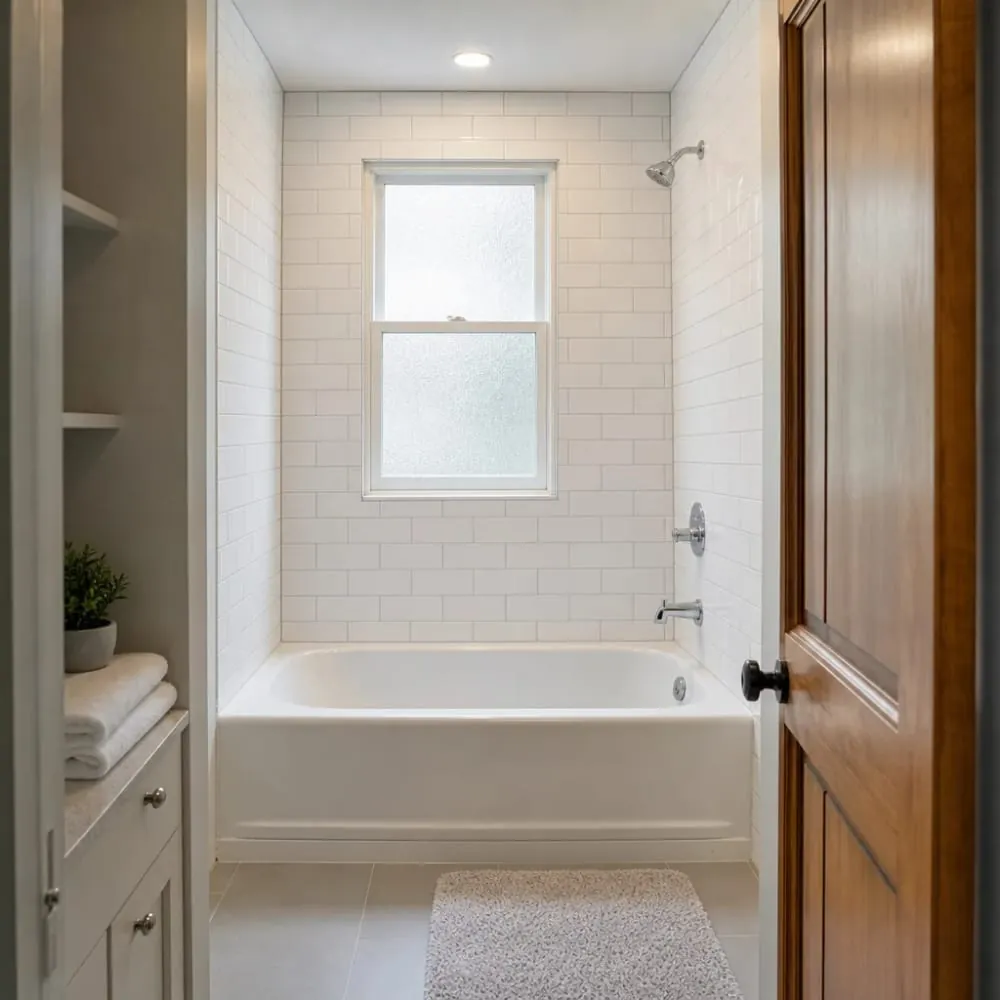
- Trap and drain. A bathtub, with or without a shower head, gets a trap of at least 1½ inches under Indiana's residential trap-size table. The drain needs steady slope and a working vent, or the tub gurgles and drains slowly once the wall is tiled.
- Valve. The valve blends hot and cold on the way to the spout. In commercial and multi-unit buildings, Indiana's plumbing code calls for pressure-balance or thermostatic tub and shower valves (ASSE 1016) set no higher than 120°F, and it caps bathtub fill water at 120°F with an ASSE 1070 device. A house falls under the 2020 Indiana Residential Code, but the same kind of scald-limiting valve makes sense there.
- Overflow. The overflow ties into the drain behind the tub, and its gasket is one of the joints most likely to weep later.
- Setting the tub. It needs a solid, level base. Many acrylic and fiberglass tubs call for a mortar or foam bed underneath so the tub floor won't flex.
The leak test comes before tile or drywall. We fill the tub to the overflow and drain it while someone watches every joint from below or through the open wall. If a joint lets go behind a finished wall, the repair ends up in the ceiling downstairs.
Bathtub Installation Permits and Inspections in Evansville
New drains and supply lines are permitted work in Evansville. Before work starts, the Building Commission needs a building permit on file for the plumbing, and under EMC 15.05.100 covered work gets inspected before anything goes over it.
The permit desk is at the Civic Center Complex, Room 310, 1 NW Martin Luther King Jr Blvd, and inspections are scheduled at 812-436-7867. So the rough plumbing for a new tub gets inspected while the wall is open, and the schedule needs a gap between rough-in and tile.
Which rulebook applies depends on the building. Indiana's 2020 Residential Code covers one- and two-family homes. The 2012 Indiana Plumbing Code covers Class 1 buildings, a group that takes in rentals with three or more tenants and any building with employees. So a duplex tub and an apartment-building tub can answer to different standards.
Landlords have an extra reason to test. In a multi-unit building, a tub drain that leaks reaches the unit below, and the tenant there finds it first.
Bathtub Installation Cost in an Existing Bathroom
Bathtub installation cost depends less on the tub you pick than on how much has to be built around it.
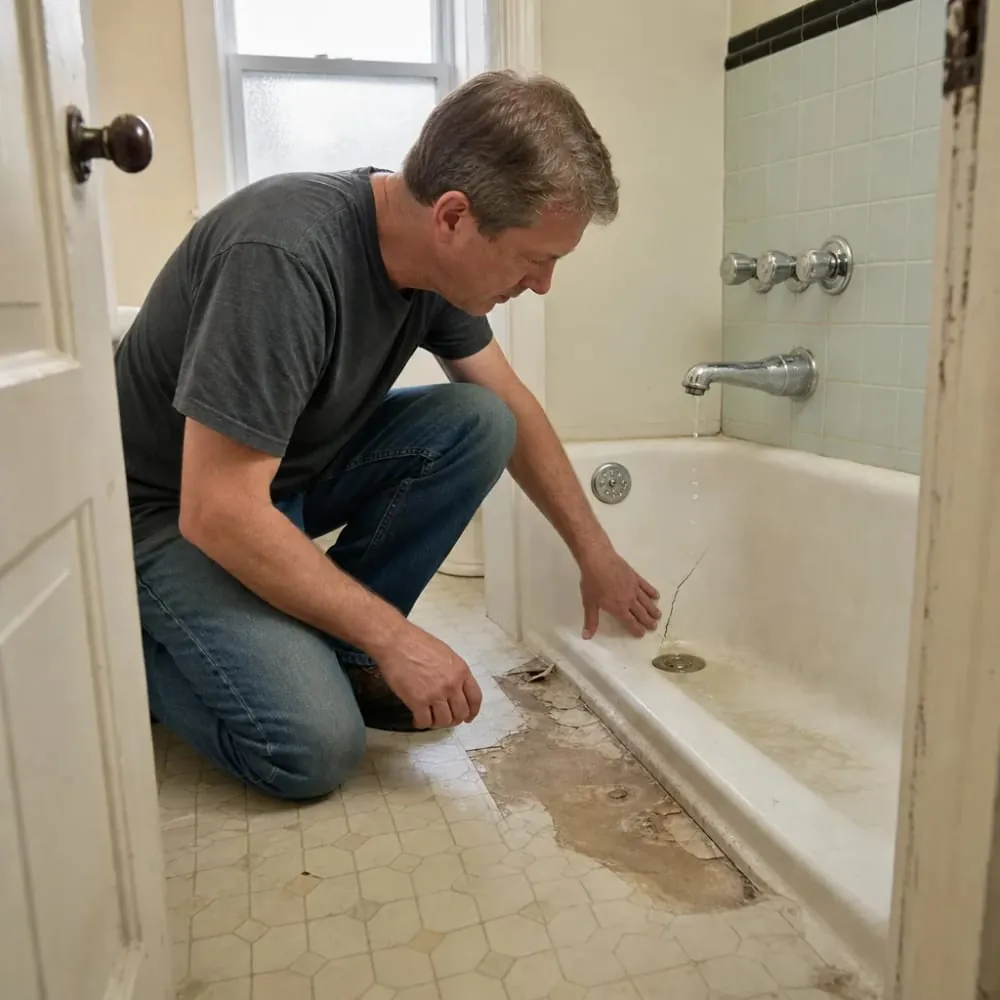
- The drain path. Using the same drain spot as the old one keeps it simple; a new trap location, a new vent, or a trench through a slab does not.
- The valve. A new pressure-balance or thermostatic valve, and any wall opening needed to reach it, counts toward the plumbing cost.
- Floor and framing. Soft or rotted subfloor, or joists that need help carrying a full tub, get repaired before the tub goes in.
- Tub type. An alcove tub sets against three walls. A freestanding tub needs its drain and floor-mounted supply lines exactly where it will sit.
- Basement work. A backwater valve under EMC 13.05.240, or a pump for a below-grade tub, adds to the parts and labor.
- Who buys the tub. You can supply it, as long as its drain side, size, and overflow location line up with the rough plumbing.
For a larger change, such as moving several fixtures or gutting the room, a full bathroom remodel lets the tub be planned along with the floor, walls, and vanity.
Common questions
- Can a handyman install a bathtub for me?
- Recaulking, regrouting, or swapping a stopper are fine handyman jobs. Once the work reaches the drain, trap, supply lines, or valve, it's plumbing, and in Evansville that means a permit before anyone starts and an inspection while the wall is still open. Those same parts are the ones that leak behind finished tile and drywall.
- How long does my bathroom need to be out of use during a tub installation?
- A tub that goes where an old one drained, on a sound floor, can move quickly. A new drain location, rotted subfloor, or new tile stretches the job, and the rough plumbing must clear its EMC 15.05.100 inspection while the framing is bare. In a house with one bathroom, ask for a timeline first and plan a few days of showers elsewhere.
- What should I check before buying my own tub for installation?
- Measure doorways and the hallway turn, and confirm the drain side (left or right) matches the plan. Check where the overflow sits, whether the tub needs a mortar or foam bed, and that its drain suits a trap of 1½ inches or more, the tub minimum under Indiana's residential trap table. A tub that won't fit through the door, or drains on the wrong end, stops the job on install day.
Where we do this work
This page is for bathtub installation based out of Evansville, IN. We also work surrounding communities. City pages cover each market; as demand grows we can add service pages for specific cities without rebuilding this silo.
Related work
- Tub-to-shower conversion01
- Bathtub replacement01
- Vanity / bathroom sink install01
- Bathroom faucet install01
- Plumbing fixture installation01
- Bathtub repair01
We also do this work for businesses across the area.
Commercial plumbingReady to Get Started?
Call (812) 677-8484 Now.