
Bathtub replacement in Evansville, IN
Bathtub replacement takes the old tub out of its opening, checks the floor and plumbing while they're exposed, and sets a new tub on fresh drain parts that Evansville's Building Commission inspects with the wall still open. It's the answer to a crack that opens when you step in, rust through a steel tub, or a brown ring on the ceiling below. Chips, loose caulk, and a dripping spout usually don't need a new tub at all.
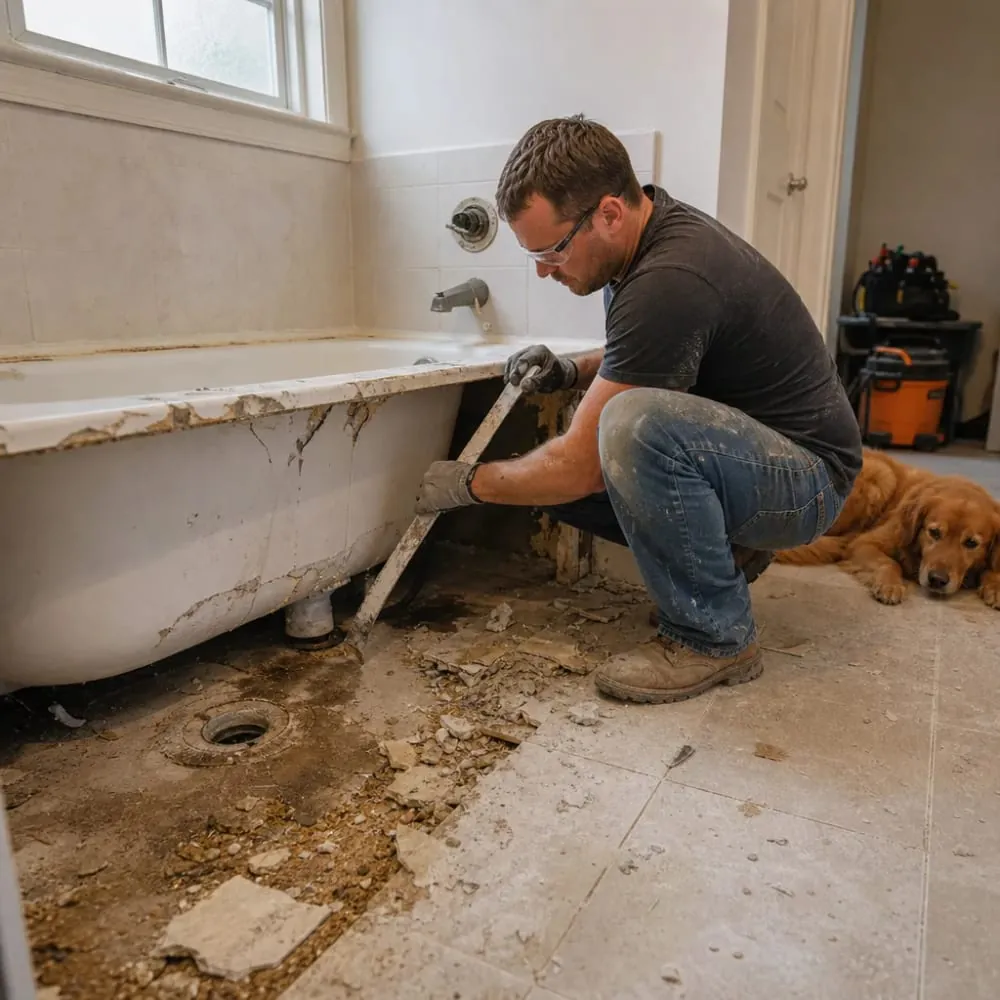
Signs a Bathtub Replacement Is Due, Not a Patch
Bathtub replacement is usually the fix for water that gets past the tub into the floor, the wall, or the room below, because a patch on top can't reach the shell or the base underneath.
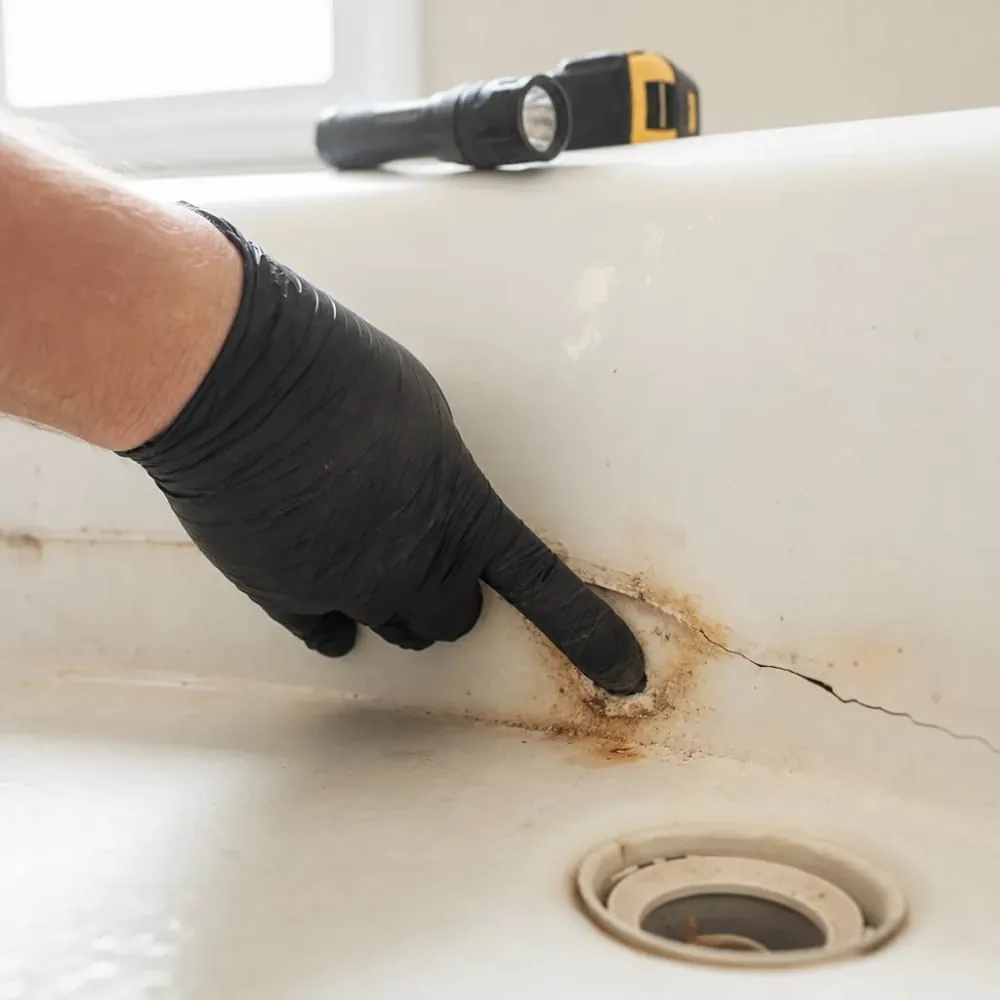
On a fiberglass or acrylic tub, a crack that opens and closes underfoot means the base has stopped supporting the shell, and filler will crack again. Other signs say water has already reached the subfloor or is sitting behind the surround: a spongy spot in the floor next to the tub, a stained ceiling below, rust eating through a steel tub near the drain, or a musty smell that comes back after cleaning.
Many Evansville tubs are old enough to reach this point. Per Census data, 21.7% of the city's homes date from 1939 or before, and the median build year is 1961, so original steel and cast iron tubs, and the drain parts under them, are often decades old.
Other reasons are about use, not damage. A tub may be too hard to step into, or a different size may suit the room. When the tub is solid and dry and all it has is a sluggish drain, a small chip, or a drip, a repair that leaves the shell in place costs far less. Putting a tub on a wall that never had one is a new installation with new drain lines.
Bathtub Drain Replacement and the Valve
With the old tub out and the wall open, the bathtub drain replacement and a look at the valve happen while everything is in plain sight. A new tub on tired parts still leaks, and the next chance to reach them is years away.

- Drain and overflow. Their gaskets dry and crack with age, so the new tub comes with its own drain and overflow, sized to fit, rather than old parts forced to line up.
- Drain side. Alcove tubs come with the drain on the left or the right. A tub that doesn't match means moving the drain, which should be on the quote.
- Trap. A bathtub trap has to be 1½ inches or larger per Indiana's residential trap table, and an old drum trap or a rusted trap under the floor is easiest to replace now.
- Valve. An old valve that drips, sticks, or swings hot when a toilet flushes is worth replacing now, with the wall off. Commercial and multi-unit buildings in Indiana have to use pressure-balance or thermostatic tub and shower valves that max out at 120°F under the state plumbing code, and the same type suits a house.
- Wall above the tub. Where a tub has a shower head, the base 2006 plumbing code text wants the wall smooth and waterproof to at least 70 inches over the drain. A house answers to the 2020 Indiana Residential Code, but that height still makes a good target for the new surround.
Not every part needs replacing. A valve that works and a trap in good shape can stay, as long as someone checks them first. Keep any access panel behind the tub; it saves cutting tile the next time the drain or valve needs work.
Bathtub Replacement, Stage by Stage
A bathtub replacement runs in stages, and most surprises turn up once the old tub is out. It starts with measuring the doors, hall, and stair turns, because a one-piece tub that won't make the corner ends the job before it starts.
- Prep. Water to the tub is shut off and the path to the door is covered.
- Opening the wall. Most alcove tubs have a lip behind the tile, so the bottom rows of tile or the whole surround come off.
- Pulling the old tub. Acrylic and fiberglass carry out whole; cast iron is often broken up in the room.
- Checking underneath. Rot, old leaks, and framing problems are fixed before anything new sits on them.
- Setting the new tub level and fully supported, often on the support bed the maker specifies.
- Hooking up the drain, overflow, and valve, then filling the tub and checking every joint with the wall still open.
- Closing the wall, setting the surround or tile, and caulking.
New drain and valve work needs a permit, issued by Evansville's Building Commission, before anyone starts. Under EMC 15.05.100, covered work is inspected while it's still exposed, so the open-wall leak test and the inspection happen together. For a rental with three or more tenants, the 2012 Indiana Plumbing Code governs rather than the residential code, and a tub over another unit should get a ceiling check below once the job is done.
Bathtub Replacement Cost: How Much It Costs to Replace a Bathtub
How much it costs to replace a bathtub depends more on the opening and plumbing than on the tub itself.
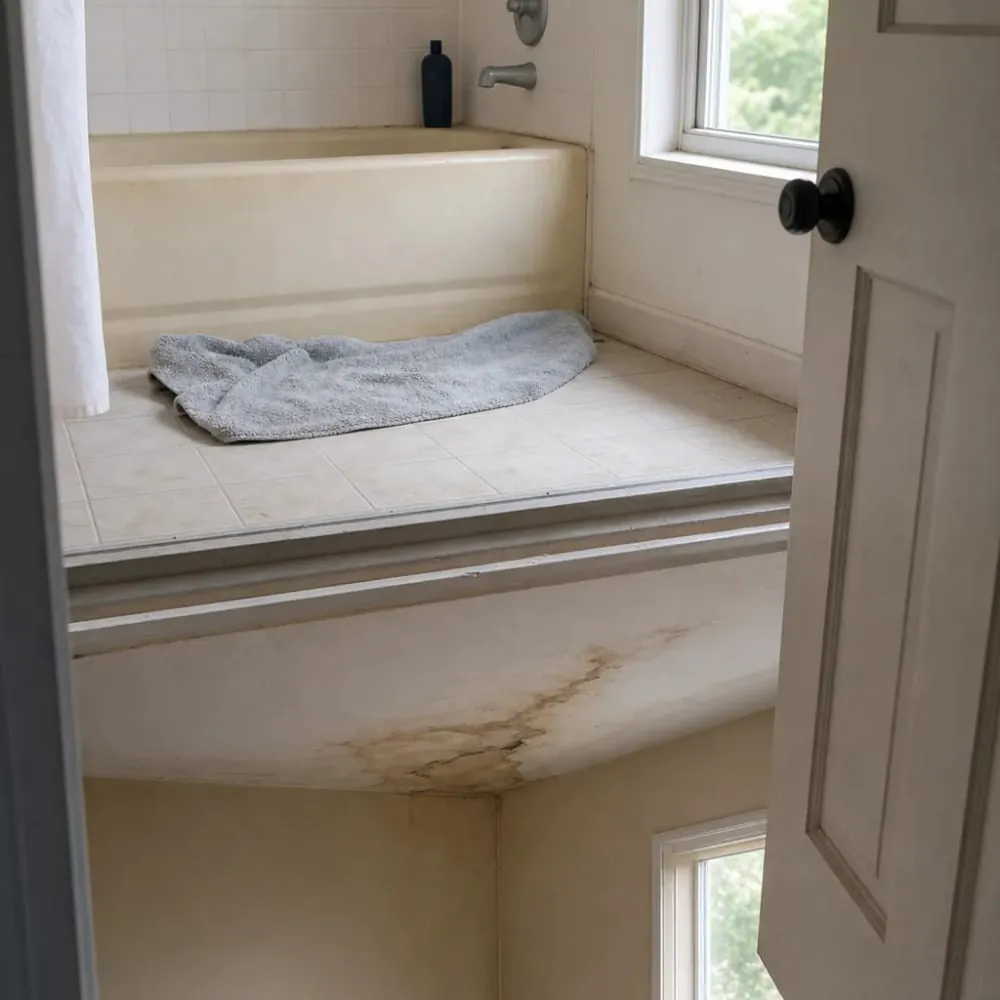
- Same size or not. One alcove tub for another of the same size is the simplest swap. A freestanding tub, a drop-in, or a new size changes framing and the drain location.
- The walls. A panel surround is quicker to put up than tile, and old tile that's no longer made may mean redoing the whole wall.
- What's under the floor. From a basement or crawl space the drain is right there; on a slab, reaching it can mean breaking concrete.
- Hidden damage and extras. A rotted subfloor discovered once the old tub is pulled, plus extras like a new valve, spout, shower head, or grab bars, gets priced and agreed before the work is done.
- A much bigger tub. A deep soaking tub can outrun the water heater's supply, which belongs in the plan before you buy.
A clear quote says whether hauling the old tub, closing the wall, new drain parts, and the permit are included; Evansville's plumbing fee schedule (EMC 15.05.470) gives fixture replacement a line of its own. If the whole bathroom is getting redone, a bathroom remodeling project can fold the tub in with the floor and vanity, and in a house where nobody takes baths, a tub-to-shower conversion may be the better swap.
Common questions
- Can a handyman replace my bathtub, or do I need a plumber?
- Bathtub replacement means disconnecting and reconnecting the drain, overflow, and often the valve behind the wall, then leak testing them. That's plumbing: in Evansville it takes a permit up front and an EMC 15.05.100 inspection with the wall still open. And a soft subfloor hiding under the old tub gets repaired before the new one is set.
- Who should I contact first when my tub starts leaking or cracking?
- Start with someone who checks the tub, the floor beside it, and the drain together. A tub that feels solid next to a dry floor may need only a repair. A soft spot by the tub, or a stained ceiling under the bathroom, means water is already reaching the subfloor, and the 1½-inch drain and its trap are worth inspecting before anything else.
- What should I ask before hiring someone for a tub replacement?
- Ask what the quote covers: hauling the old tub, patching the wall, new drain and overflow parts, and whether the valve is checked. Ask how a rotten subfloor is handled and priced if one turns up, and whether the permit and the open-wall inspection (EMC 15.05.100) are included.
Where we do this work
This page is for bathtub replacement based out of Evansville, IN. We also work surrounding communities. City pages cover each market; as demand grows we can add service pages for specific cities without rebuilding this silo.
Related work
- Tub-to-shower conversion01
- Bathtub installation01
- Vanity / bathroom sink install01
- Bathroom faucet install01
- Plumbing fixture installation01
- Bathtub repair01
We also do this work for businesses across the area.
Commercial plumbingReady to Get Started?
Call (812) 677-8484 Now.