
Effluent Pump Repair in Evansville: Know If It's Your Pump or Your Panel
Evansville Plumbing Repair diagnoses and repairs effluent pumps on pressure-dosed and mound septic systems, checking power, floats, check valves, and the chamber itself so homes and businesses across Evansville avoid repeat alarm trips and backups.
Locally owned plumber in Evansville, IN. Open 24/7.
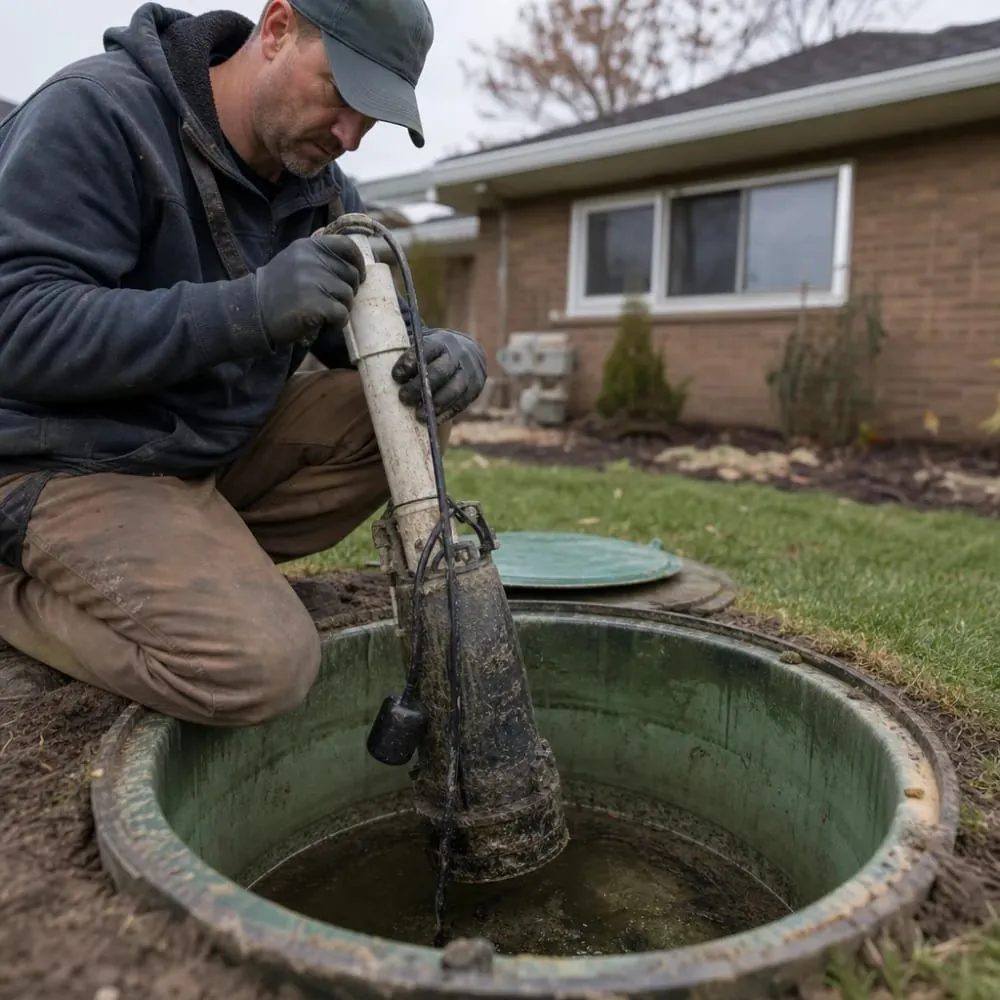
Effluent Pumps and Sump Pumps Are Not the Same Job
A sump pump moves groundwater out of a basement or crawl space. An effluent pump moves wastewater from your septic system out to the drain field. They look alike, but they handle different liquids, sit in different places, and need different parts and know-how.
A lot of folks call us about a "pump problem" and aren't sure which pump they have. That's fair. Both are submersible pumps with floats, and both sit in a pit. That's where the likeness ends.
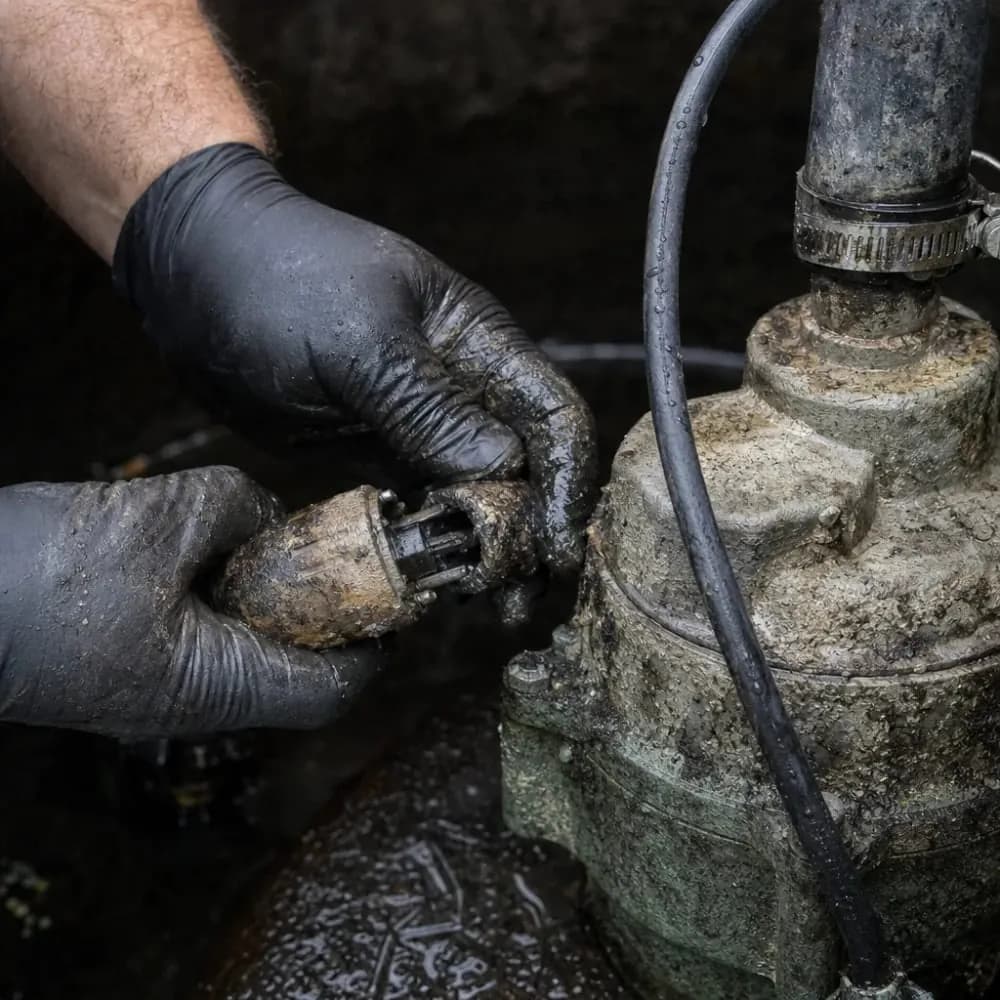
A sump pump keeps water out of your house. It sits in a pit in the basement or crawl space. When rain soaks the ground and water seeps in, it pushes that water out a discharge line into the yard.
An effluent pump is part of your septic system. It usually sits in a buried chamber or a section of the tank outside, after the wastewater has settled. Its job is to push that liquid out to the drain field or mound so the soil can treat it.
Here's why the difference matters to you:
- What it moves. A sump pump handles clean groundwater. An effluent pump handles septic wastewater, which can carry small solids, grease, and sewer gases.
- Where it lives. A sump pit is inside, where you can see it. An effluent chamber is outside and buried, with a lid or riser in the yard.
- How it's controlled. Effluent systems often have float switches set to send a measured amount of liquid at a time, plus a high-water alarm panel. Many sump pumps just have one float.
- What fails when it quits. A dead sump pump can mean a wet basement. A dead effluent pump can mean wastewater backing up toward the house or surfacing in the yard.
You can't swap one for the other. A sump pump isn't built to handle septic wastewater, and putting one in an effluent chamber is asking for an early failure. The floats, the pump, and the alarm all need to match how your septic system was designed to dose the drain field.
So how do you tell which one is acting up? Look at where the trouble is. Water creeping across the basement floor or a pump running nonstop in an indoor pit points to the sump pump. An alarm on an outdoor post or a panel in the garage, soggy ground over the septic area, or slow drains throughout the house point to the effluent side.
If you're not sure, just tell us what you're seeing and hearing. We handle both, residential and commercial, and we'll sort out which pump it is when we get there. Our sump pump repair page covers the basement side if that's your situation. This page stays on the septic side.
Getting this right up front saves you time and money. The fix, the parts, and the urgency are different for each one, and knowing which pump you have makes it easier to describe the problem when you call.
Signs an Effluent Pump Is Failing
Most effluent pumps don't quit without warning. They send signals first. The trick is knowing what those signals look like, because the pump itself is buried where you can't see it.
Here's what to watch and listen for.
- The high-water alarm is going off. This is the big one. A buzzer or a red light on the alarm panel means liquid in the pump chamber has risen past where it should be. The pump isn't keeping up, or it isn't running at all.
- The alarm comes and goes. If it sounds, then stops on its own, don't ignore it. That can point to a sticking float, a pump that's losing strength, or a pump that only works part of the time.
- You hear a hum but nothing moves. A pump that hums without pushing liquid may have a jammed impeller or a motor that's failing.
- The pump runs nonstop or kicks on and off over and over. Either one can mean a float problem, a check valve that's letting liquid fall back into the chamber, or water getting into the system where it shouldn't.
- The breaker keeps tripping. A pump that trips its circuit is drawing more power than it should. That's often a motor or wiring issue.
- Drains slow down all over the house. When the chamber can't empty, the whole septic system starts to back up. You may hear gurgling in tubs, sinks, and toilets at the same time.
- You smell sewage outside. A strong odor near the tank lid, the pump chamber riser, or over the drain field can mean wastewater is sitting where it shouldn't.
- The yard over the septic area is soggy or extra green. Wet spots, standing water, or a patch of grass that's greener than the rest can mean wastewater is surfacing instead of being dosed out the way the system was designed.
One sign alone doesn't always mean the pump is dead. An alarm can come from a bad float while the pump is still fine. Slow drains can come from a clog in the line between the house and the tank. That's why we look at the whole picture before we tell you what needs fixing.
Say your alarm goes off during a weekend cookout. The guests keep flushing and the kitchen keeps running water. Every gallon goes into a chamber that isn't emptying. The reserve space above the alarm level isn't unlimited, and once it fills, the wastewater has nowhere to go but back toward the house or up into the yard.
So treat an alarm like it means something, because it does. The sooner the pump gets checked, the better your odds of a simple repair instead of a mess to clean up.
Sometimes the pump checks out fine and the trouble is somewhere else, like a full tank or a struggling drain field. Our septic system service covers those parts of the system too, so you aren't calling around to find someone else.
We're open 24/7, every day, for homes and businesses. Quotes are free, and there's no trip or diagnostic fee. You can tell us what the alarm is doing and what you're seeing in the yard without worrying about a charge just for showing up.
That same focus carries through the practical septic system guidance our team provides to local families.
Check These Things Before You Call
You don't need to dig anything up or open anything before you call us. A few minutes of looking and listening is enough. What you notice helps us figure out whether it's the pump, the float, the power, or something else in the system.
Here's what's worth checking from where you stand.
- What the alarm is doing. Is it steady, or does it come and go? Is the light on, the buzzer, or both? Many panels have a silence button. Pressing it quiets the noise, but it doesn't fix anything, and the light usually stays on.
- When it started. Was it this morning, overnight, or a few days ago? Did it start right after laundry, a lot of guests, or a hard rain?
- Whether the breaker looks tripped. Find the breaker labeled for the septic or pump circuit and look at it. Just tell us what you see. You don't need to flip it back and forth.
- What you hear at the chamber. Stand near the pump chamber lid or riser. Is there a hum, a click, nothing at all, or a pump that never seems to stop?
- What's happening inside. Note which drains are slow or gurgling. Is it one sink, or the whole house?
- What the yard looks like. Look for wet spots, standing water, or a strong smell near the tank, the riser, or over the drain field.
While you wait, go easy on water. Hold off on laundry, the dishwasher, and long showers if you can. Every gallon you send down goes into a chamber that may not be emptying, so using less water gives you more breathing room.
It also helps to know where things are. If you know where the tank lid, the pump chamber riser, and the alarm panel are, tell us. If you have old paperwork from the install or the last time the tank was pumped, set it aside. It's fine if you don't have any of that. Lots of people buy a house without knowing where the septic parts are, and we can track them down.
For a business, tell us how many people use the building and whether there's a kitchen, a wash bay, or anything else that sends a lot of water down the drain. A restaurant and a small office put very different loads on a septic system, and that changes what we look for.
Don't worry about getting the details perfect. "The red light came on last night and the yard smells by the lid" is a fine place to start. We'll ask follow-up questions on the phone and sort out the rest when we get there.
We're a licensed, insured, locally owned plumbing company serving homes and businesses in Evansville and the Tri-State. We're open 24/7, every day. Quotes are free, and there's no trip or diagnostic fee, so calling about an alarm costs you nothing.
If your effluent pump alarm is on or your yard is telling you something's wrong, call us at (812) 677-8484 or send us a message through our contact form, and tell us what you're seeing.
Why Pressure-Dosed and Mound Septic Systems Are Common Around Evansville
If you have an effluent pump, your septic system was probably built that way for a reason. Somebody looked at your lot and decided gravity alone wouldn't get the job done.
A basic septic system lets liquid flow downhill from the tank into trenches in the yard. The soil soaks it up and cleans it. That only works when the ground drains well and the trenches can sit low enough.
Lots of ground around Evansville doesn't cooperate. Much of the area is flat river-valley land along the Ohio. Some of it holds water after a hard rain, and some soils drain slowly. When the soil can't take wastewater fast enough, or the water table sits close to the surface, a plain gravity field can flood or fail.
That's where pressure-dosed and mound systems come in. There are two common reasons a lot ends up with one.
- The soil drains poorly or stays wet. A mound fixes that by building a raised bed of sand and fill above the native soil. The pump pushes wastewater up into the mound, where it has more room to filter before it reaches the ground below.
- The field sits uphill or far from the tank. Gravity can't move liquid uphill, so the pump does the lifting.
Pressure dosing adds another layer. Instead of letting wastewater trickle into one end of the field, the pump sends a set amount at a time through small pipes with small holes. That spreads the liquid evenly across the whole field. No single spot gets soaked, and the soil gets time to rest between doses.
Here's the part that matters for repair. In these systems, the pump isn't an add-on. It's the heart of the whole setup. When it stops, there's no gravity backup. Wastewater just sits in the chamber until something gives.
It also means a repair has to fit the design. The pump has to push hard enough to lift liquid into the mound and force it out through every hole in the pipes. The floats or timer have to send the right amount each time.
- A pump that's too weak can leave the far end of the field dry while the near end floods.
- A pump that's too strong, or floats set wrong, can dump too much at once and wear out the field early.
- A field that gets the wrong doses for long enough can fail. That's a much bigger and pricier fix than any pump.
Picture a home on a few acres outside town with a mound out back. The pump quits, and someone drops in whatever pump fits the chamber. It runs, the alarm goes quiet, and everything seems fine. Months later the mound is soggy on one side because the new pump never had the push the system needed.
The same goes for businesses outside city sewer lines. A shop, church, or rural office with a mound depends on that pump just as much as a house does. Often it carries a heavier load.
So effluent pump repair isn't just about getting a motor running again. It's about getting the right amount of wastewater to the right place, at the right pressure, the way your system was built to work. Get that right, and the drain field you already paid for keeps doing its job.
What Happens During an Effluent Pump Repair Visit
Your alarm is on and you want to know what comes next. A good repair doesn't start by pulling the pump and swapping it. It works through the system in order, because a dead pump, a stuck float, and a tripped circuit can all set off the same alarm.
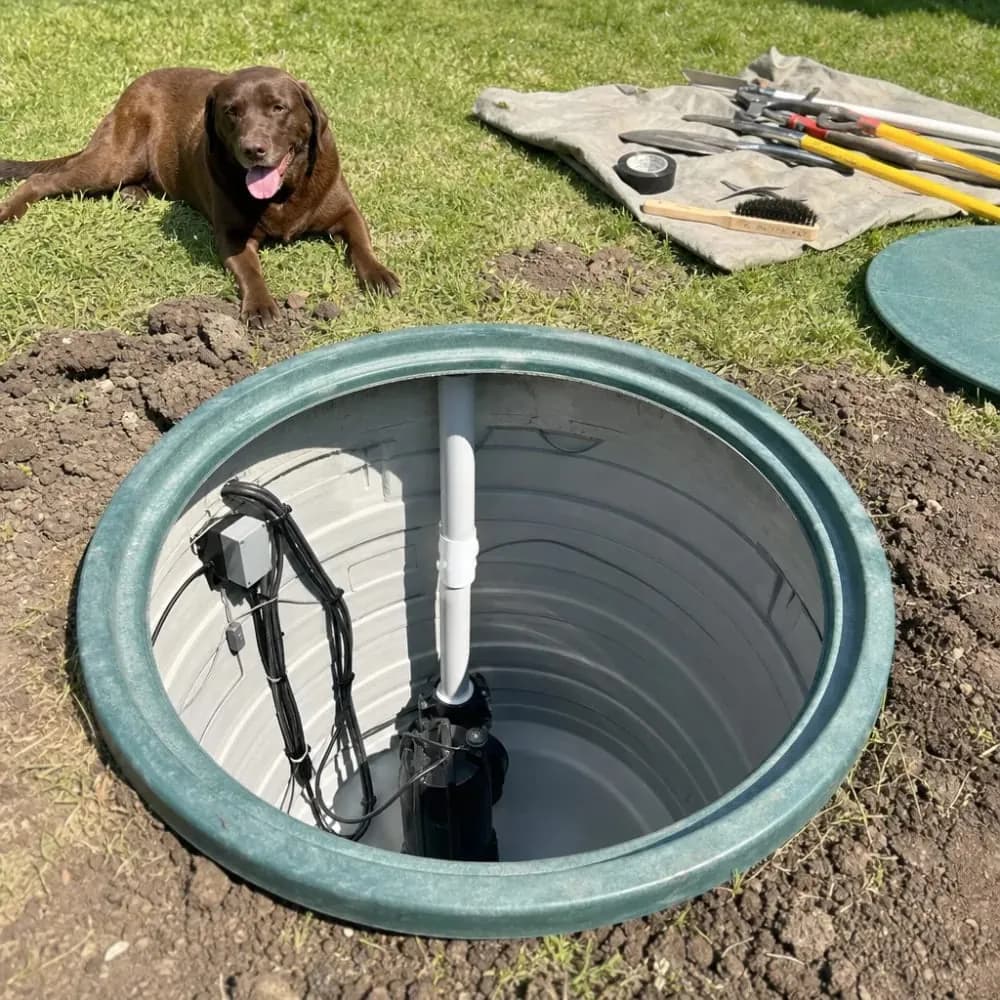
Here's what a thorough check should cover.
- Power first. The breaker, the plug or wiring at the chamber, and the alarm panel itself. Sometimes the fix is electrical and the pump is fine.
- The floats. A float can get tangled in its own cord, coated with grease, or knocked out of position. If it can't rise, it can't tell the pump to run.
- The pump. Does it run when called? Does it hum without moving liquid? Is it drawing too much power? Answering these may mean pulling the pump out of the chamber to look at the impeller and the motor.
- The check valve and discharge line. A bad check valve lets liquid fall back into the chamber after each dose, so the pump works twice as hard. A clog or crushed line stops the flow out to the field.
- The chamber itself. Solids that slipped past the tank, roots, or groundwater leaking in can all cause trouble for a perfectly good pump.
Sometimes the answer is simple. A float hung up on the power cord can look like a dead pump until someone frees it and the chamber drains right down. Other times, the motor is burned out and the pump has to be replaced.
Repair or replace comes down to a few things: how old the pump is, what failed, and whether the parts are worth fixing. If the pump gets replaced, the new one has to match the push and flow your system needs. As covered above, a mound or pressure-dosed field won't forgive a pump that's too weak or too strong.
A few things can change the size of the job, and the cost along with it:
- How easy the chamber is to reach. A riser at ground level is a lot quicker than a lid buried under a foot of dirt.
- Whether the tank or chamber needs to be pumped out before anyone can work safely.
- Whether the trouble is just the pump, or the floats, the alarm, the wiring, and the discharge line too.
- Whether the system serves a house or a business with a heavier daily load.
Before anyone starts work, it's fair to ask a few questions. What failed, and why? Will the new pump match what the system was designed for? Will the float settings be checked so each dose is the right amount? Does the chamber need pumping?
How a visit ends matters as much as how it starts. Ask that the system be run through a full cycle afterward. The pump should kick on, empty the chamber to the right level, and shut off. The alarm should be tested so you know it will sound the next time something goes wrong. If the alarm simply went quiet and nobody watched a full dose, you don't really know the problem is fixed.
Our quotes are free, and there's no trip or diagnostic fee. You can hear what's wrong and what your options are before you decide anything.
Common questions
- How long does an effluent pump usually last before it needs repair?
- Most effluent pumps last several years, but how long depends on how hard your system works. A pump on a mound or pressure-dosed system often works harder than a basic gravity setup, since it's the heart of the whole system. Heavy daily use, like from a business with a kitchen or wash bay, can wear a pump down faster than a typical home. Watching for early warning signs, like an alarm that comes and goes, helps you catch trouble before the pump fails completely.
- Can my basement sewage pump problem be an effluent pump issue?
- It can, and telling them apart starts with where the trouble shows up. A sewage or sump pump sits inside, in a visible pit, and keeps groundwater out of your basement. An effluent pump sits outside in a buried septic chamber and handles wastewater headed to the drain field. If you're seeing wet basement floors, that points to the indoor pump. If you're seeing an alarm on an outdoor panel, soggy ground near the septic area, or slow drains throughout the house, that points to the effluent side instead.
- Do plumbers fix effluent pumps, or do I need a septic specialist?
- Yes, plumbers who work on septic systems handle effluent pump repair, since the job covers plumbing, electrical, and septic know-how together. A repair visit should check the power and wiring, the floats, the pump itself, the check valve and discharge line, and the chamber before anything gets replaced. That's because a tripped breaker, a stuck float, or a bad check valve can all cause the same alarm as a dead pump. Getting all of that checked in one visit saves you from calling around to different specialists.
Where we do this work
This page is for effluent pump repair based out of Evansville, IN. We also work surrounding communities. City pages cover each market; as demand grows we can add service pages for specific cities without rebuilding this silo.
Related work
- Septic tank repair01
- Septic baffle / lid repair01
- Septic inspection01
- Septic system installation01
- Septic tank / drain field01
- Sewer Cleaning01
We also do this work for businesses across the area.
Commercial plumbingReady to Get Started?
Call (812) 677-8484 Now.