
Septic Baffle / Lid Repair in Evansville: Fixing Lids and Baffles the Right Way
Evansville Plumbing Repair diagnoses and repairs missing, cracked, or failing septic baffles and tank lids, stepping in quickly after a pumper's report to stop solids from reaching the drain field before costly damage sets in.
Locally owned plumber in Evansville, IN. Open 24/7.
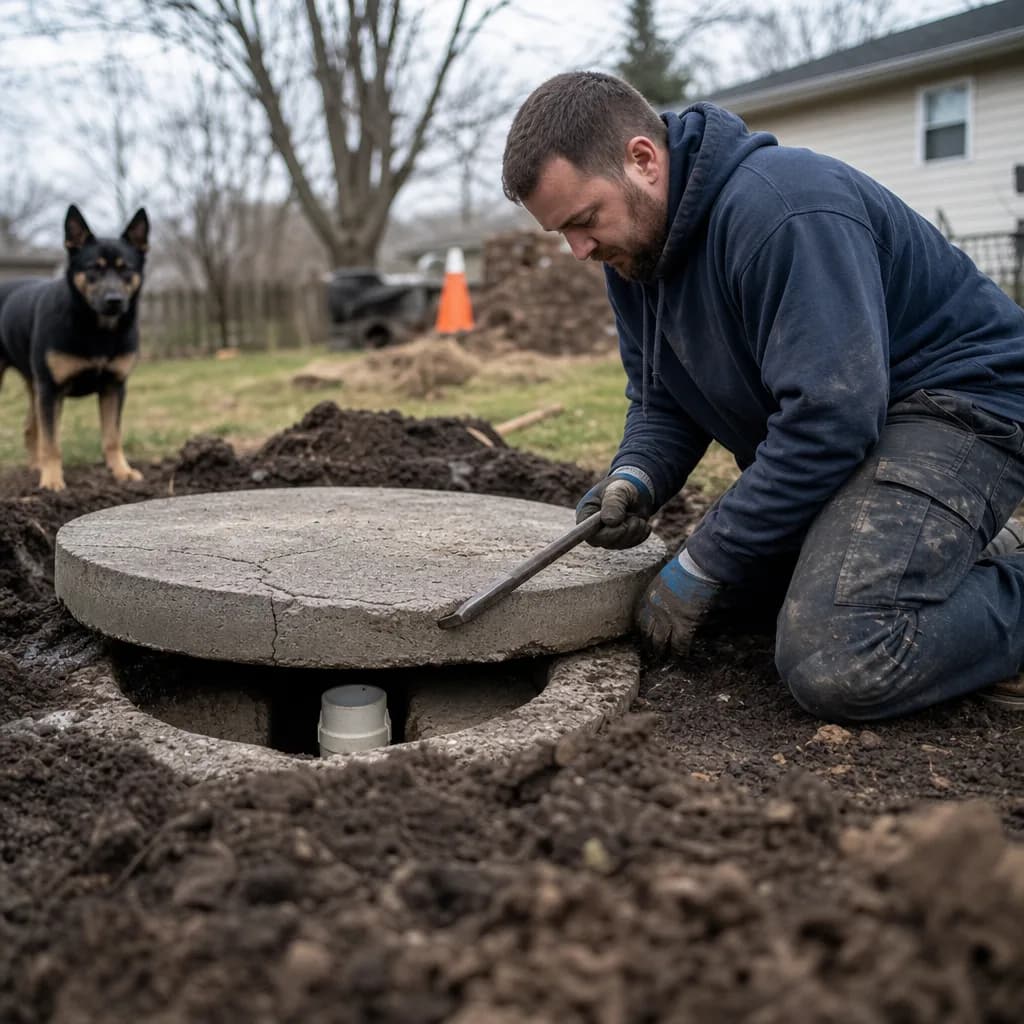
What a Cracked Lid or Failed Baffle Means for Your Septic System
Most people find this problem by accident. You're mowing and the lid wobbles. Or a pumper tells you a baffle is gone. Either way, you want to know one thing. Is this a big deal?
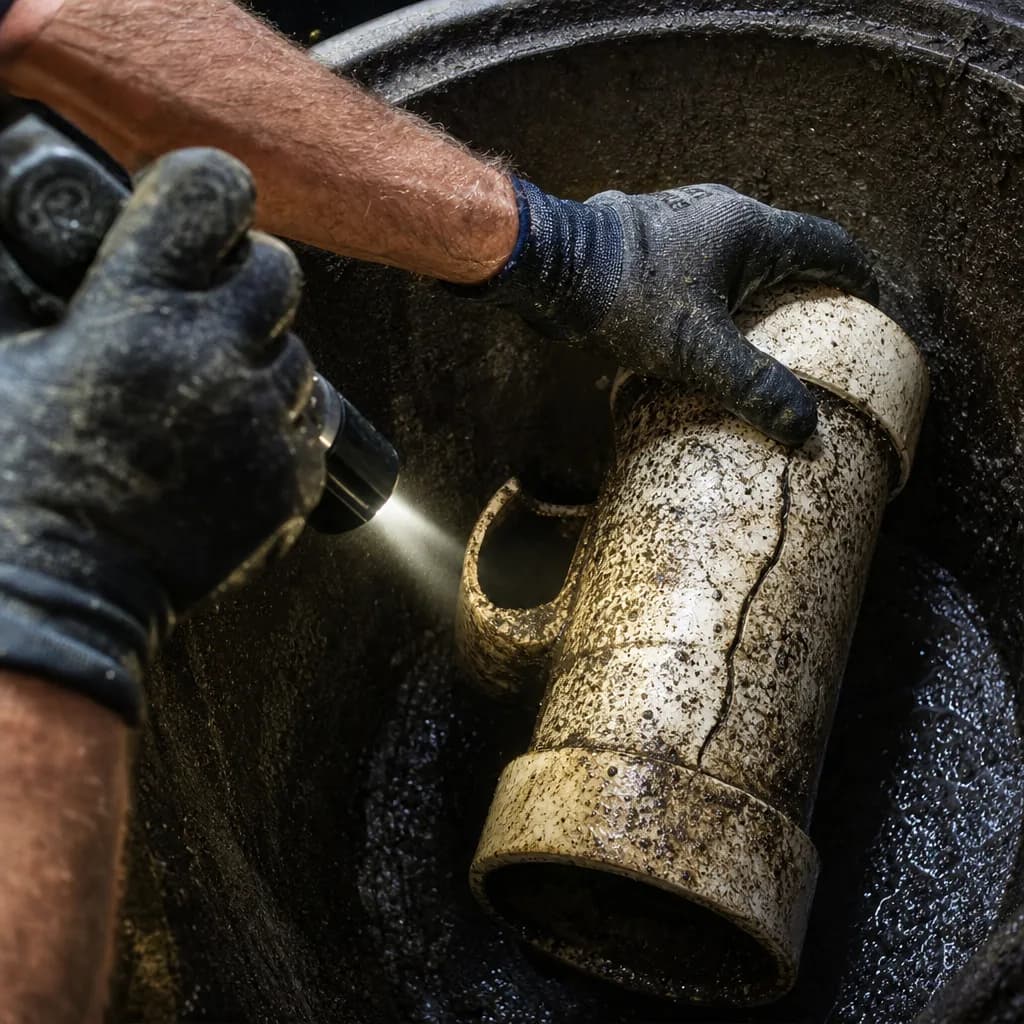
The honest answer is that the part itself is small. What it protects isn't.
Your tank has two baffles. One sits at the inlet, where waste comes in from the house. The other sits at the outlet, where liquid leaves for the drain field. Their whole job is to keep things moving in the right direction and keep solids in the tank.
- Inlet baffle: It points incoming waste down into the tank. When it breaks or falls off, the floating scum layer can block the inlet pipe. You may notice slow drains, gurgling, or backups in your lowest fixtures.
- Outlet baffle: It holds back the scum and grease that float on top. When it fails, those solids can wash out of the tank and into your drain field lines.
The outlet baffle is the one that matters most. Your drain field is built to soak up liquid, not sludge and grease. Once solids start reaching it, they can clog the soil and the pipes over time. A baffle is a fairly simple fix. A clogged drain field is a much bigger job.
That's why we'd rather replace a baffle now than see you later for drain field repair. Catching it early is how a small part stays a small bill.
A cracked or broken lid causes two different problems.
First, it lets things in. Rain, surface water, and loose dirt can run into the tank through the cracks. Extra water fills the tank faster than it's meant to fill and pushes liquid out before solids have time to settle. That puts more strain on the drain field too.
Second, it's a real safety risk. A septic tank is deep, and the gases inside aren't safe to breathe. A lid that's cracked, sunken, or sitting loose may not hold the weight of a child, a pet, or a riding mower. If your lid moves when you step near it, take that seriously.
Here are signs that point to a lid or baffle problem:
- A lid that rocks, sags, or shows visible cracks
- A sewage smell near the tank, even when the system isn't backing up
- Slow drains or gurgling in the whole house, not just one fixture
- Soggy ground or bright green grass over the drain field
- A pumping or inspection report that says a baffle is missing or damaged
None of these always means disaster. But each one tells you a part isn't doing its job. In Evansville and around the Tri-State, that's true for a home on a rural lot and for a small commercial building on its own system. The tank works the same way, and so does the risk.
The good news is that a lid or baffle usually fails before the bigger parts do. That gives you a window. Use it while the repair is still small.
Signs Your Septic Lid or Baffle Needs Attention
You've spotted one of the warning signs. Now you want to know which part it points to and how fast you need to move. Here's how we'd sort it if you were telling us about it on the phone.
Lid problems show up on the surface. You can usually see or feel them.
- The lid shifts under your foot or sits lower than the ground around it.
- Cracks run across the top or around the rim where the lid meets the riser.
- Water pools right over the tank after a hard rain.
- The smell is strongest at the lid itself, not out in the yard.
Baffle problems hide underground. You won't see a baffle from the yard. The clues come from inside the house or from the person who pumped your tank.
- Every drain in the house slows down at once, and plunging doesn't help for long.
- Toilets gurgle when the washer drains.
- The yard over the drain field stays wet even in dry weather.
- A pumping report says a baffle is cracked, loose, or missing.
The only way to be sure about a baffle is to look inside the tank. That's why a pumper's note matters so much. If someone wrote it down, don't let it sit in a drawer.
One clogged sink or toilet usually isn't a septic problem. If the rest of the house drains fine, the trouble is more likely a clog in that one line. Drain cleaning fixes that, and your tank may be just fine.
How fast should you act? It depends on what you're seeing.
- Call right away: the lid has sunk, cracked through, or left an opening. Sewage is coming up into the house. Keep people and pets away from the tank until it's checked.
- Call soon: you smell sewage near the tank, or the ground over the field stays soggy.
- Plan ahead: a report flagged a worn baffle, but nothing is backing up yet. Get it looked at before it fails all the way.
The same signs apply to a small shop, office, or rental on its own system. A building with more people using it puts more water through the tank each day. So a weak baffle there has less time before it causes trouble.
Lid and baffle repair is one part of our septic system service work across Evansville and the Tri-State. That work also covers tank repair, inspections, and drain field repair. If what you're seeing turns out to be a bigger problem, you won't have to start over with someone new.
When you reach out, it helps to know a few things. When was the tank last pumped? Where is the lid, and is it buried? What did you notice, and when did it start? Even rough answers help us figure out which part is the likely problem before we get there.
We're open 24/7, every day. Quotes are free with no trip or diagnostic fee. So if you're not sure whether a sign is serious, it costs you nothing to have us take a look.
That same focus carries through the practical septic system guidance our team provides to local families.
When This Is Urgent and When It Can Wait
Not every lid or baffle issue needs a truck in your driveway tonight. Here's the honest version, including the times you don't need us yet.
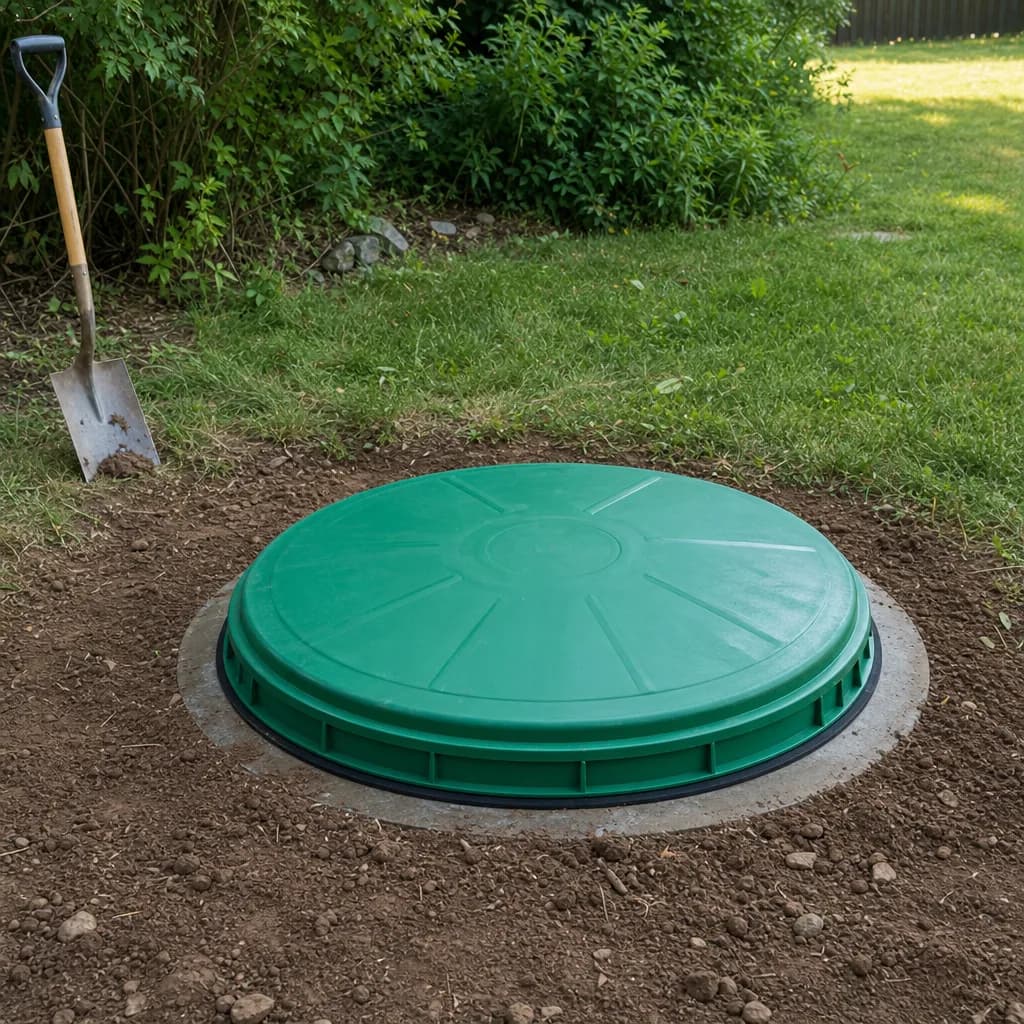
It's usually fine to wait if:
- The lid has a small chip or surface wear, but it sits flat, doesn't move, and holds firm when you press on it.
- A pumping report called a baffle worn, but it's still in place and every drain in the house runs normally.
- Your tank is due for pumping soon anyway. The tank will be open then, so that's a good time to have the baffle checked.
In those cases, there's no reason to rush. Write down what you saw and when you saw it, and keep an eye on it.
Waiting stops making sense once something changes. A worn part that's getting worse is on its way to failing. These changes move a wait-and-see problem to the top of the list:
- A lid that used to sit firm now rocks, sinks, or shows new cracks.
- A sewage smell shows up near the tank where there wasn't one before.
- Drains that were fine start slowing down all at once.
- You're about to put more water through the system than usual, like holiday guests, a full rental, or a busy week at a shop.
- You've got equipment or vehicles coming across the yard near the tank.
The real cost of waiting is the drain field. As we covered above, a failed outlet baffle can send solids out where they don't belong. You can't undo that damage by fixing the baffle afterward. That's why we'd rather you call a little early than a little late.
If you're weighing cost, it helps to know what moves the price on this kind of job. Across the industry, these are the usual factors:
- How deep the lid is buried and how much digging it takes to reach it.
- Whether the lid alone needs replacing, or the riser it sits on is damaged too.
- Whether the tank has to be pumped first so the baffle can be reached and replaced.
- What the tank is made of and what kind of baffle fits it.
- Whether the work turns up a bigger problem with the tank itself.
Before you hire anyone, ask a few plain questions. Will the tank need pumping first? Is that part of the quote? What happens if you find more damage once the lid is off? A good answer up front saves surprises later.
With us, the quote is free with no trip or diagnostic fee. We're licensed, insured, and locally owned in Evansville. We work on homes and commercial buildings across the Tri-State. So you can find out whether your problem can wait without paying just to ask.
Call (812) 677-8484
Ready when you are - get in touch today.
Call Now. Evansville Plumbing Repair is ready to help.
When It's Not a Lid or Baffle Problem
A lot of septic trouble looks the same from inside the house. Slow drains, gurgling, and a bad smell can come from a part that has nothing to do with the lid or the baffles. Fixing the wrong part won't make the symptom go away, so it's worth knowing the other suspects.
Start with the pipe between your house and the tank. Roots, grease, or a sag in that line can block it, and every drain slows down just like it would with a broken inlet baffle. The tank and baffles can be fine. Sewer cleaning clears that line. If you don't have an easy way to reach it, cleanout installation gives you an access point for next time.
Next, the tank may just be full. When sludge builds up past a certain point, the tank can't settle solids the way it should. You'll get slow drains and smells even with solid baffles. Pumping is the fix, and it's also the best time to check the baffles, since the tank is already open.
Some systems use a pump to move liquid from the tank out to the field. If yours has one and the alarm is going off, or the tank fills and won't drain out, the pump may have quit. That calls for effluent pump repair, not a new lid.
Then there's the drain field itself. If the field is already clogged or worn out, a new baffle won't bring it back. Soggy ground and backups that keep coming after pumping can point here. Drain field repair or replacement is a bigger job, and you'll want to know about it before you spend money on smaller parts.
A few problems aren't septic at all:
- A wet yard after rain, away from the tank and field, is often a drainage issue. A downspout, a sump pump discharge line, or low ground can cause it. French drain and exterior drainage work fixes that.
- A sewage smell in a basement or utility room can come from a floor drain that's dried out. Running water into it refills the trap and often stops the smell.
- Gurgling at one fixture while the rest of the house runs fine usually means a clog in that one line.
If you've got a mix of signs and you can't tell which part is failing, a septic inspection is the honest place to start. It looks at the whole system, so you don't end up replacing a baffle when the real problem is the field or the line to the house.
This matters for commercial owners too. A shop or office on its own system can't afford to guess wrong and close a restroom twice. Finding the actual cause the first time keeps the doors open.
Because we handle the lid, baffles, tank, pump, field, and the plumbing inside the building, we don't have a reason to push one repair over another. We just need to find the part that's failing.
Call (812) 677-8484
What Happens During a Lid or Baffle Repair Visit
Once you've decided to fix it, the job mostly comes down to three things. First, the lid has to be found. Then the tank has to be opened safely. Finally, the damaged part gets repaired or replaced. Most of what you can do to help happens before anyone shows up.

Finding the lid is often the slowest part. Plenty of lids are buried under a few inches of dirt or grass, and some homeowners have never seen theirs. If you know where it is, that saves time and digging.
Here's how to get ready:
- Look for an old pumping receipt or your property paperwork. Either one may show where the tank sits.
- Clear the area over the tank. Move cars, trailers, grills, and yard furniture out of the way.
- Keep kids and pets inside while the lid is off.
- Unlock any gate between the street and the tank.
- Write down what you've noticed and when it started, so it's handy when we arrive.
A lid job usually starts at the surface. The lid gets exposed, and then the rim and the riser under it are checked. Sometimes only the lid is cracked. Other times the riser it sits on is broken too, and both need work. A new lid should sit flat and stay put when someone steps on it.
A baffle job happens inside the tank. That's why it often goes hand in hand with pumping, which we covered above. Once the tank is open, the baffle gets checked and replaced with one that fits your tank. This is also a good chance to look at the rest of the tank, since it doesn't get opened often.
Before any work starts, you'll get a quote. With us, that quote is free with no trip or diagnostic fee. If the tank turns out to need more than a lid or baffle, you'll know before you agree to anything.
If you run a shop, office, or rental on its own system, plan for a short stretch when water use should stay low. Let staff or tenants know ahead of time. Then nobody flushes or runs the dishwasher while the tank is open.
After the job, check a few things yourself:
- The lid sits level with the ground and doesn't rock.
- The dirt or sod over the tank has been put back.
- Drains in the house run at their normal speed.
- The sewage smell near the tank is gone or fading.
Keep a note of what was fixed and where the lid is. Mark the spot with a stake or a photo. The next person who pumps your tank will thank you, and so will you.
We're licensed, insured, and locally owned in Evansville. We work on homes and commercial buildings across the Tri-State, 24/7, every day.
Call (812) 677-8484
Common questions
- What should I do if my pumper says a baffle is missing?
- Don't wait on this one. A missing baffle means solids can move straight toward your drain field, and that's the expensive part to fix. Call us with the pumping report in hand, and we'll check the tank and replace the baffle before more waste washes out toward the field lines.
- Will my septic tank still work without a baffle?
- It will keep running for a while, but not safely. Without a baffle, solids and grease that should stay in the tank can flow out into your drain field. Once that soil clogs with sludge, you're looking at a much bigger repair than a simple baffle swap.
- What affects the cost of replacing a septic tank lid?
- A few things drive the price: how deep the lid sits, whether the riser under it is cracked too, and whether the tank needs pumping first to reach the work safely. A shallow lid with a solid riser is usually a quicker, cheaper fix than one buried deep with hidden damage.
Where we do this work
This page is for septic baffle / lid repair based out of Evansville, IN. We also work surrounding communities. City pages cover each market; as demand grows we can add service pages for specific cities without rebuilding this silo.
Related work
We also do this work for businesses across the area.
Commercial plumbingReady to Get Started?
Call (812) 677-8484 Now.