
Septic Tank Repair in Evansville
Evansville Plumbing Repair diagnoses and fixes cracked lids, broken baffles, and leaking seams in septic tanks throughout Evansville, pumping and opening each tank first to confirm whether a targeted repair or a full tank replacement is the right call.
Locally owned plumber in Evansville, IN. Open 24/7.
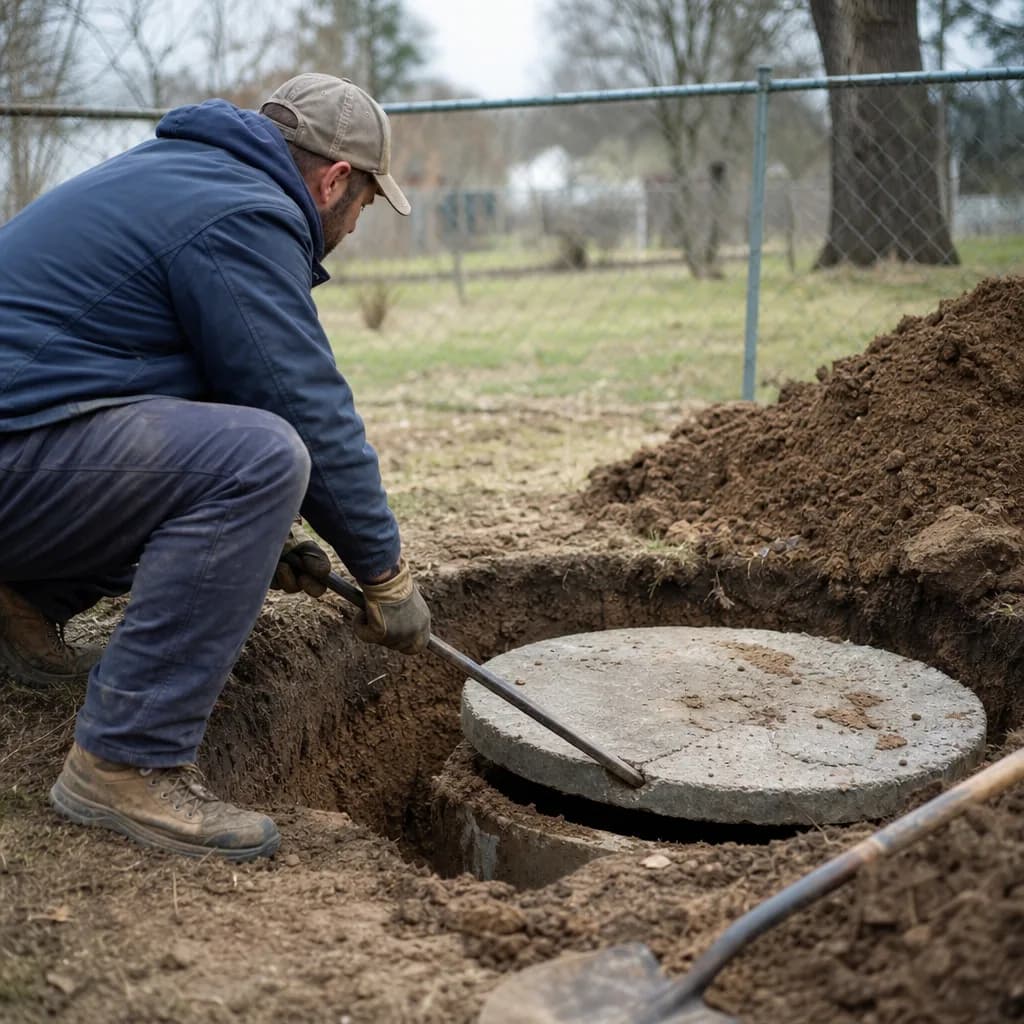
Know Whether Your Problem Is a Septic Tank Issue
Before you worry about a big septic bill, find out where the problem lives. A septic system has three parts that can fail. There's the plumbing inside, the tank in the yard, and the drain field past the tank. Each one acts a little different when it goes wrong.
Start with a simple question. Is it one drain, or is it the whole building?
- One sink, tub, or toilet is slow, and the rest work fine. That's almost always a clog in that line. It's not a septic tank problem.
- Several drains are slow at once, or the lowest drain in the house gurgles or backs up when you run water somewhere else. Now the problem is downstream, in the main line or the tank.
- Toilets gurgle, and you smell sewage near where the tank sits in the yard. That points at the tank itself. A cracked lid, a broken baffle, or a full tank are the usual suspects.
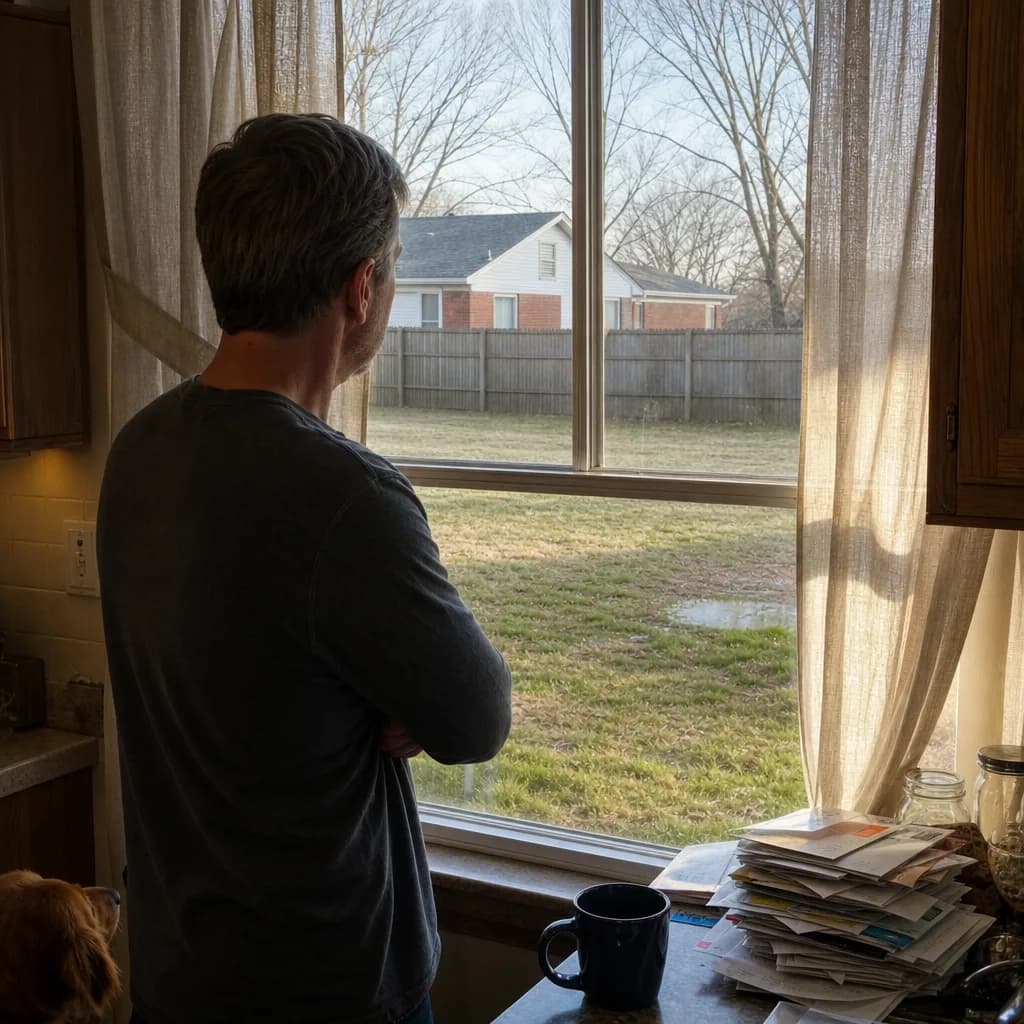
- The grass over one part of the yard is soggy, greener than the rest, or smells bad, even when it hasn't rained. That's often the drain field, not the tank.
Here's a real-life way it plays out. You flush the upstairs toilet, and water bubbles up in the basement shower. That's not two problems. That's one blockage past the point where those lines meet, and it's telling you to look outside.
Some septic systems have a pump that pushes water out to the drain field. If yours has one, an alarm going off or a tank that fills fast can mean the pump quit. The tank and pipes may be fine.
Why does this matter to you? Because the fix is very different for each one. A house clog is a drain cleaning job. A bad baffle or lid is a septic baffle or lid repair. A pump that stopped is an effluent pump repair. A drain field that's soaked through can mean drain field repair or replacement. That's the biggest job of the bunch.
You don't want to pay for the biggest fix when the smallest one would do. You also don't want to clear a clog over and over when the real issue is out in the yard.
If your signs don't line up neatly, that's normal. Some problems overlap. A full tank can push water back into the house and flood the drain field at the same time. That's when a septic inspection earns its keep. We look at the tank, the lines, and the field, and we tell you which part failed.
Our quotes are free, with no trip or diagnostic fee. So finding out what's really wrong doesn't cost you anything up front. That goes for homes and commercial buildings alike.
Who Is Responsible for Septic Tank Repair
If the property has a septic tank, the property owner is responsible for it. That covers the tank, the lines running to it, any pump, and the drain field. The city doesn't own any of it, and the city won't fix it.
That surprises people who moved from a house on city sewer. With a sewer hookup, the utility handles the public main. With septic, the whole system sits on your land and works like a small treatment plant you own. When it breaks, the repair is on you.
Who makes the call depends on your situation.
- You own the home. You're responsible for repairs and upkeep. You pick who does the work and when.
- You rent. In most cases the landlord owns the system and handles repairs. Call them first. Your lease may say you pay for damage caused by misuse, like flushing wipes or grease.
- You own or manage a commercial building. The building owner is responsible, unless a lease moves that duty to the tenant. Restaurants and shops with heavy water use should know who's on the hook before something backs up on a busy day.
- You're buying or selling. Who pays for a repair found before closing is something buyer and seller work out between them. A septic inspection before closing tells both sides what they're dealing with.
Here's a common one. A tenant notices the toilets gurgling and the yard smelling bad. They call a plumber on their own and get stuck with the bill, when the landlord should have handled it. If you rent, a quick call or text to your landlord first can save you that headache.
Insurance is the next question people ask. Many homeowner policies don't cover a septic system that fails from age or wear. Some do cover sudden damage. Read your policy or call your agent before you assume either way.
Permits can come into play too. Small fixes, like a cracked lid or a broken baffle, usually don't need one. Bigger work, like replacing a drain field or putting in a new tank, often goes through the county health department. Evansville sits in Vanderburgh County, so that's the office that applies here. If your job needs a permit, it's better to know before work starts.
Septic tank repair is one part of the septic system service we handle for homes and commercial buildings around Evansville and the Tri-State. Whoever ends up paying, the first step is the same. Find out which part failed and what it really takes to fix it.
If you're a landlord or property manager, you can call us directly to look at a tenant's problem. Our team is licensed and insured. We give the person responsible for the bill a clear answer on what's wrong, so nobody pays for work the system doesn't need.
That same focus carries through the practical septic system guidance our team provides to local families.
Signs That Mean Call Now
Some septic problems can wait for a weekday. Some can't. The difference comes down to two things. Is sewage going somewhere it shouldn't? Is the ground around the tank still safe to walk on?
Call right away if you see any of these:
- Sewage coming up into a tub, shower, floor drain, or toilet. Once it's inside, every flush adds to the mess and the cleanup.
- Wastewater pooling on top of the ground over the tank or drain field. That's raw sewage where kids, pets, and neighbors walk.
- A pump alarm that's going off and won't stop. The tank keeps filling while the pump sits idle, and there's only so much room before it backs up.
- A septic lid that's cracked, sunk, or missing. An open or weak lid is a fall hazard. Keep people and pets away from it.
- Ground that's sagging or caving in near the tank. That can mean the tank or a line underneath has given way.
- Drains backing up in a business during open hours. A restaurant, shop, or office can't run with sewage on the floor.
Any one of those is a reason to call today, not next week. We're open 24/7, every day. A backup at 2 a.m. on a Sunday doesn't have to wait.
While you wait, go easy on water. Hold off on laundry, the dishwasher, and long showers. Less water going in means less coming back up.
Other problems can wait a day or two. One slow drain while everything else works. A faint smell outside that comes and goes. A patch of grass that's a little greener than the rest but still dry. Those are worth a look, and we'll still come out for them. They're just not emergencies, so you don't need to drop everything.
Heavy rain changes things. A system that's already struggling can tip over fast when the ground is soaked. If you've noticed those slower signs and a big storm is on the way, get it checked before the storm, not after.
Here's how the call plays out. On a Friday night you notice a sewage smell by the tank. The toilets still flush, and there's no water on the ground. That can usually wait until morning. Now picture the same night, but there's dark water sitting in the basement floor drain. Call now.
Not sure which kind you have? Call and tell us what you're seeing. Quotes are free, with no trip or diagnostic fee, so asking costs you nothing. Our team is licensed, insured, and locally owned here in Evansville, and we work on homes and commercial buildings across the Tri-State.
Call (812) 677-8484
Have questions? We're happy to help.
Call Now. Evansville Plumbing Repair is ready to help.
When You Don't Need Septic Tank Repair
Plenty of septic scares turn out to be nothing broken at all. Here's when you can skip the repair, or at least hold off.
Your tank is just due for pumping. A septic tank fills with solids over time. That's normal. Getting it pumped on schedule is upkeep, not a repair. If the drains slowed down gradually and nothing is cracked, sunk, or leaking, a pump-out may be all it needs.
The smell comes from inside, not the yard. A sewer smell in a basement or laundry room can come from a floor drain that hasn't had water in it for a while. The trap dries out and lets gas through. Pour a bucket of water down it. If the smell goes away and stays gone, the tank was never the problem.
You smell something right after the tank was pumped. Some odor around the lid for a day or so after a pump-out is normal. If it fades on its own, leave it alone.
The yard is wet after a big rain. Soggy ground over the drain field after a storm can just be soggy ground. Watch it for a few dry days. If it dries out and doesn't smell, the field is probably doing its job. Wet ground in dry weather is a different story, and that one's covered above.
The grass over the field is a little greener. A drain field puts water and nutrients into the soil. Slightly greener grass on its own, with dry ground and no smell, is common and isn't a sign of failure.
The pump alarm went off after the power blinked. If your system has a pump, check whether its breaker tripped. If the alarm clears once power is back and the tank isn't filling fast, the pump may be fine.
It's one drain. A single slow fixture is a drain cleaning job, as we went over earlier. Don't let anyone sell you tank work for one clogged sink.
You're not on septic. Some people assume they have a tank because the house is older or sits on a big lot. If your property is hooked up to city sewer, there's no tank to fix. A backup there points to the sewer line, which is a different repair.
You don't need a product from the hardware store either. Additives poured down the toilet won't fix a broken baffle, a cracked lid, or a failed field. If something is truly broken, a bottle won't change that. If nothing is broken, you didn't need the bottle.
Here's how that looks in real life. You notice a sewer smell in the basement on Saturday. Every drain in the house runs fine, and the yard is dry. You pour water into the floor drain, and by Sunday the smell is gone. That's it. You're done.
Waiting makes sense when the signs are mild, they don't get worse, and none of them involve sewage where it shouldn't be. Keep an eye on things. If a symptom comes back or spreads to more drains, that's when it's time for someone to look.
An honest answer sometimes means the answer is no repair. Paying for a fix your system doesn't need won't make it last any longer.
What Gets Repaired: Tank, Baffle, Lid, Pump, or Drain Field
Once you know which part failed, the fix gets a lot clearer. Each part has its own kind of repair, and some are much smaller than people fear.
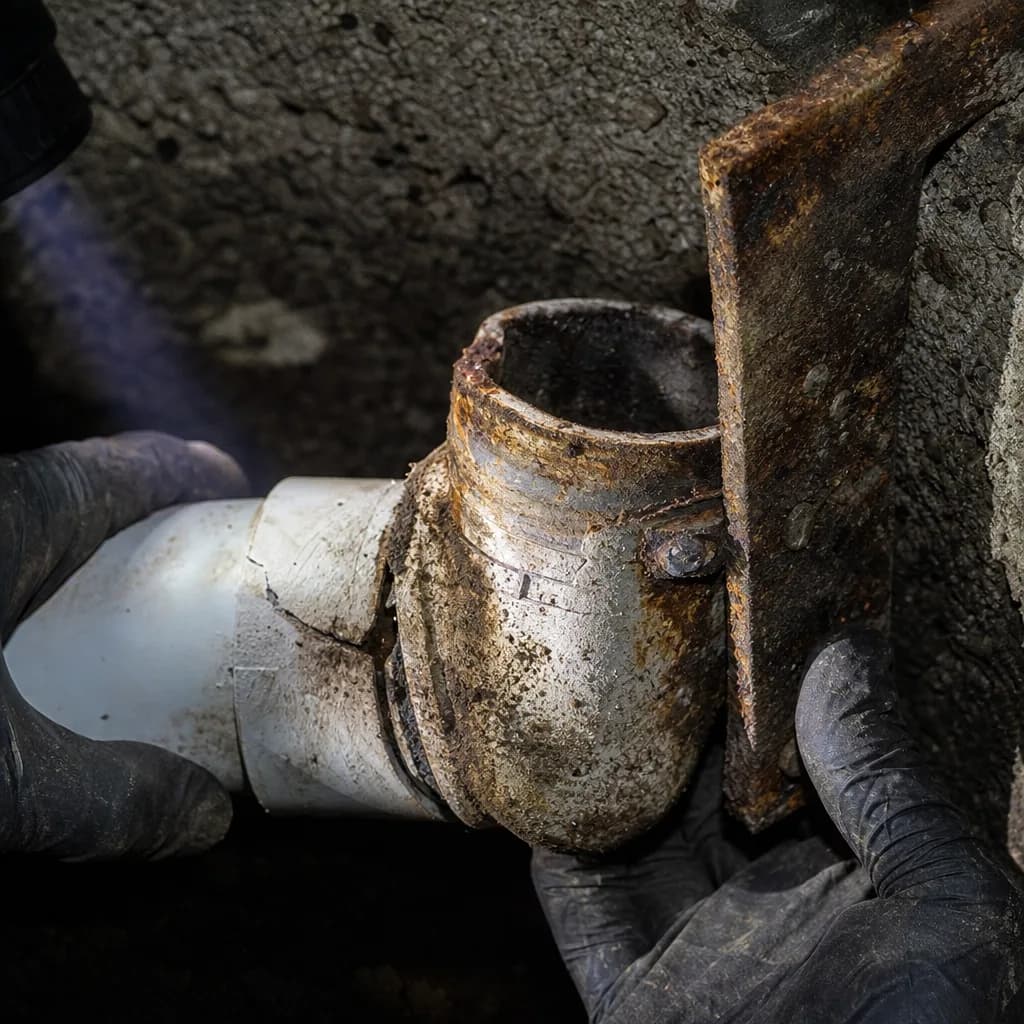
The baffle. Baffles sit at the inlet and outlet of the tank. They keep grease and solids inside the tank so those don't run out to the drain field. When a baffle breaks or falls off, solids can head straight for the field. Fixing it usually means pumping the tank down, reaching the fitting, and replacing it. It's one of the smaller septic jobs. Catching it early also protects the drain field, which is the most expensive part to replace.
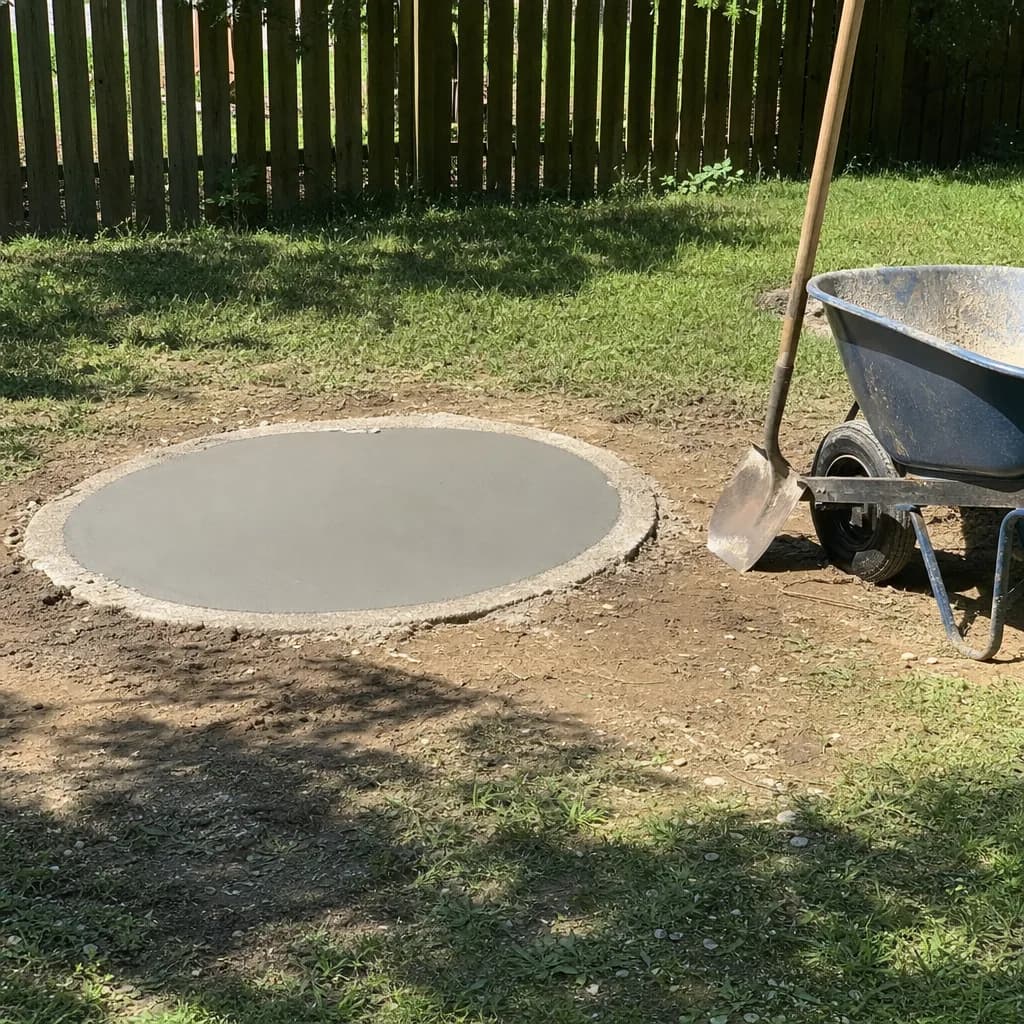
The lid. A cracked, sunk, or broken lid gets replaced. It's a small job, but it matters, because a weak lid is a fall hazard. The cost mostly depends on how deep the lid is buried and how much digging it takes to reach it.
The tank. A crack in the wall, a leaking seam, or a broken pipe where the line enters or leaves the tank can sometimes be repaired once the tank is pumped out. A tank that's caving in or rusted through usually can't be patched. At that point the fix is a new tank, which is a septic system installation job.
The pump. When an effluent pump stops, the pump itself isn't always the problem. The cause can be a stuck float switch, a bad alarm, or a wiring issue. An effluent pump repair starts by finding which of those failed, so you don't replace a working pump.
The drain field. This is the biggest job. Sometimes the trouble is one crushed or clogged line between the tank and the field, and that line can be repaired. A field that's soaked through and can't take water anymore may need drain field replacement. That often needs a permit through the county health department, as mentioned earlier.
No two septic repairs cost the same. These are the things that push the price up or down:
- Which part failed. A baffle or lid is a much smaller job than a tank or a field.
- How deep the tank is and how easy it is to reach. Driveways, decks, and landscaping over the tank add work.
- Whether the tank has to be pumped before anyone can work inside it.
- The tank's age and what it's made of.
- How far the damage spread. A broken baffle that let solids into the field can turn one repair into two.
- Whether the job needs a permit.
- System size. Commercial buildings with heavy water use often have bigger systems with more parts.
Before you hire anyone, ask a few questions. Which part failed, and how do you know? Is pumping included in the job? Does this need a permit, and who pulls it? What happens if you open the tank and find more damage? A good answer to each one tells you the person quoting the job looked.
We handle septic tank repair, baffle and lid repair, effluent pump repair, and drain field repair or replacement for homes and commercial buildings around Evansville and the Tri-State. Our team is licensed, insured, and locally owned. Quotes are free, with no trip or diagnostic fee, so you'll know what the fix involves before you spend a dime.
Call (812) 677-8484
Common questions
- Are septic tanks repairable, or do they always need to be replaced?
- Most septic tank problems are repairable. A cracked lid, a broken baffle, or a leaking seam can usually be fixed once the tank is pumped out and opened up. A tank that's caving in or rusted through is the exception. At that point, patching won't hold, and a new tank is the better fix.
- Will homeowners insurance cover my septic tank repair?
- It depends on your policy, so check before you assume either way. Many homeowner policies don't cover septic failures caused by age or normal wear. Some do cover sudden, accidental damage. Read your policy or call your agent to find out which kind of repair you're dealing with.
- Can you replace just the top of a concrete septic tank?
- Yes, if only the lid is cracked, sunk, or broken, replacing just that part is usually all it takes. It's one of the smaller septic repairs. The cost mostly depends on how deep the lid sits and how much digging it takes to reach it.
- How often does a 1,000-gallon septic tank need to be pumped?
- Pumping schedules depend on your household size and water use, so there's no single number that fits every home. Getting it pumped on a regular schedule is normal upkeep, not a repair. If your drains have slowed down gradually and nothing is cracked or leaking, a pump-out may be all your tank needs.
Where we do this work
This page is for septic tank repair based out of Evansville, IN. We also work surrounding communities. City pages cover each market; as demand grows we can add service pages for specific cities without rebuilding this silo.
Related work
- Septic baffle / lid repair01
- Septic inspection01
- Septic system installation01
- Septic tank / drain field01
We also do this work for businesses across the area.
Commercial plumbingReady to Get Started?
Call (812) 677-8484 Now.