
Septic Tank or Drain Field? How to Tell the Difference in Evansville
Evansville Plumbing Repair diagnoses and repairs septic tank and drain field problems in Evansville, checking pumping history, baffles, and soil conditions in the area's heavy clay and silty soils before recommending a repair or full field replacement.
Locally owned plumber in Evansville, IN. Open 24/7.
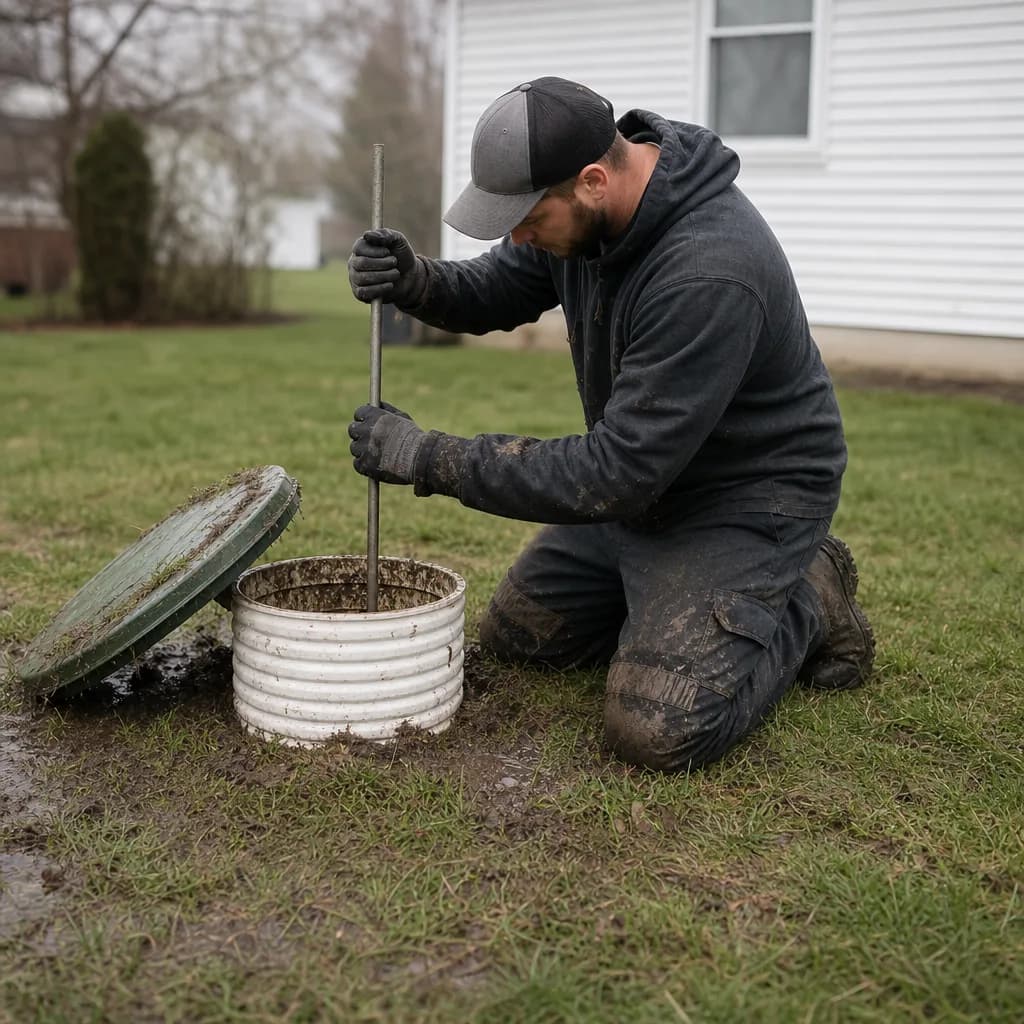
Tank Problem or Drain Field Problem: How to Tell
A full tank and a worn-out drain field can look the same from inside the house. Drains slow down. Toilets gurgle. Something smells off. But they're very different fixes, and paying for the wrong one doesn't solve anything.

Start with two questions. Is it the whole house or one fixture? And where is the water or smell showing up, inside or out in the yard?
Signs it's the tank:
- Every drain in the house is slow, not just one.
- Water backs up into the lowest drain first, like a basement floor drain or a first-floor tub.
- Toilets gurgle when the washer drains or someone runs the shower.
- You smell sewage near the tank lid, but the rest of the yard is dry.
- Nobody can remember the last time the tank was pumped.
- If you have a pump tank, the alarm is going off. That can mean the effluent pump has quit.
Signs it's the drain field:
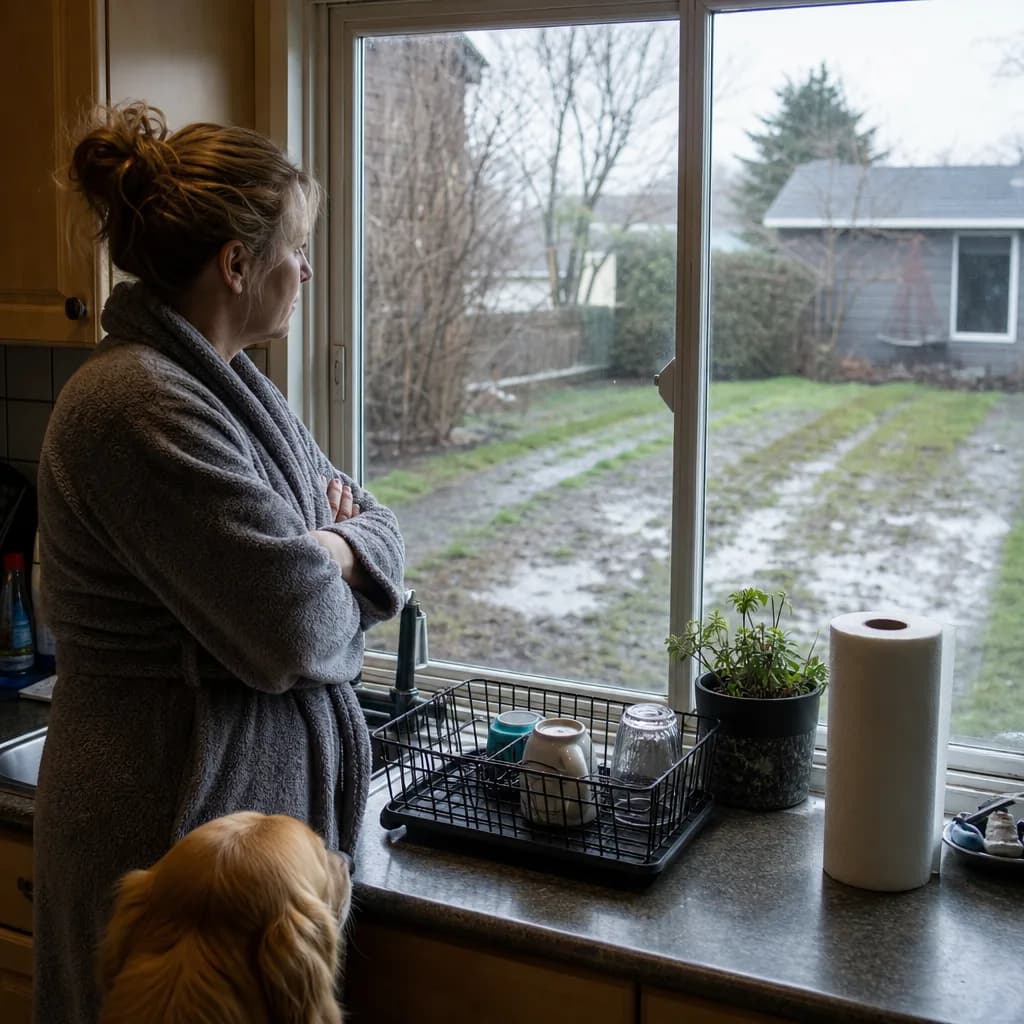
- The ground over the field stays soft or soggy, even when it hasn't rained.
- You see standing water or dark, wet spots in the yard.
- The grass grows greener and thicker in lines over the field.
- There's a sewage smell out in the yard, away from the tank.
- The tank was pumped not long ago, and the slow drains are already back.
That last one is the big tell. Pumping empties the tank. It doesn't fix a field that can't soak up water anymore. If things go bad again a few weeks after a pump-out, the water has nowhere to go, and the field is where we'd look next.
Sometimes it's both. A broken or missing outlet baffle lets solids slip out of the tank and into the field lines. Those solids clog the soil over time. So a small tank problem left alone can turn into a drain field problem. That's why it pays to find out which part failed, and why, before anyone picks a fix.
Here's one that fools a lot of people. Only the kitchen sink is slow. Everything else drains fine. That's almost always a clog in the house pipe, not the septic system. A regular drain cleaning usually handles it, and you don't need to touch the tank or the yard.
Write down what you notice. Which drains are slow, where the smell is, whether the yard is wet, and when the tank was last pumped. That short list helps us narrow it down fast.
You don't have to guess on your own. Our quotes are free, and there's no trip or diagnostic fee. Finding out whether it's the tank, the field, or a simple clog won't cost you a thing.
Signs That Need Attention Right Away
Most slow-drain septic trouble can wait a day or two for a look. A few signs can't. If you see any of these, stop guessing and call us.
- Sewage coming up in the house. Dirty water in a tub, shower, or floor drain means waste has nowhere to go. Every flush or load of laundry makes it worse.
- Sewage on top of the ground. Raw wastewater pooling in the yard isn't just a wet spot. It's a health problem for your family, your pets, and your neighbors.
- A pump alarm that won't stop. As covered above, it can mean the effluent pump has quit. The tank keeps filling while it's down.
- Ground that's sinking or caving near the tank. A soft hole or sunken patch by the lid can mean a cracked tank or a failing lid. Keep people and pets off it.
- A cracked, broken, or missing tank lid. An open tank is a real danger, especially with kids around. It also lets rain and dirt pour in.
Here's how that plays out. You start a load of laundry and hear the toilet gurgle. A few minutes later, gray water is sitting in the bottom of the tub. That's not a "call Monday" problem. That's a "stop running water and call now" problem.
Until we get there, go easy on water. Hold off on laundry, the dishwasher, and long showers. Less water going in means less coming back up.
Some signs are serious but give you a little time. A yard that stays soggy for a week, a smell that comes and goes, or drains that are slowly getting worse all need a look soon. They're just not usually a middle-of-the-night emergency. Book a visit, but don't wait months. A field that's struggling only gets worse the more water you send it.
Businesses have their own urgent signs. If a restaurant, shop, or office on a septic system has a backup in a restroom or kitchen, that can shut the doors. Treat it as an emergency, even if it's only one spot so far.
Not sure which group your problem falls into? That's normal. A backup in one sink can be a simple clog, while the same sight in the lowest drain can be a full tank. Our septic system service covers both ends of that, from the tank and baffles to the effluent pump and the drain field.
We're open 24/7, every day, for homes and businesses across Evansville and the Tri-State. We can't promise every job gets done the same day. We will pick up the phone, talk through what you're seeing, and tell you plainly whether it needs us tonight or can wait for morning.
We're licensed, insured, and locally owned. Quotes are free, and there's no trip or diagnostic fee, so calling about an urgent sign doesn't cost you anything up front.
That same focus carries through the practical septic system guidance our team provides to local families.
When It's Not the Septic System
A lot of problems look like septic trouble and aren't. Before you pay for a pump-out or let anyone dig up the yard, rule these out. Some cost nothing to fix.
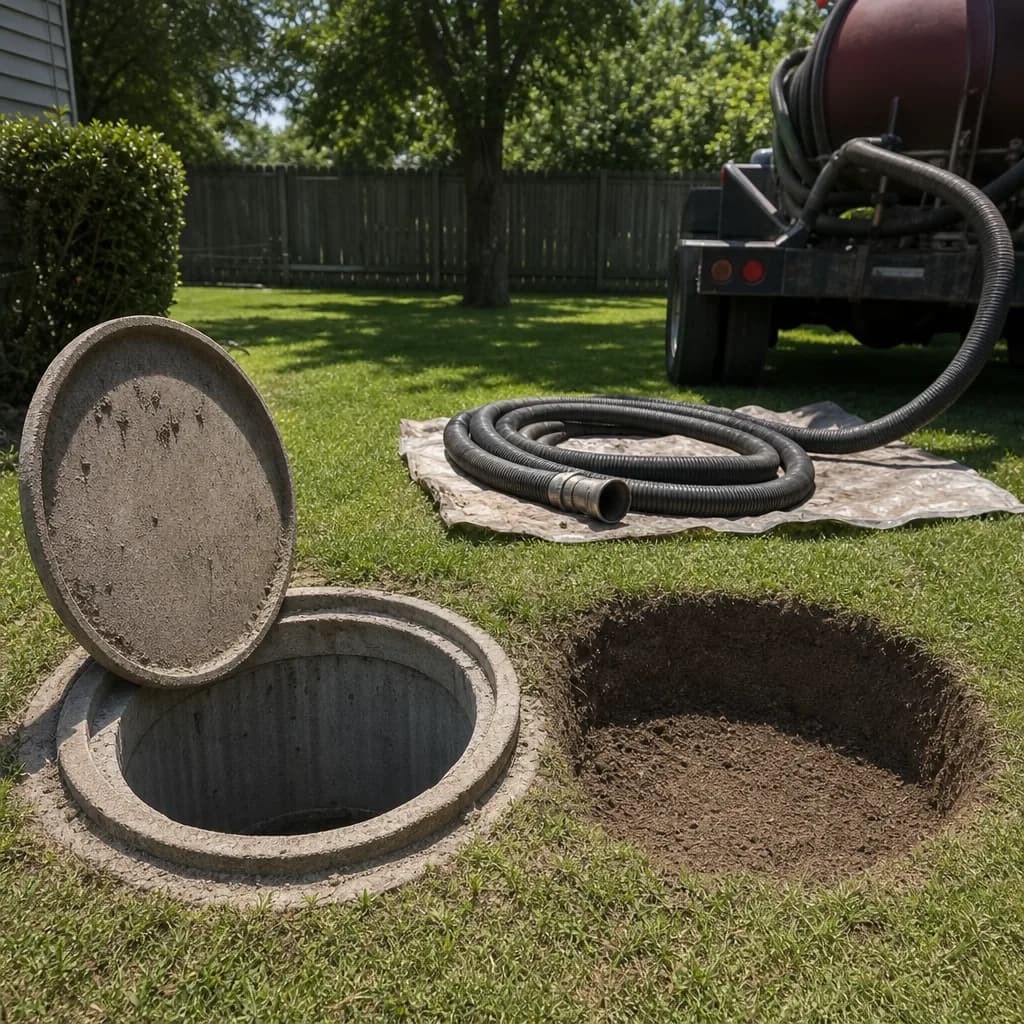
You might not have a septic system at all. If you pay a sewer bill to the city, your waste goes to a public sewer, not a tank in your yard. Plenty of Evansville homes are on city sewer, so check before you go hunting for a tank lid. A backup on city sewer is a drain or sewer line problem, and that's a different fix.
Here are the common look-alikes on a septic property:
- A sewer smell from one drain you rarely use. Think of a basement floor drain or a guest bathroom. The water in the trap under that drain can dry up, and sewer gas comes right through. Pour water down it and wait a day. If the smell is gone, that was it. No septic work needed.
- Gurgling with no backup. If a sink or tub gurgles but drains fine and nothing comes back up, the plumbing vent may be blocked. Leaves, a bird's nest, or debris on the roof can do it. The tank has nothing to do with it.
- Every drain slow, but the tank isn't full. A clog in the main pipe between the house and the tank can act just like a full tank. Roots, wipes, and grease build up in that pipe. Clearing the line through a cleanout fixes it. Pumping the tank won't.
- A wet yard with no smell. Sewage has a smell. Clean water doesn't. A soggy spot that never smells can come from a leaking water service line, a downspout dumping next to the field, or ground that slopes toward the house. That's a leak or drainage problem, not a failing field.
- A sump pump line aimed at the field. If your sump pump pushes water out near the drain field, it can flood the soil. The field looks like it's failing when it's really just drowning. Moving the discharge line can solve it.
For businesses, the same rules apply. One slow restroom in a building with several isn't a septic failure. A grease buildup in a kitchen line can back up a sink without the tank being anywhere near full.
There's also a case where the honest answer is to wait. If you had a houseful of holiday guests and the drains ran slow for a day, then went back to normal, the system may have just been handling a big load. Keep an eye on it. If it comes back with no extra people in the house, that's when it needs a look.
If one of these turns out to be your problem, you don't need septic work. Don't let anyone talk you into pumping a tank to fix a dry trap or a leaking water line. Drain cleaning, sewer cleaning, plumbing leak detection, water line repair, and French drain or exterior drainage work each have their own page if that's where your problem points.
Thinking about Septic tank / drain field? Let's talk.
Call Now. Evansville Plumbing Repair is ready to help.
Why Drain Fields Struggle in This Area
A drain field has one job. It lets water from the tank soak slowly into the ground. Anything that keeps the soil from taking that water will make the field act like it's failing, even if the pipes are fine.
Around Evansville and the Tri-State, the ground itself is often the first problem. A lot of the soil here is heavy clay or tight, silty dirt. Water moves through it slowly. A field in that kind of soil has less room for error than one in loose, sandy ground.
Wet seasons add to it. Spring rain can soak the ground for weeks, and low spots near the Ohio River and its creeks can hold water longer. When the soil is already full of rainwater, there's no space left for what comes out of the tank. Drains slow down and the yard turns soggy, then things improve once the weather dries out.
That pattern matters. A field that only struggles after heavy rain may be worn but still working. A field that's soggy in a dry August is in worse shape. Telling those two apart is a big part of deciding whether it needs repair or replacement.
Here are the other common reasons a field gives out:
- Age. Over many years, a layer of slime builds up in the soil under the lines. It slowly seals the ground until water can't get through.
- Solids getting out of the tank. A tank that's overdue for pumping, or one with a bad outlet baffle, sends sludge into the lines. That clogs the soil much faster.
- Too much water at once. Back-to-back laundry loads, a leaky toilet that runs all day, or a business that grew and added staff can push more water than the field was built for.
- Roots. Trees and big shrubs planted near the lines send roots toward the water. Roots can crack pipes and fill them up.
- Weight on the field. Parking cars, driving trucks, or setting a shed or pool on top crushes pipes and packs the soil down so it can't drain.
- Extra water aimed at it. Downspouts or a sump line pointed at the field, as covered above, flood soil that's already working hard.
Each of these has a different fix. A leaky toilet is a cheap repair, and the field may recover once the extra water stops. Roots may mean replacing a section of line. A field sealed up after many years of use may need new lines in fresh soil. Pumping the tank doesn't solve any of them on its own.
That's why we look at the whole picture before we suggest anything. When was the tank last pumped? Is the baffle in place? Does the yard stay wet in dry weather? Is anything parked or growing on the field? The answers tell us whether your field needs a rest, a repair, or a replacement.
Some fields can be saved. Cutting water use, moving a downspout, fixing a running toilet, and keeping the tank pumped can give a tired field a chance to dry out and start working again. If the soil under the lines is sealed or the pipes are crushed, it's time to talk about drain field repair or replacement instead of buying more time.
What a Septic Inspection and Repair Involves
Once you know something's wrong, the next question is what happens when someone shows up. The short answer is that it depends on what the signs pointed to. A good inspection follows the problem from the house to the tank to the yard. It doesn't jump straight to the biggest fix.
A thorough septic inspection usually looks at these things:
- Where the tank and lids are, and whether they can be reached.
- How high the liquid sits in the tank. If the level is above the outlet pipe, water isn't leaving fast enough. That points toward the field.
- How much sludge and scum have built up, and whether the tank needs pumping.
- Whether the inlet and outlet baffles are in place and in one piece.
- Cracks, leaks, or a weak lid on the tank itself.
- On a pump system, whether the effluent pump and alarm work.
- The ground over the field. Look for wet spots, smells, sunken areas, and anything parked or growing on top.
Sometimes the tank has to be pumped before anyone can see the walls and baffles clearly. That's normal. It's part of finding the real cause, not a fix by itself.
Repairs run from small to large. Most problems land somewhere on this list:
- Septic baffle or lid repair. A broken baffle or cracked lid is a small part, and it's often a fairly quick fix.
- Effluent pump repair. A pump that's quit can be repaired or swapped so the tank stops filling up.
- Septic tank repair. This covers cracks, leaks, or damaged pipe going into or out of the tank.
- Drain field repair. This means fixing a crushed or root-filled section of line when the rest of the field still works.
- Drain field replacement. This means new lines, often in fresh soil, when the ground under the old field is sealed up.
Cost depends on where your problem lands on that list. We don't publish prices because every yard is different. These are the things that push a septic job up or down:
- How deep the lids are buried and how easy the tank is to reach.
- Whether the tank has to be pumped first.
- The size of the field and what kind of soil it sits in.
- Whether the work needs a permit or a soil review.
- How much digging there is, and what it takes to put the yard back.
- For businesses, how much water the building sends to the system each day.
Before you hire anyone, ask a few plain questions. What failed, and why? Is this a repair or a replacement, and what makes you say so? What does the quote include, and what isn't in it? Is a permit needed? Will the yard be put back? A straight answer to each one tells you a lot. If someone won't explain why your field needs replacing, get another opinion.
This goes for homes and businesses alike. A restaurant or office on septic gets the same step-by-step look as a house. The only difference is that more water is moving through the system.
Call (812) 677-8484
Common questions
- Can a drain field be unclogged, or does it always need replacing?
- Sometimes, but it depends on what caused the clog. If the problem is extra water from a leaky toilet or a sump line pointed at the field, cutting that water out can let the soil recover. If the soil itself is sealed by years of buildup or the pipes are crushed, unclogging won't hold and new lines in fresh soil are the real fix. That's why we check tank pumping history, baffles, and what's sitting on top of the field before suggesting a repair or a full replacement.
- How deep is a septic drain field usually buried?
- Depth varies by yard, soil, and local code, so there's no single number that fits every property. What matters more in Evansville is the soil type above the lines. A lot of the ground here is heavy clay or tight, silty dirt, and that affects how the field was designed and how well it drains, regardless of exact depth. A full inspection checks the lids, the lines, and the soil condition rather than relying on depth alone.
- What are the clearest signs a drain field is failing?
- The biggest giveaway is backups that return soon after the tank gets pumped, since pumping only empties the tank and does nothing for a field that can't soak up water anymore. Other signs include a yard that stays soft or soggy even without rain, standing water or dark wet patches, greener and thicker grass growing in lines over the field, and a sewage smell out in the yard away from the tank lid.
Where we do this work
This page is for septic tank / drain field based out of Evansville, IN. We also work surrounding communities. City pages cover each market; as demand grows we can add service pages for specific cities without rebuilding this silo.
Related work
We also do this work for businesses across the area.
Commercial plumbingReady to Get Started?
Call (812) 677-8484 Now.