Sewer Cleaning in Evansville: Know When You Need It
Evansville Plumbing Repair clears main sewer lines using cable machines and hydro jetting equipment built to reach blockages that store-bought augers can't touch, a common need in Evansville's older homes with clay and cast iron pipe prone to root intrusion.
Locally owned plumber in Evansville, IN. Open 24/7.
Signs You Need Sewer Cleaning, Not Just a Plunger
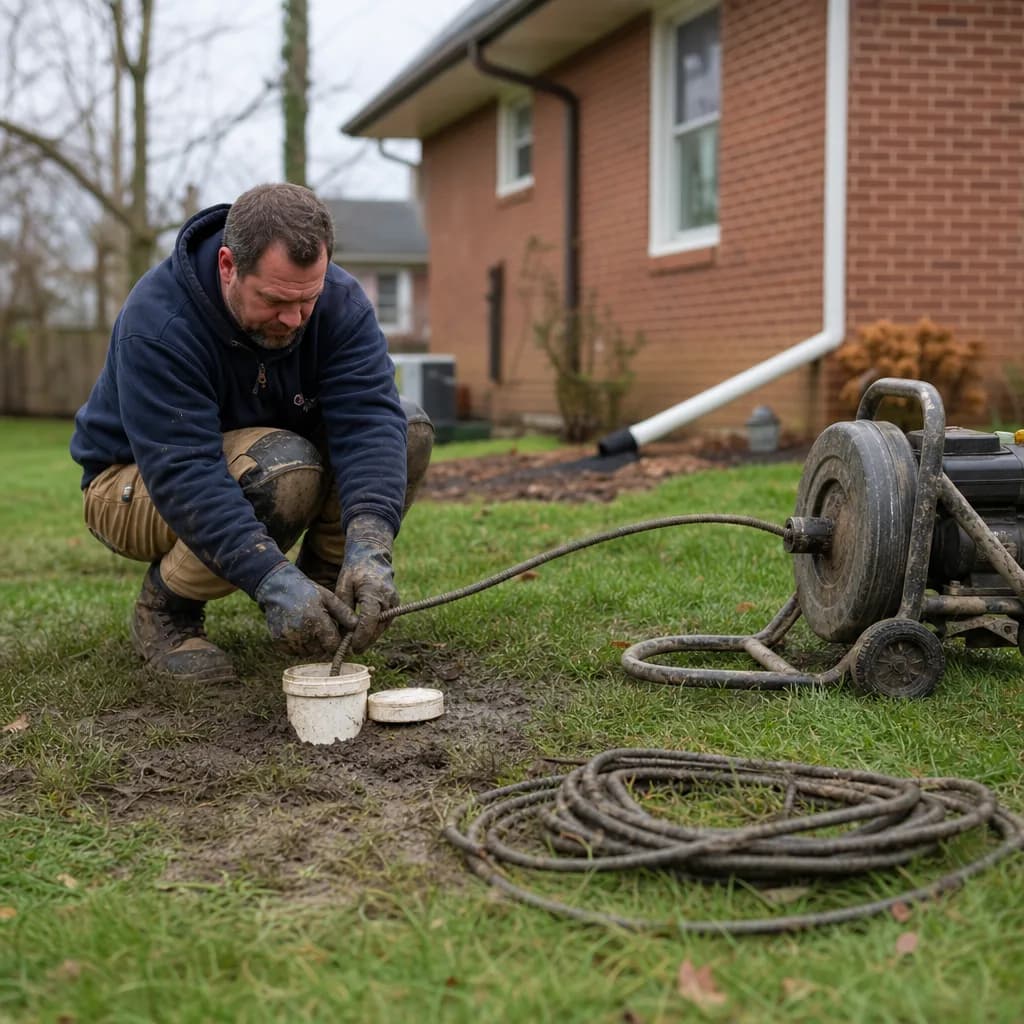
One slow sink is usually a drain clog. When several fixtures act up together, or water backs up into your lowest drain, the blockage is likely in the main sewer line. A plunger can't reach that far, so the line itself needs to be cleared.
A plunger works on the pipe right under the fixture. That's a few feet of line. Your main sewer line runs under the house and out to the street, and a plunger won't touch a clog down there.
The trick is figuring out where the clog is. Your house tells you if you know what to watch for.
- More than one drain is slow at the same time. The kitchen sink, the tub, and a toilet all drag. They share one thing, and that's the main line.
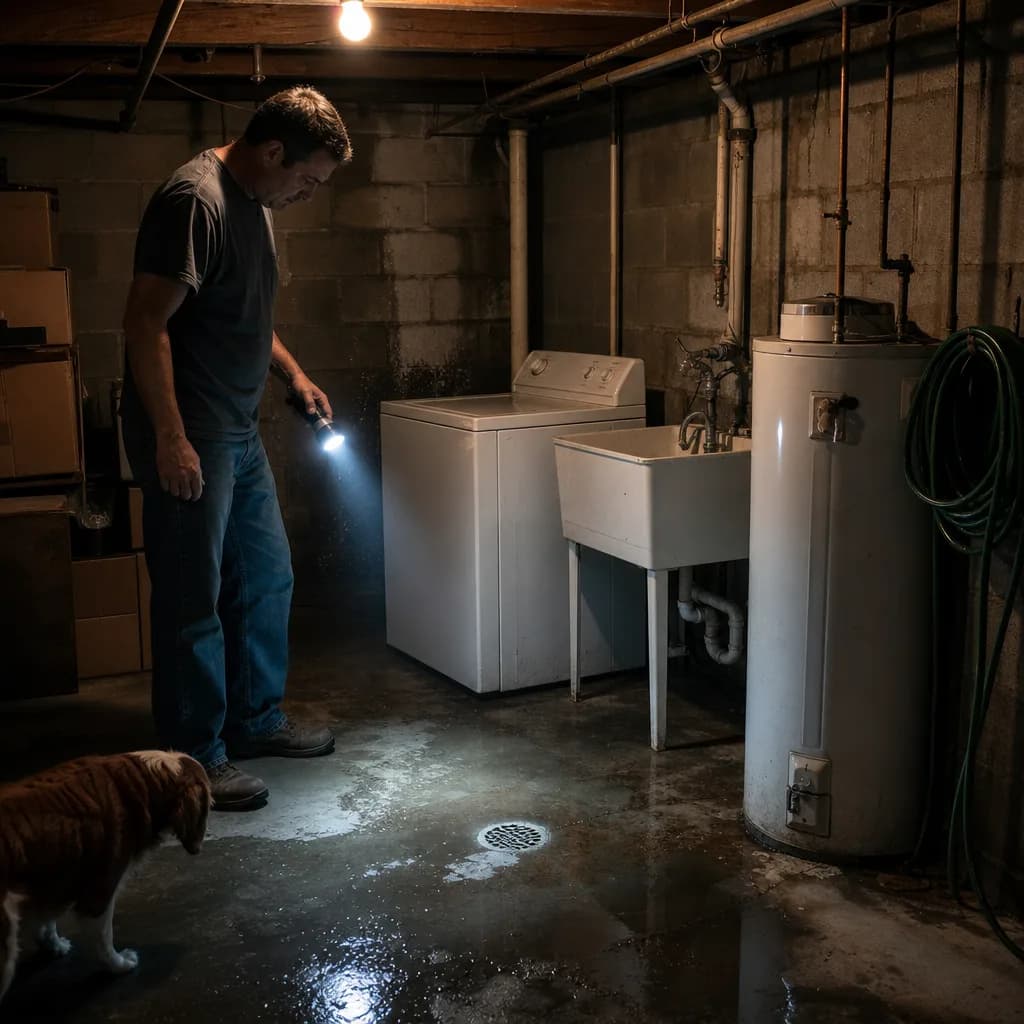
- Water comes up in the lowest drain first. A basement floor drain, a ground-floor shower, or a tub fills up when you flush or run the washer. Water takes the easiest way out, and that's the lowest opening.
- The toilet gurgles when something else drains. You run the sink or the washer empties, and the toilet bubbles. Air is being pushed through the system because the water can't get past a blockage.
- Flushing the toilet puts water in the tub or shower. Two fixtures shouldn't affect each other like that unless the line they both feed into is backed up.
- You smell sewage near a floor drain or in the yard. That smell can mean waste is sitting in the line instead of moving out.
- The clog keeps coming back. You plunge it, it drains, and a few days later it's slow again. You cleared a path through the blockage, but you didn't clear the blockage.
Picture this. You start a load of laundry downstairs. A few minutes later there's gray water around the basement floor drain. Nothing upstairs looks wrong yet. That's not a washer problem. That's the main line telling you it's full.
Businesses see the same signs on a bigger scale. Several restrooms backing up at once, or a kitchen floor drain filling while the sinks run, points past any one fixture and down to the shared line.
Here's the straight answer on the other side. If only one sink or one toilet is slow, and the plunger fixes it and it stays fixed, you probably don't need sewer cleaning. That's a local clog. If it keeps coming back in that one spot, our drain cleaning service is the right fit, not a full sewer line job.
Getting to the main line is easier when there's an outside access point. If your home or building doesn't have one, ask us about cleanout installation. It gives you a way into the line without going through a toilet or a floor drain.
Not sure which one you've got? You don't have to guess on your own dime. Quotes are free, with no trip or diagnostic fee anywhere in Evansville or the Tri-State we serve.
When You Don't Need Full Sewer Cleaning
Sewer cleaning clears a blockage in the main line. That's all it does. A lot of problems look like a sewer clog but aren't, and cleaning the line won't fix them. Here's when you should skip it.
Your home is on a septic tank. If you don't pay a sewer bill, your waste may go to a tank in the yard instead of a city main. Backups there often come from a full tank or a drain field that can't take more water. That calls for septic system service, not sewer cleaning.
The pipe itself is broken. A cracked, sagging, or caved-in line will clog again soon after it's cleared. Roots and dirt keep getting in through the damage, or waste settles in the low spot. Cleaning buys you a little time. It doesn't fix the pipe. If the line keeps backing up soon after a cleaning, a plumbing inspection can show what shape the pipe is in. From there, it may need plumbing pipe repair, or a new run of pipe through our sewer line installation work.
Your neighbors are backing up too. If several homes or businesses on your street have trouble at the same time, the problem may be in the public sewer, not your line. That's the city's pipe to fix. Call the local sewer utility first. Cleaning your own line won't clear a clog that's past your property.
Something only gurgles, and everything drains fine. Gurgling with slow drains points to the main line. Gurgling with fast drains can mean a plumbing vent is blocked. Vents let air into the pipes so water flows smoothly. A sewer cleaning won't touch a vent problem.
You smell sewer gas near a drain you never use. Every drain has a trap that holds a little water. That water blocks gas from coming up. A basement floor drain or a guest shower that sits unused can dry out. When the water's gone, the smell comes through. Running water into that drain often takes care of it. If the smell stays, or shows up in the yard too, that's when to look at the line.
Water shows up in the basement after a hard rain, not after you run the drains. That's usually groundwater or runoff getting in, not sewage backing up. The fix is on the drainage side, like sump pump repair or a French drain, not sewer cleaning.
The problem is only in the toilet. A toilet that runs, rocks, or leaks at the base has a toilet problem. If water isn't backing up into other fixtures, toilet repair is the right call.
None of these need a main line cleaning. If you're not sure which one you have, tell us what you're seeing and we'll tell you straight. Sometimes the answer is a job for the city, or one you can handle yourself.
That same focus carries through the practical septic system guidance our team provides to local families.
Why Older Evansville Homes See More Sewer Line Trouble
If your house has some years on it, the sewer line under the yard does too. Old pipe doesn't clog the same way new pipe does. It catches more, and it lets more in. That's why the same backup can keep coming back in an older home.
It mostly comes down to what the pipe is made of and how long it's been in the ground.
- Clay tile pipe comes in short pieces. There's a joint every few feet. Over time those joints loosen. Tree roots find the gap because there's water and food inside. A small root turns into a mat that grabs paper and waste.
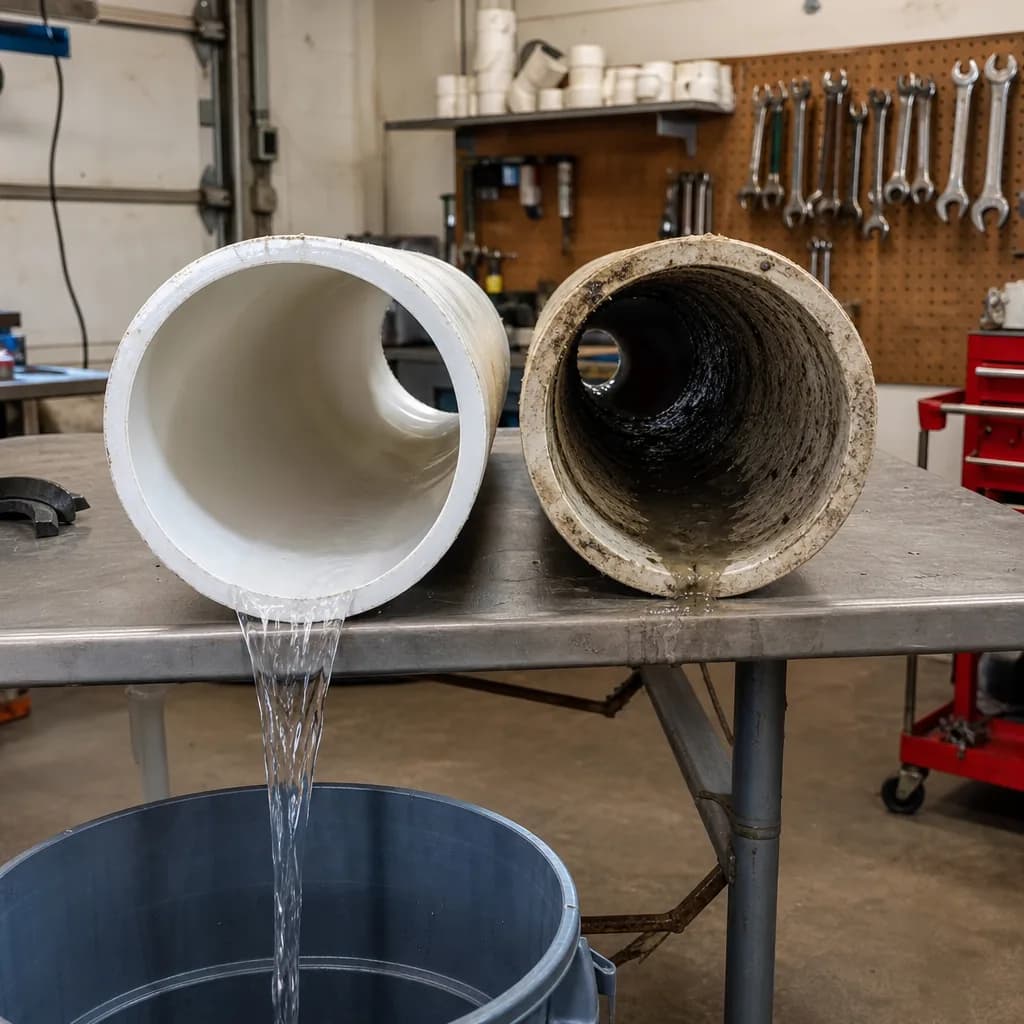
- Cast iron pipe rusts from the inside. The walls get rough and bumpy. Grease and waste stick to that rough spot instead of sliding past. The opening slowly gets smaller.
- Fiber pipe was used in some homes around the middle of the last century. It's made of pressed material and tar. With age and ground weight, it can flatten or blister. Then there's less room for water to get through.
Time works on every kind of pipe, too. Ground settles. A pipe that was laid straight can sink in one spot. Waste sits in that low spot and builds up. The trees that were small when the house was built are big now, and their roots reach a lot farther.
Older homes are also less likely to have an easy way in. Many weren't built with an outside cleanout. That makes the line harder to reach, which is one reason the cleanout installation we mentioned earlier is worth asking about.
Here's what this means for you. In an older line, the clog usually isn't one bad flush. It's roots, rust, or buildup that took years to form. Clearing the line takes care of the blockage that's there now. But if the cause is root entry at loose joints, the roots can grow back over time.
That's not a reason to skip cleaning. It's a reason to pay attention to how long the fix lasts.
- If your line stays clear for a long stretch after a cleaning, the pipe is likely still doing its job. Cleaning when the signs come back may be all you need.
- If backups return within weeks, that points to damage, like the broken or sagging pipe we covered above. Cleaning again won't change that.
- If you don't know what your pipe is made of, it helps to find out. A plumbing inspection is the way to learn it before you put more money into the line.
Older commercial buildings deal with the same thing on a bigger scale. A restaurant or a building with many restrooms sends a lot more water and grease down an aging line. Rough cast iron and loose joints catch that load fast. The backups tend to hit at the worst time, like during a busy lunch.
None of this means an old pipe is a bad pipe. Plenty of older lines still work fine. You just want to know which kind you have, so you're not paying for the same cleaning over and over without knowing why it keeps coming back.
How Sewer Cleaning Works, Start to Finish
Water backing up into the basement drain. Toilets gurgling. You know it's the main line. Here's what clearing it involves, so nothing during the job surprises you.
Before anyone shows up, stop running water. Hold off on laundry, the dishwasher, and flushing. Every gallon you send down has nowhere to go but back up through your lowest drain.
If you know where your cleanout is, clear the space around it. Do the same for a basement floor drain. That saves time once the work starts.
Step one is getting into the line. A cleanout is the easiest way in, as we covered above. Without one, a plumber may have to go in through a toilet that's been pulled up or through a roof vent. That's slower and messier, but it works.
Step two is clearing the blockage. There are two common ways to do it.
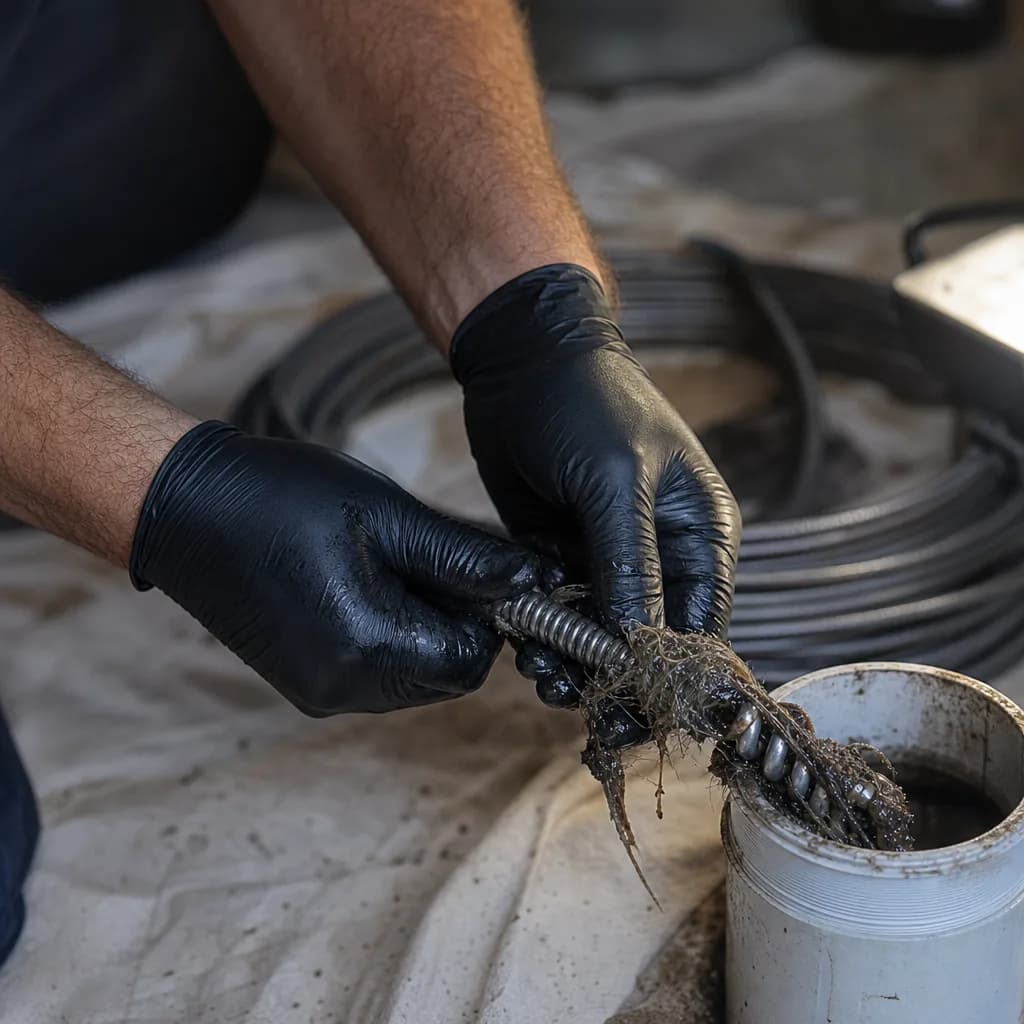
- A cable machine, often called a snake or auger. It feeds a spinning steel cable down the line, with a cutting head on the end. It breaks up the clog and cuts through roots. It's good at opening a line that's fully stopped up.
- Hydro jetting. It sends high-pressure water through the pipe. Instead of punching a hole through the clog, it scrubs grease, scale, and buildup off the pipe walls. That's useful for greasy lines, like the ones under a restaurant kitchen.
Which method fits depends on what's in the pipe and what shape the pipe is in. An old, fragile line may not handle the same pressure as a newer one. A good plumber should tell you which method they're using and why.
Step three is checking the work. Water should run freely through the line again, from more than one fixture. Many plumbers also run a camera down the pipe after cleaning, so you can see what caused the clog. That's the inspection we talked about earlier. It's how you learn whether you had a one-time blockage or a pipe that's failing.
Step four is the wrap-up. You should hear what was found, where it was, and whether it's likely to come back. If the cause was roots or a low spot, you want to know that now, not at the next backup.
Whoever you call, ask these questions before the work starts:
- How will you get into the line?
- Which method will you use, and why that one for my pipe?
- How will we know the line is fully clear, not just draining again?
- What will you tell me about the cause when you're done?
- What's the price before you start?
With us, that last one is easy. Quotes are free, with no trip or diagnostic fee. You'll know the cost before any work begins.
Businesses have one more thing to plan for: timing. A main line job can mean shutting off water to restrooms or a kitchen for a while. We're open 24/7, so it's worth asking about clearing the line before you open or after you close, when it won't stop your day.
The steps are the same for a house or a building. Get in, clear it, prove it's clear, and tell you why it happened. If a job skips that last part, you're paying for a cleaning without knowing whether you'll need another one next month.
What Drives Sewer Cleaning Cost
The cost of a sewer cleaning depends on two things: what's in your line and how hard it is to reach. Two houses on the same street can need very different jobs. That's why a fair number usually comes after someone looks at the problem, not before.
These are the things that move the price up or down:
- How we get into the line. A line with an outside cleanout is quick to reach. Going in through a pulled toilet or a roof vent takes more time and more work.
- What's causing the clog. A soft clog of paper and waste clears fast. A thick root mat or years of grease takes longer and may need more than one pass.
- Which method fits. The cable machine and hydro jetting we covered above use different equipment. Jetting usually takes more setup.
- How far out the clog is. A blockage near the house is easier to reach than one near the street, especially on a long run under a big yard.
- The shape of the pipe. Old clay, cast iron, or fiber pipe may need a gentler approach. Working carefully takes more time.
- A camera check. Looking inside the pipe adds to the job. It's also how you find out whether you'll be dealing with this again next month.
- When the work happens. Some plumbers charge more for nights, weekends, and holidays. Ask about that before the work starts.
Plumbers usually price this work one of two ways. A flat price gives you the total before the work begins. An hourly rate can come in lower on an easy job and higher on a hard one. Either can be fair, as long as you know which one you're getting.
Businesses have more to think about. Bigger lines, more fixtures, and heavy grease from a kitchen all add time. If you need the work done before you open or after you close, ask how that timing affects the price.
The cheapest cleaning isn't always the cheapest choice. A quick snake job might open the line today. If roots or a sagging pipe caused the clog, you could be paying for the same visit three times in a year. Spending a little more to learn the cause can save you money over time.
Before you agree to a price, ask what's included:
- Is the camera check part of the price, or is it extra?
- If the clog turns out worse than you expected, will you tell me before you go further?
- If you find a broken pipe, what happens to the price for the cleaning?
With us, you don't have to pay just to find out what's wrong. Quotes are free, with no trip or diagnostic fee. You'll know what the job involves and what it costs before we start.
Got a backup now, or one that keeps coming back? Call our licensed, insured, locally owned team at (812) 677-8484, or send us a note through the contact form. We're open 24/7 across Evansville and the Tri-State, for homes and businesses.
Common questions
- How often does a sewer line need to be cleaned?
- It depends on your pipe and your trees, not a fixed schedule. Homes with older clay or cast iron pipe, or big trees near the line, tend to need cleaning more often because roots and rust buildup return faster. If your line stays clear for a long stretch after a cleaning, you likely don't need another one soon. If backups return within weeks, that usually points to a deeper problem like a damaged pipe, not a timing issue.
- Can I clean my sewer line myself?
- You can try for a simple clog, but main line cleaning usually needs real equipment to do it safely. A plunger or a store-bought auger only reaches a few feet, while your main line runs under the house and out toward the street. Without a cleanout, you'd need to go in through a pulled toilet or a roof vent, which is hard to do without the right tools. If the clog keeps coming back, that's a sign it's past what a home snake can fix.
- How can I unclog my sewer drain?
- Start by figuring out if it's a single drain or the main line, since that changes the fix. One slow sink is usually a local clog you can plunge. But if several drains act up together, or your lowest drain backs up when you run water elsewhere, the blockage is in the main line and needs a cable machine or hydro jetting to clear it properly.
Where we do this work
This page is for sewer cleaning based out of Evansville, IN. We also work surrounding communities. City pages cover each market; as demand grows we can add service pages for specific cities without rebuilding this silo.
Related work
We also do this work for businesses across the area.
Commercial plumbingReady to Get Started?
Call (812) 677-8484 Now.