
Water tank installation in Evansville, IN
An Evansville utility room can hold three different tanks: a well pressure tank, a small expansion tank by the cold supply, and a storage tank. Water tank installation covers those three. A tank that heats water is a different job, handled on the water heater pages, so a cold shower or rusty hot water gets routed there instead of here.
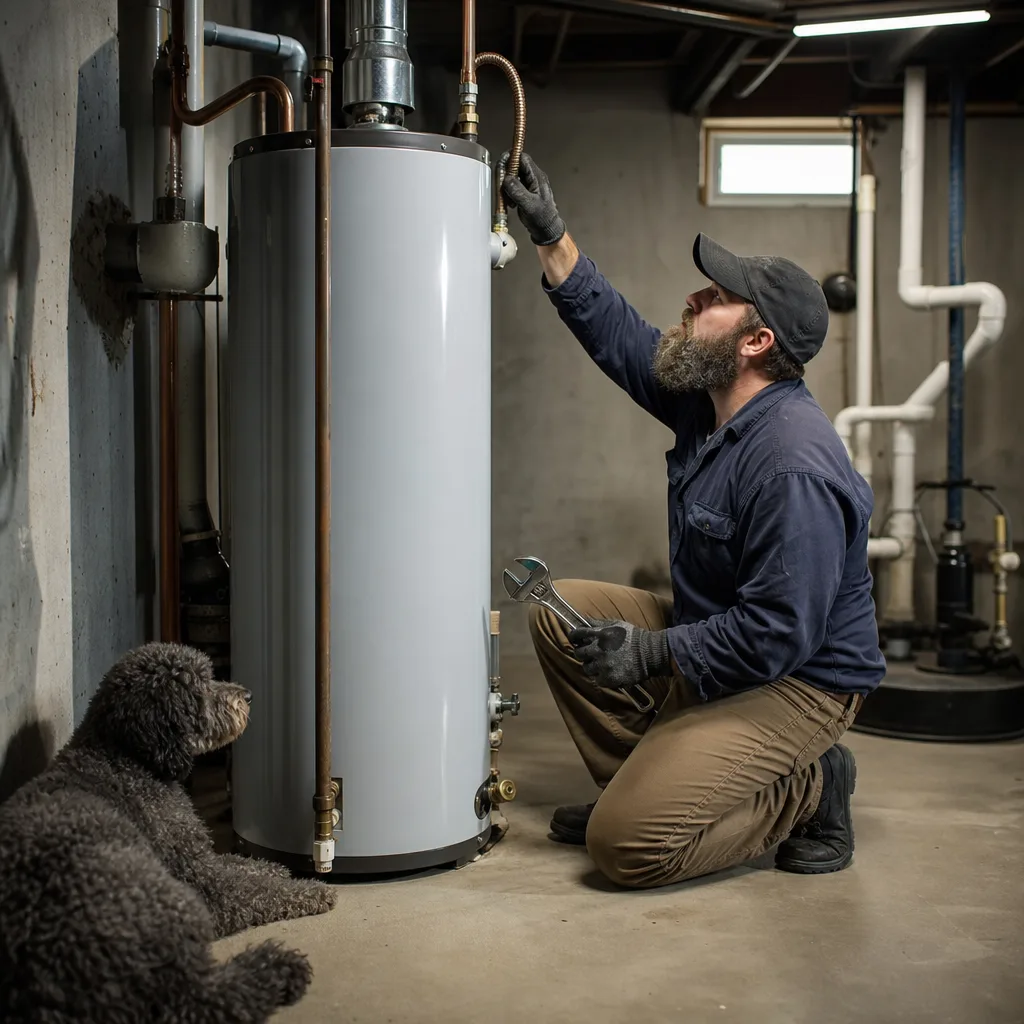
Pressure Tank Installation on a Private Well
Pressure tank installation is for homes and shops on a well, where the tank sits by the incoming water line and holds a cushion of air that keeps the pump from kicking on every time a faucet opens.
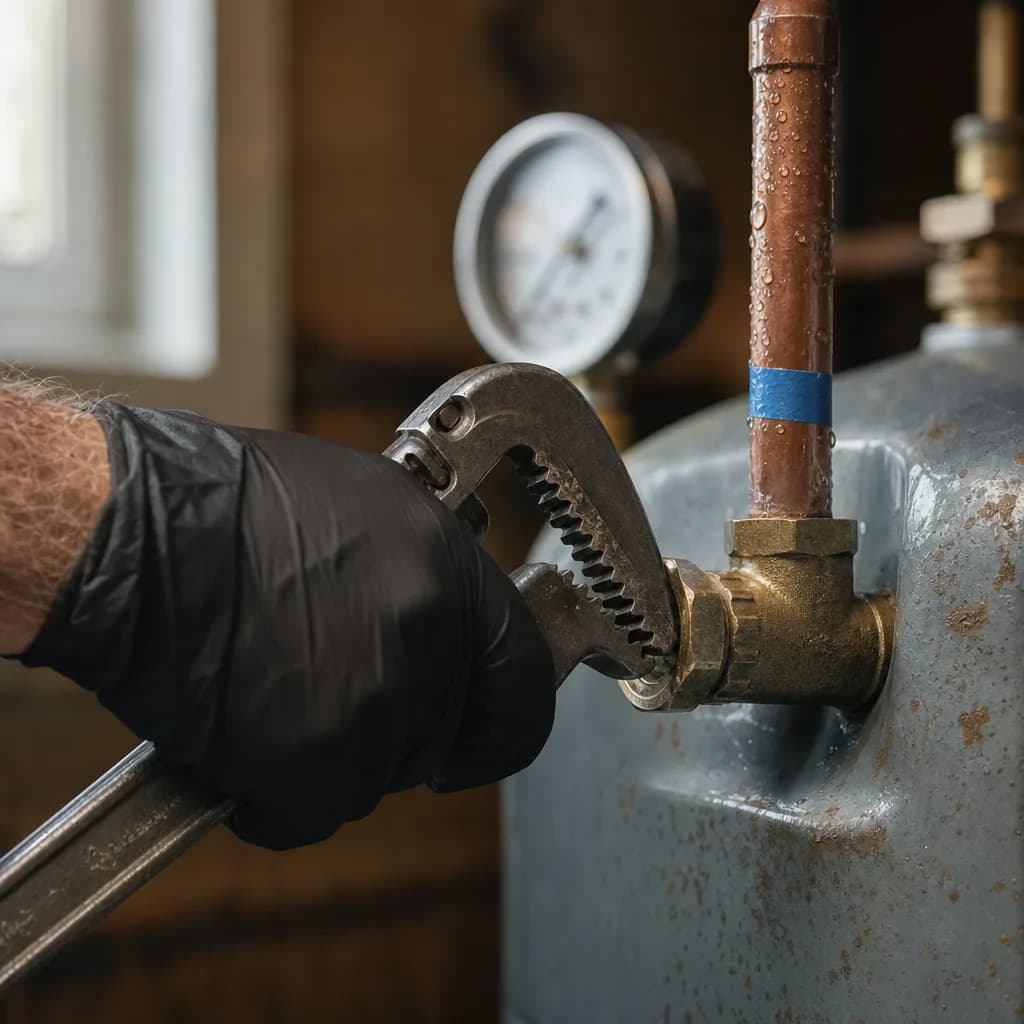
The usual signs are the pump clicking on and off fast, pressure swinging in the shower, or faucets spitting air. That short cycling is hard on the pump, and a waterlogged tank, one full of water with no air cushion, is a common cause. The pump itself, or its pressure switch, can be the real problem instead, so both get checked before a tank is sold. When the pump is the failure, the work belongs with the well pump and pressure tank.
Vanderburgh County doesn't have a well ordinance, so wells need no county permit, though the county's health department lab will run a total coliform test on private well water. Of the county's aquifers, the Ohio River outwash and alluvial system ranks as the most productive, more than 150 feet thick in places, and wells in it commonly reach 45 to 85 feet.
Water Storage Tank Installation: Sizing and Placement
Water storage tank installation comes up where supply is slow or use comes in bursts: a well that can't keep up with morning demand, a shop that needs a reserve, or a building that wants water on hand during a utility outage.
- Size follows use, not the space available. A tank that's too small refills constantly; one that's oversized sits and goes stale.
- Placement needs a level, solid base, room to service the fittings, and a drain or floor that can take a spill.
- The inlet and outlet should be arranged so water moves through the tank instead of sitting in one corner.
- A storage tank doesn't add pressure by itself. It needs the well system or a booster to push water to the fixtures.
USGS's scale rates Evansville's water as hard. EWSU's 2025 average was 138 ppm, about 8.1 grains per gallon, so mineral buildup inside a storage tank calls for flushing, not for assuming the tank failed.
When You Don't Need a Water Tank Installation
Water tank installation isn't the answer when the tank is dry, quiet, and doing its job, or when the water isn't coming from the tank at all. An air conditioner condensate line, a water softener drain, or a pipe overhead can drip beside a perfectly good tank. A cold tank also sweats in humid air, beading up along its whole shell instead of at one joint.
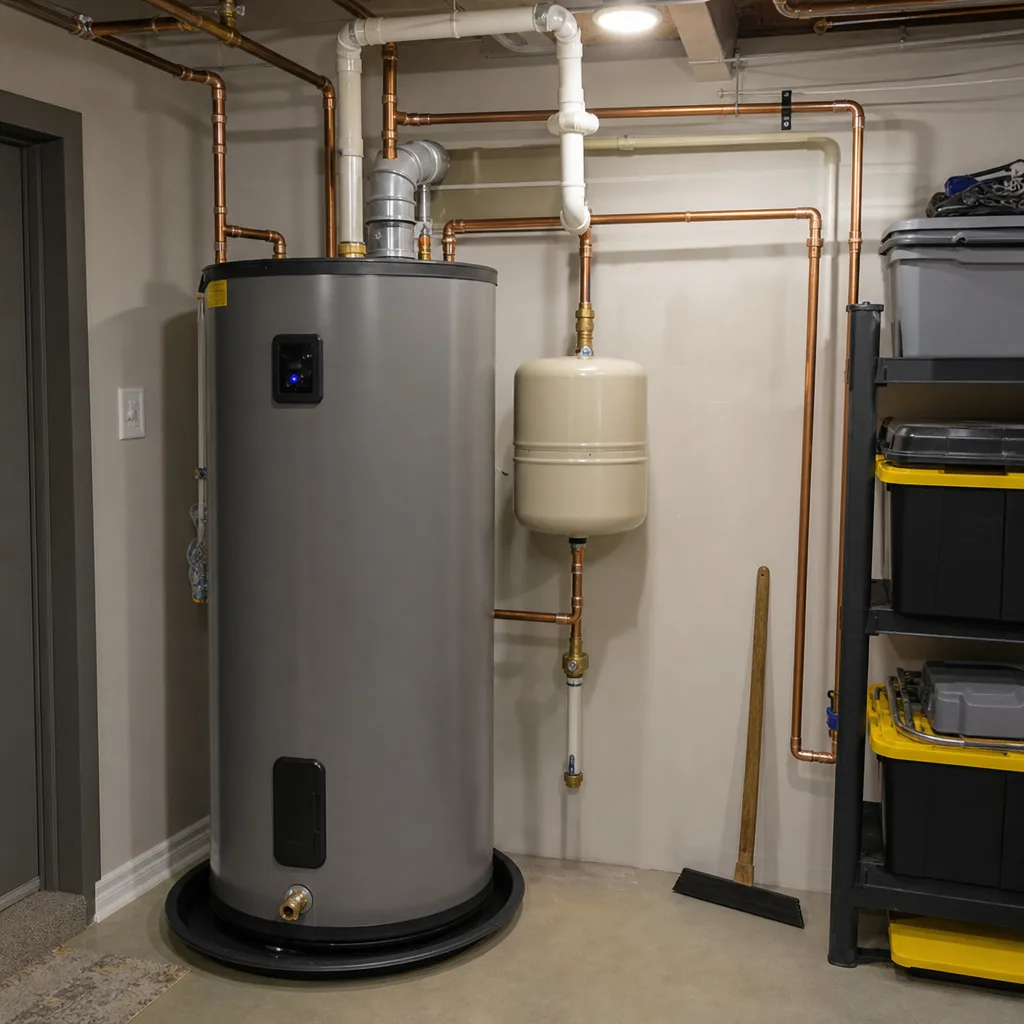
A relief valve that drips after the water heater cycles usually traces to the little expansion tank at the cold supply, not a storage tank, which makes it a job for expansion tank install. Indiana's plumbing code amendment says no valve may go between the heater and an expansion tank that's controlling thermal expansion. High pressure coming into the building can make the same valve drip; Indiana's adopted code sets 80 psi static as the point where commercial buildings need a pressure-reducing valve.
Water Tank Installation: Air Charge, Connections, and Price
Water tank installation for a pressure tank centers on the air charge, which must be set to suit the pressure switch; get it wrong and the pump short-cycles on a brand-new tank. The tank goes on a level base, the lines connect, water comes back on, and the pump is watched through several cycles to confirm it starts and stops at the right points.

A storage tank is simpler: set it level, connect inlet and outlet so water circulates, and check every joint under pressure. An expansion tank's air charge is matched to the home's static pressure before the tank goes in at the cold supply.
Cost moves with tank type and size, access through a tight closet, crawl space, or narrow stair, old valves that crumble when turned, and haul-away of the old tank. In Evansville and Vanderburgh County, plumbing work also takes a building permit up front. For a commercial or multi-unit building, a like-for-like replacement or a new heater of 100 gallons or less is exempt from the state's design release, but that exemption doesn't cover the local permit, and it doesn't cover a well or storage tank either.
If a leaking tank can still be saved with a fitting or a valve, it's a water tank repair job rather than a new install; tank work of either kind is routine plumbing in Evansville.
Common questions
- How long does a water tank installation take?
- A pressure tank swap is usually a few hours: water off, old tank out, new tank set, air charge matched to the switch, and several pump cycles watched. A storage tank takes longer when the inlet and outlet have to be rerouted so water actually moves through it.
- Can I install a water tank myself?
- Swapping a little expansion tank yourself is doable, but a pressure or storage tank means draining the system, setting the air charge to suit the pressure switch, and testing under pressure. The common DIY miss is a wrong charge, which keeps a new tank's pump short cycling, and in Evansville the plumbing work still needs a permit first.
- Do I need a permit for a water tank installation?
- Yes for the plumbing work. Evansville's Building Commission, at the Civic Center, must issue a building permit before anything else, and under EMC 15.05.100(A), anything covered gets an inspector's look before it's hidden. The permit question is about the plumbing, not the well, since there's no well ordinance in Vanderburgh County.
Where we do this work
This page is for water tank installation based out of Evansville, IN. We also work surrounding communities. City pages cover each market; as demand grows we can add service pages for specific cities without rebuilding this silo.
Related work
We also do this work for businesses across the area.
Commercial plumbingReady to Get Started?
Call (812) 677-8484 Now.