
Water tank repair in Evansville, IN
On a Vanderburgh County well, a pump that clicks on and off every few seconds points to water tank repair. Pressure that surges strong and weak at the tap does too, and so does a damp spot under a tank in the basement. The job covers three kinds of tank: the pressure tank on a well system, the small expansion tank on the cold line by the water heater, and storage tanks that hold water for a building. Leaks from the water heater itself go to water heater replacement instead.
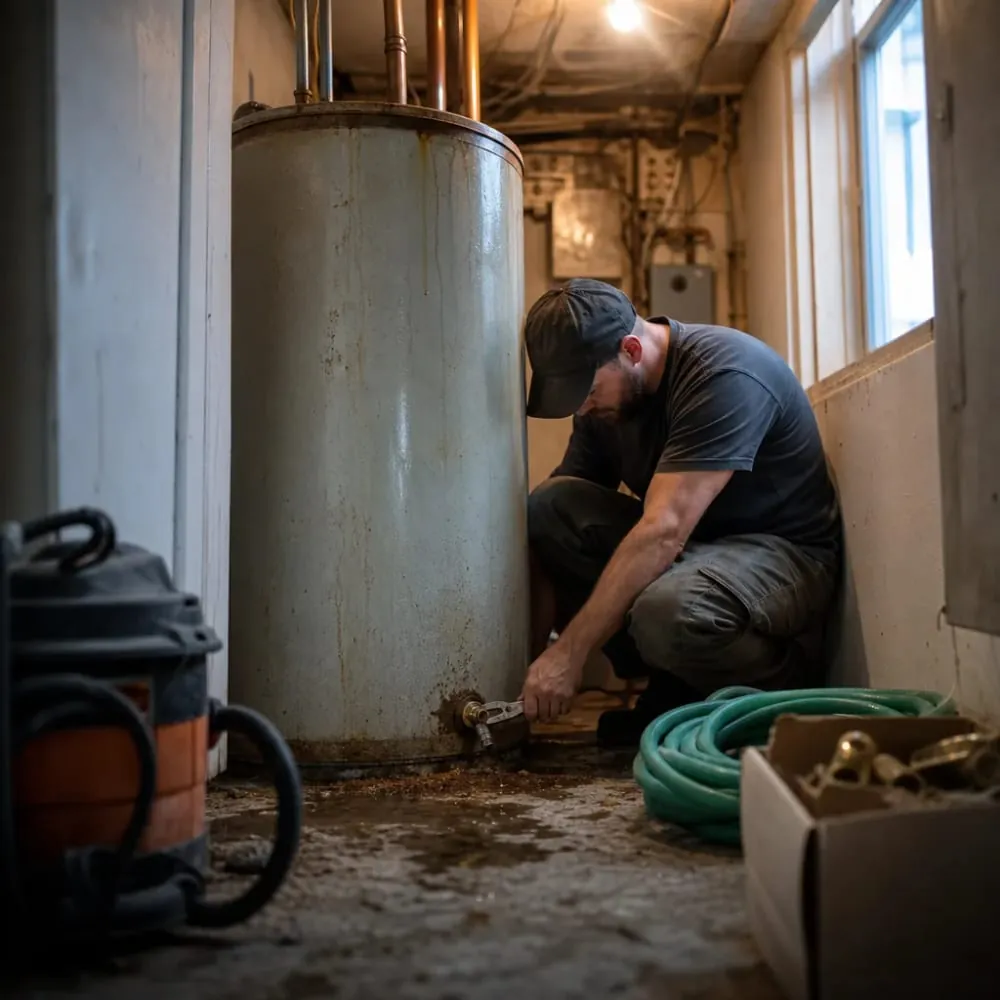
Water Tank Repair: Pressure Tank, Expansion Tank, or Storage Tank
The first question in water tank repair is which one you have, because each tank fails in its own way. A pressure tank sits beside the well pump or pressure switch, often in a basement, crawl space, or pump house. An expansion tank is small and hangs on the cold-water line near the water heater, and a storage tank is the large vessel that holds a reserve supply.
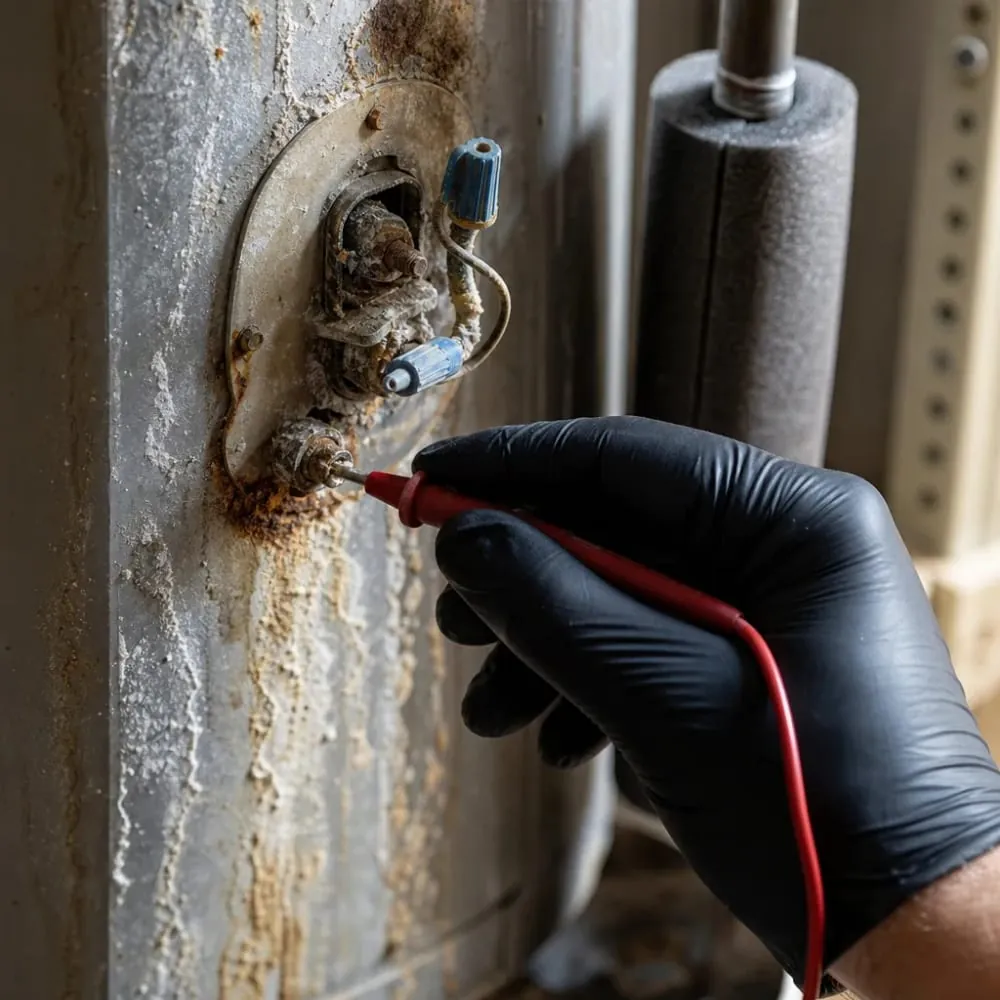
Pressure tanks belong to rural and edge-of-county homes on private wells. USGS estimated that about 12,550 Vanderburgh County residents, roughly 6.9% of the county, used self-supplied water in 2015, all of it from groundwater. Most homes on Evansville city water from EWSU have no pressure tank at all.
Expansion tanks are the city case, on EWSU water. The 2006 International Plumbing Code that Indiana adopted (section 607.3.2) requires a pressure-control device where a check valve or backflow device traps the pressure a storage water heater builds as it heats. Indiana adds that when an expansion tank does that job, no valve may sit between the water heater and the tank.
Waterlogged Pressure Tank: Signs and How It Gets Fixed
A pump that short cycles, kicking on and off in quick bursts every time a tap opens, is the classic sign of a waterlogged pressure tank. The tank has lost its air cushion, so it holds too little water between pump starts, and pressure at the faucet swings with every cycle.
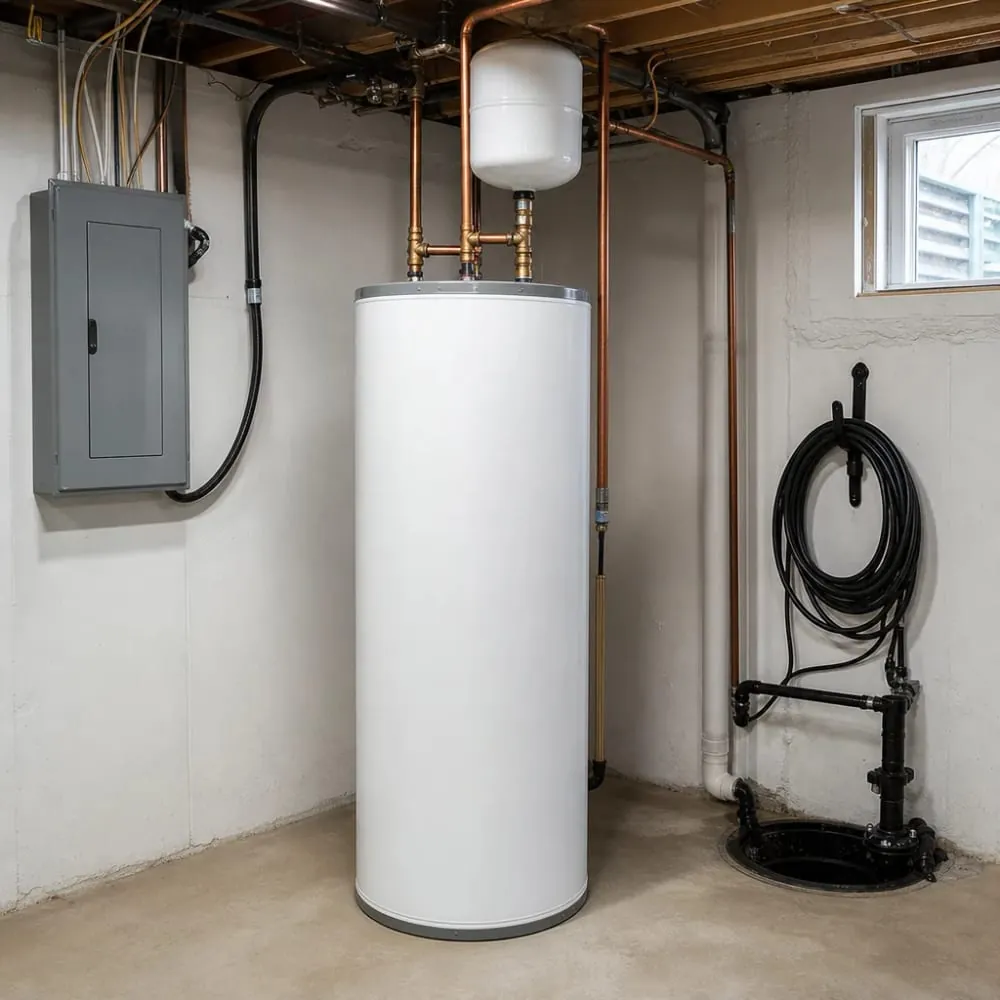
A tank that simply lost its charge can often be drained, recharged, and set to match the pressure switch. A tank that keeps losing its charge soon after a recharge, or spits water from its air valve, has a failed bladder or diaphragm, and that can't be patched.
Short cycling wears out the pump along with the tank, so catching it early keeps a tank problem from turning into a pump problem. A pump that runs and never shuts off is past the point of waiting. Anything past the tank, in the pump or the well, is part of the well pump and pressure tank work we also do.
Well owners in Vanderburgh County also look after their own water quality. The county has no well ordinance, and the Vanderburgh County Health Department's lab tests private well water for total coliform.
Water Tank Leaking: The Tank, a Fitting, or the Water Heater
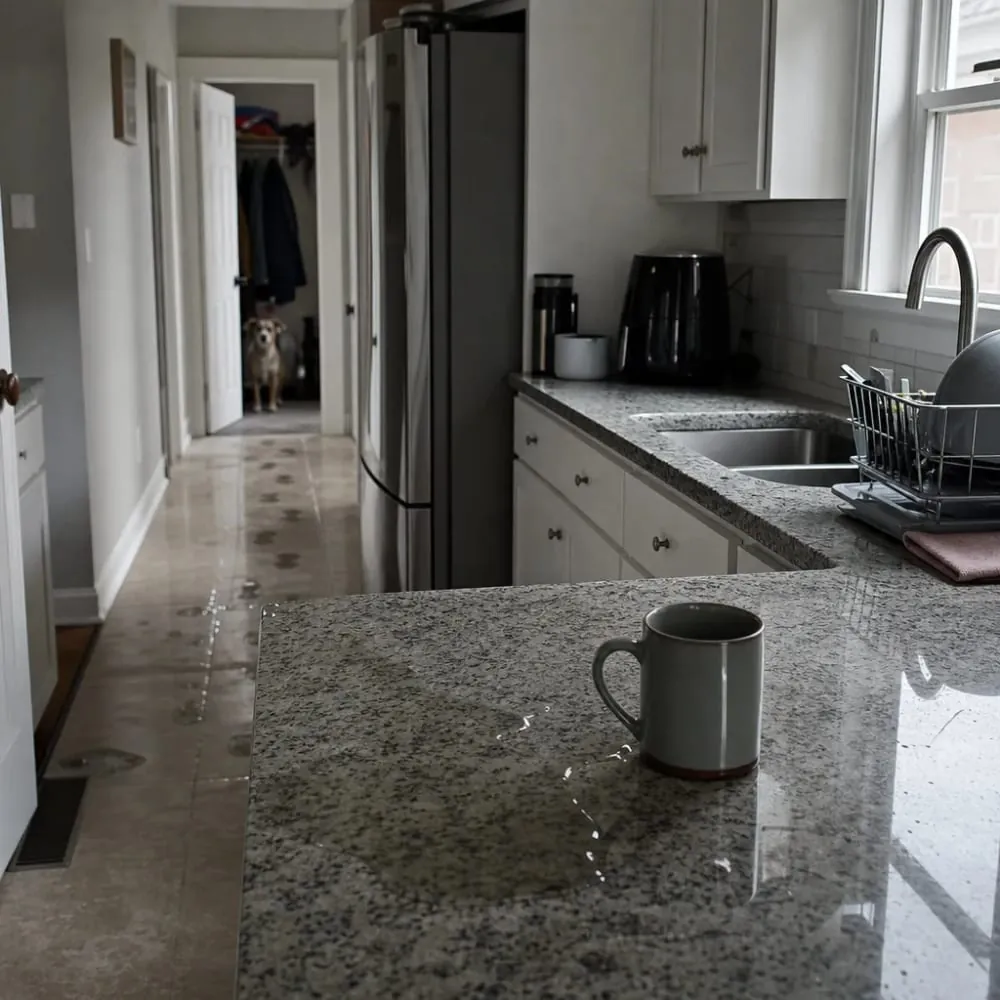
When water is pooling near a pressure, expansion, or storage tank, the first job is finding which part is leaking. Dry off every fitting, every valve, and the tank shell, lay paper towels underneath, and look again after the pump or heater has run.
Water at a threaded fitting, a union, or a valve where pipe meets the tank is usually a repair. Water from the tank shell, rust that has eaten through the steel, or water from the air valve means the tank itself is done.
A dripping relief valve on the water heater, after a check valve or backflow device was added, often points to thermal expansion with nowhere to go. That's the situation section 607.3.2 addresses, and a failed or missing expansion tank is the usual fix, handled as an expansion tank install.
High pressure at every tap is a separate question. The plumbing code requires a pressure-reducing valve where static pressure inside a building exceeds 80 psi. EWSU designs its mains to hold at least 35 psi static, but it doesn't publish a typical delivered pressure, so a gauge on a hose bib is the way to know.
Pressure Tank Replacement or Repair
A worn fitting, a pressure switch that acts up while the tank is fine, a stuck gauge, or a tank that only needed its air charge restored are repairs. Water from the air valve, a shell leak, a tank that won't hold a charge, or a tank too small for the household's use point to pressure tank replacement, which is replacing the tank as a new install.
The quote is free and separates a fitting or switch you can keep from a tank that has to come out, before any part is ordered.
The price depends on the tank's type and size, how hard it is to reach in a closet or crawl space, and whether old fittings, a corroded relief valve, or a worn pressure switch should be swapped while we're there. Mineral scale can also play a part: EWSU reported a 2025 average hardness of 138 ppm, so older valves and fittings around a tank on city water may show buildup worth replacing during the visit.
Age is only part of it: an older tank with one leaking fitting can be worth fixing, and a newer tank with a torn bladder may still need replacing. Tank work comes up on county wells and on EWSU city water alike, and it's part of the plumbing in Evansville we take on.
Common questions
- How do you fix a waterlogged pressure tank?
- If the bladder is intact, the tank is drained, its air charge is restored to match the pressure switch setting, and the system is refilled. If water comes out of the air valve, the bladder has failed and the tank needs replacing.
- Do I need a permit or inspection for a private well in Vanderburgh County?
- There's no county well permit, because Vanderburgh County has no well ordinance. The Vanderburgh County Health Department's lab does test private well water for total coliform.
- Why does my water heater's relief valve drip after a new check valve went in?
- A check valve or backflow device traps the expansion of heated water, and the plumbing code Indiana adopted (section 607.3.2) calls for a pressure-control device in that case. An expansion tank is the usual answer, with no valve between it and the heater.
Where we do this work
This page is for water tank repair based out of Evansville, IN. We also work surrounding communities. City pages cover each market; as demand grows we can add service pages for specific cities without rebuilding this silo.
Related work
We also do this work for businesses across the area.
Commercial plumbingReady to Get Started?
Call (812) 677-8484 Now.